What to Look for When Viewing a Home
Knowing what to look for when viewing a property makes the difference between a costly mistake and a confident purchase. This guide gives UK buyers a room-by-room checklist covering damp, structural condition, electrics, heating, leasehold considerations, and the key questions to ask the seller at every viewing.

Oliver H.
Oliver covers Midlands property trends and practical selling tips for homeowners. He focuses on clear, jargon-free advice that helps private sellers stay in control.
A property viewing can feel like the exciting part of buying a home. After weeks of browsing listings and shortlisting properties, you finally get to walk through the door. But the experience of a viewing is easy to get wrong.
Most people spend their first viewing taking in the general feel of a property, imagining where the sofa goes, and thinking about whether it matches what they had in mind. Very few people spend that time systematically checking the things that could cost them thousands of pounds to fix after they move in.
This guide gives you a practical, thorough framework for what to look for when viewing a home. It covers the outside of the property, every key area inside, the questions you should be asking, and how to use a second viewing to dig deeper. Whether you are a first-time buyer or an experienced mover, working through this checklist during every viewing will put you in a much stronger position.
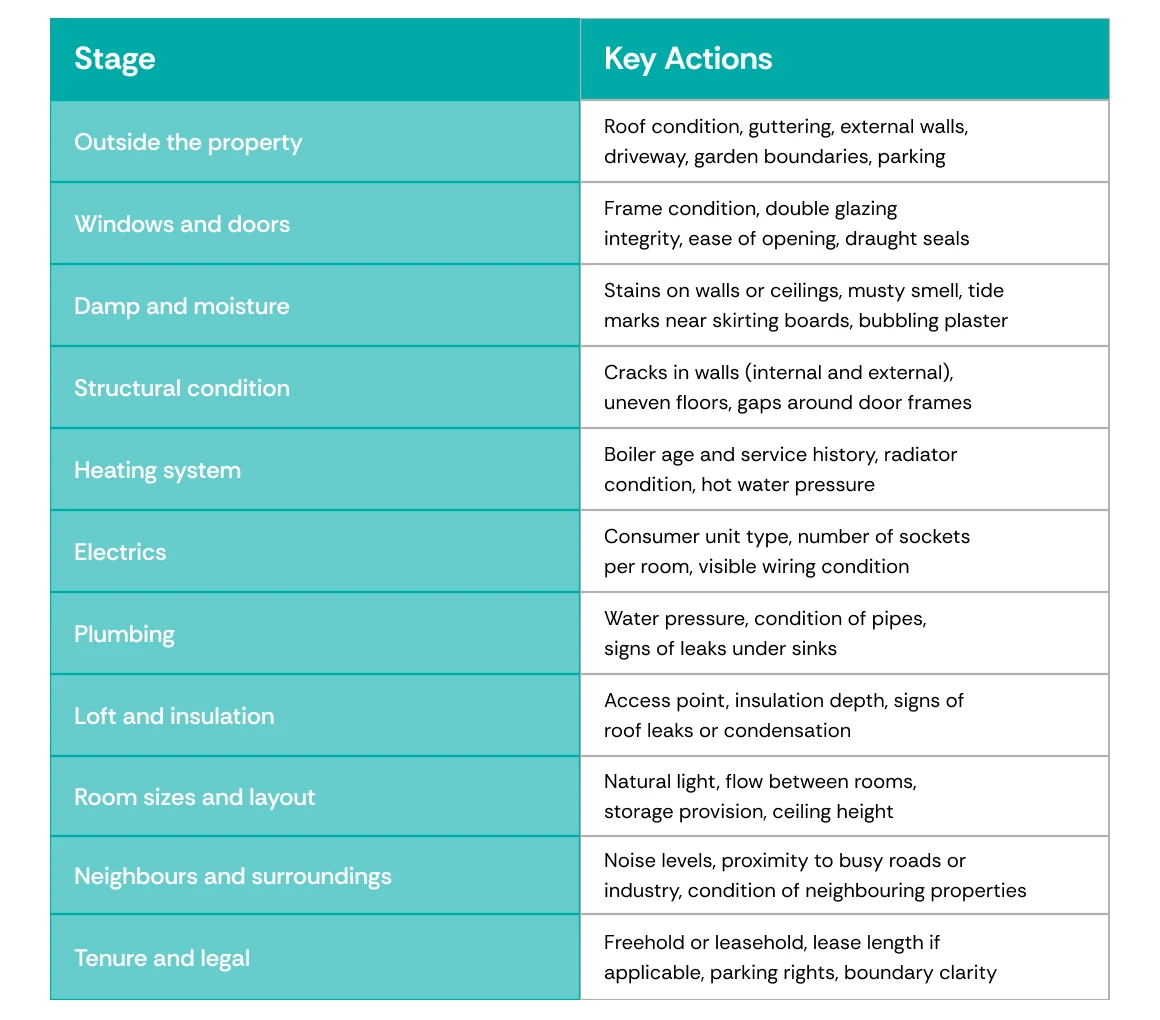
Quick Reference: What to Check When Viewing a Property
The table below gives a summary of the key areas to inspect and what to look for in each. The sections that follow cover each in detail.
What to Do Before the Viewing
How you prepare before attending a viewing is just as important as what you do when you get there. Arriving informed and equipped means you can use your time in the property productively rather than simply absorbing the atmosphere.
Research the Property Beforehand
Look at the listing carefully before you visit. Note the floor plan, the number of rooms, and the orientation of the property. Check how long the property has been on the market. A property that has been listed for several months without selling may have issues that previous viewers identified, or may simply be overpriced.
If you are browsing properties on YooSell, listings include enhanced photos, floor plans, and detailed descriptions directly from verified sellers, which gives you more reliable information before you even step through the door.
Check the Location in Advance
Use mapping tools to look at what is nearby. Check the proximity to main roads, industrial areas, railway lines, and flight paths. Look up local amenities, schools if relevant, and transport links. Walk or drive around the street at different times of day if you can, including in the evening, to get a realistic sense of the area.
What to Bring
Arriving equipped makes the difference between a productive viewing and one where you forget most of what you saw. Bring:
• A tape measure to check room dimensions against your furniture
• A small torch to check dark corners, loft hatches, and underneath sinks
• A notepad or your phone to photograph and record observations
• A list of questions prepared in advance
• A charged phone to check signal strength inside the property
How Many Viewings Should You Do
Most experienced buyers recommend viewing a property at least twice before making an offer. The first viewing is for general impressions and spotting obvious issues. The second is for a more methodical inspection, ideally at a different time of day to see how natural light moves through the property and to observe the street and neighbourhood at a different hour.
What to Check on the Outside of the Property
Most buyers walk straight to the front door without spending time on the exterior. This is a mistake. The outside of a property reveals a great deal about how well it has been maintained, and some of the most expensive problems to fix are visible from the street before you even go inside.
The Roof
Look at the roofline from the street. Missing, cracked, or slipped roof tiles are worth noting. Check the ridge tiles along the top of the roof as these are often the first to deteriorate. While a professional survey will assess the roof in detail, obvious signs of damage visible from street level are a signal to ask questions.
Flat roofs on extensions or outbuildings have a shorter lifespan than pitched roofs and are worth paying particular attention to. Signs of patching or pooled water are worth flagging.
Gutters and Downpipes
Blocked or damaged guttering is one of the most common causes of damp penetration in UK homes. Look for gutters that are sagging, pulling away from the fascia boards, or have vegetation growing in them. Dark staining on external walls directly below a gutter or downpipe suggests water has been running down the wall rather than through the drainage system.
External Walls
Run your eye along the external walls. Horizontal or diagonal cracks in brickwork, rendering that is cracked or bulging away from the wall, or sections that have clearly been patched or repointed are worth investigating further. Minor surface cracking in render is common but larger cracks that run through mortar joints or bricks themselves can indicate more serious movement.
If the property has rendered walls, check whether the render sounds hollow when tapped gently. This can indicate that the render is detaching from the substrate beneath.
Windows and Doors
Check the condition of window frames from outside. Timber frames should be sound and well painted. Rotting or swollen timber around window frames is a sign that water has been getting in. Check that all windows appear to be properly sealed into their frames without obvious gaps.
Double glazed units that have failed will show condensation between the panes. This is not a structural problem but replacing failed units has a cost and is worth noting.
The Garden and Boundaries
Walk around the outside of the property if access is available. Check the condition of fences, walls, and gates. Ask the seller or note from the title plan which boundaries belong to the property, as maintenance responsibility sits with whoever owns each boundary.
Check for signs of Japanese knotweed or other invasive vegetation. Japanese knotweed in particular is a serious issue in the UK, capable of causing structural damage and making mortgage applications on affected properties complicated. It has distinctive broad leaves and hollow stems with purple-speckled markings and should be noted if spotted.
Parking and Access
Check whether there is off-street parking. If parking is on the street, check whether it is permit-controlled and whether the area has restrictions at certain times. Look at whether the driveway or access route shows signs of poor drainage or persistent waterlogging.
What to Check Inside the Property
Once you are inside, resist the urge to simply absorb the feel of the space. Work through the property methodically, starting from the top and working your way down, paying attention to the condition of surfaces, the operation of systems, and any signs of underlying problems.
Damp and Moisture
Damp is one of the most common issues found in UK homes and one of the most frequently missed at viewings. It presents itself in several ways and knowing what to look for makes a significant difference.
Rising Damp
Rising damp appears as a tide mark or discoloration on walls close to floor level. It is typically associated with a failing or absent damp proof course. Bubbling or flaking plaster near skirting boards, staining with a yellowish or brown tint, and a musty earthy smell at low level are all signs to take seriously.
Penetrating Damp
Penetrating damp enters through defects in the external fabric of the building such as failed pointing, cracked render, blocked gutters, or damaged flashings. It appears as damp patches at various heights on walls, often associated with the location of external defects. It is more irregular in pattern than rising damp.
Condensation
Condensation is the most common form of moisture problem in UK properties and is usually related to inadequate ventilation and heating rather than structural defects. It presents as black mould in corners, behind furniture, around window frames, and in poorly ventilated rooms such as bathrooms and kitchens. While it can often be managed with improved ventilation, persistent condensation can indicate deeper insulation or structural issues.
Use your nose as well as your eyes. A persistent musty smell that is not immediately explained by visible moisture is worth treating as a warning sign.
Walls, Ceilings, and Floors
Look carefully at wall surfaces for cracks. Minor hairline cracks in plaster are common and rarely serious. Larger cracks, particularly those that are diagonal, step through brickwork, or are found near door and window frames, can indicate structural movement and warrant a professional assessment.
Look up at ceilings for staining. Brown water marks are a reliable indicator that water has come through from above at some point, whether from a leak, a failed shower tray, or an overflowing bath. Ask the seller whether the cause has been identified and resolved.
Walk across floors in every room and listen for significant unevenness, springiness, or movement. Some variation is normal in older properties but pronounced undulation or bouncing beneath your feet in upper floors can indicate joist issues.
The Heating System
Ask about the boiler. Find out how old it is, when it was last serviced, and whether a Gas Safe certificate is available. A boiler that is more than fifteen years old is approaching the end of its typical lifespan and replacement will be an expense to plan for.
Check radiators in every room. Feel whether they heat evenly from top to bottom. Cold patches at the top of a radiator usually indicate trapped air that needs bleeding, which is minor. Cold patches at the bottom suggest sludge buildup, which can affect efficiency across the whole system. Check whether there are radiators in all rooms you would expect them to be in.
If the property has a heat pump or other alternative heating system rather than a gas boiler, ask for details on its age, output, running costs, and service history.
Electrics
Locate the consumer unit (commonly called the fuse box) and look at its condition. A modern consumer unit will have miniature circuit breakers with toggle switches. An older unit with wire fuses or a mixture of both is a signal that the system may not have been updated in some time and a full electrical inspection certificate should be requested.
Count the number of electrical sockets in each room. A bedroom with only one or two double sockets suggests the wiring was installed some time ago and may not have been updated to meet the demands of modern living. Look for visible signs of DIY electrical work such as cables running across walls without conduit or sockets fitted at non-standard heights.
Ask whether the property has a valid Electrical Installation Condition Report (EICR). This document records the condition of the electrical installation and is particularly important for properties that have not been rewired in recent decades.
Plumbing and Water
Turn on taps in the kitchen and bathroom to test water pressure. Low pressure is worth noting, particularly if the property uses a gravity-fed system with a cold water tank in the loft. Ask whether the property is on mains pressure or fed from a header tank.
Check under sinks for signs of past leaks or water damage to cabinets. Look at the condition of visible pipework. Older lead pipework should be raised with a surveyor and your solicitor. Plastic push-fit pipework that has been installed without proper clips or support can be a sign of DIY plumbing that may need professional attention.
Check the bathroom and en-suite carefully. Look for loose or cracked grouting and silicone around baths, shower enclosures, and basins. Failed sealing around a shower or bath allows water to penetrate the floor and walls behind tiles and can cause significant damage over time.
The Kitchen
Open and close cupboard doors to check whether they hang and function properly. A kitchen that is not level can cause doors and drawers to work poorly and may indicate that the floor beneath has some movement. Look at the condition of worktops around the sink where water exposure is constant. Swollen or delaminating worktops suggest the seal has been compromised.
Check whether the kitchen has adequate extractor ventilation and that it vents to outside rather than simply recirculating air. If there is an integral or freestanding dishwasher, check the floor around it for signs of previous leaks.
The Loft
If safe access is available, look into the loft space. You are looking for signs of roof leaks such as water staining on the timbers or felt, adequate insulation coverage, and whether there is any sign of structural damage to the roof timbers. In older properties, check whether the roof structure has been altered to create a room in the roof without evidence of appropriate structural support.
Check the depth of insulation. Current guidance recommends at least 270mm of mineral wool insulation at loft level to meet modern energy efficiency standards. A loft with minimal or no insulation will have an impact on running costs and the property's energy rating.
Natural Light and Ventilation
Check which direction the main rooms face. A south-facing living room or garden will receive direct sunlight for most of the day, while a north-facing aspect means those rooms may receive little direct sun. This affects how warm and light the property feels day to day and is worth considering in relation to the layout.
Open windows and note whether they open easily and fully. Check whether bathroom and kitchen windows open for ventilation and whether extractor fans are present and operational.
Storage and Room Sizes
Furnished properties often look larger than they are. Take measurements of key rooms if you intend to bring specific pieces of furniture. Note the number and usability of storage spaces, including built-in wardrobes, under-stair cupboards, and any outbuildings or garages.
Consider how rooms connect to each other. A poor layout, such as a bathroom that can only be accessed through a bedroom, or a kitchen that is completely separated from the living area, may be something you adapt to or may be a deal-breaker depending on your lifestyle.
Additional Checks for Leasehold Properties
If the property you are viewing is a leasehold, there are additional points to investigate that do not apply to freehold purchases. These are separate from the physical condition of the property but have a significant impact on what it costs to own and how straightforward it is to sell in the future.
Lease Length
Ask how many years are left on the lease. Properties with fewer than eighty years remaining on the lease become more difficult to mortgage and sell, and extending the lease once it falls below this threshold becomes significantly more expensive. A property with fewer than seventy years on the lease should be approached with particular care and detailed legal advice sought before making an offer.
Service Charges and Ground Rent
Ask the seller for the current annual service charge figure and a breakdown of what it covers. Ask whether any major works are planned for the building that may result in a special levy on leaseholders. Service charges can vary significantly between buildings and years, and a large planned expenditure on the building can represent a substantial additional cost not visible in the purchase price.
Ask about the ground rent. Following changes to leasehold legislation, ground rents on new leases are now set at zero, but existing leases may still carry ground rent. Ground rents that double periodically have caused significant problems for owners and can affect mortgageability.
Management Company and Building Condition
For flats, observe the condition of communal areas such as stairwells, lobbies, and any shared outdoor space. A building that has not been well maintained externally or in communal areas is a signal about the management company's standards and the overall running of the building.
Questions to Ask the Seller or Agent
A viewing is your opportunity to ask questions directly. On YooSell, buyers communicate directly with sellers through the platform, which means you get answers from the person who has actually lived in the property rather than a third party who may not know the detail.
About the Property
• How long have you lived here and what are the main reasons for selling?
• Has there been any damp, flooding, or structural movement during your ownership?
• When was the boiler last serviced and is there a Gas Safe certificate?
• Have any significant building works been carried out and were they done with planning permission and building regulations approval?
• What is included in the sale and what is being taken?
• How old is the roof and has it been replaced during your ownership?
About the Costs of Running the Property
• What is the approximate monthly cost for gas and electricity?
• What council tax band is the property in?
• If leasehold, what are the current service charges and ground rent?
• Are there any known planned works on the building or communal areas?
About the Neighbourhood
• What are the neighbours like and have there been any disputes?
• Is there any ongoing planning development nearby that you are aware of?
• How is parking managed and are there any restrictions?
• What is the broadband speed and mobile signal like in the property?
How to Use a Second Viewing
Your first viewing is about forming an overall impression and spotting the most obvious points of concern. If you are seriously interested in a property, a second viewing before making an offer is almost always worthwhile and should be approached differently.
Visit at a Different Time of Day
Natural light changes significantly throughout the day. A north-facing room that appears bright during a midday viewing may feel quite different in the morning or evening. If the first viewing was in the afternoon, return in the morning. Observe how the street and surrounding area behaves at a different time, particularly with regard to traffic, parking, and noise.
Take Someone Else
Bringing a trusted person to your second viewing gives you a second pair of eyes with a fresh perspective. Someone who has not yet formed an emotional attachment to the property will notice things you may have started to overlook because you want it to work.
Focus on the Issues You Noted First Time
Go back to any areas that concerned you from the first visit and look at them more carefully. If you noticed a damp patch or a crack you were not sure about, give it more time and attention on the second visit. Ask follow-up questions of the seller based on what you observed the first time.
Take Measurements
The second viewing is the time to take detailed measurements if you did not do so on the first. Measure rooms you intend to furnish and check that your existing furniture or planned purchases will fit. Check ceiling heights if this is relevant to you.
What to Do After a Viewing
The time immediately after a viewing is when your observations are freshest. Write up your notes as soon as you leave the property rather than relying on memory. If you have taken photographs, review them while the context is fresh.
Compare Against Your Priorities
Review your notes against the list of priorities you established before you started viewing. Separate the things that are cosmetic and easily changed from the things that are structural, systemic, or expensive to fix. A property that does not match your decor preferences is entirely different from one with a failing roof, inadequate electrics, or a short lease.
Consider Getting a Pre-Offer Survey
Some buyers commission a desktop valuation or brief homebuyer consultation before making an offer on a property they are seriously interested in. While this involves a cost, it can surface major issues before you commit to a purchase and incur the full costs of conveyancing and a formal survey.
Make Your Offer Through the Platform
If you have viewed a property listed on YooSell and want to proceed, you can make your offer directly through the platform. All buyers on YooSell are verified before they can engage with a listing, which means your offer is taken seriously from the moment it is received. Visit YooSell to browse verified listings and book viewings directly with sellers.
Selling Your Home with YooSell
If you are currently a homeowner looking to sell before or alongside your purchase, the quality of your own listing directly affects the interest you receive and the speed of your sale. A well-presented listing that gives buyers the information they need before they arrive for a viewing leads to more serious enquiries and fewer wasted appointments.
Why Sellers Choose YooSell
YooSell is a self-service home-selling platform for homeowners in Leicestershire and the Midlands. You manage your listing, viewings, and offers directly through the platform with no estate agent commission. Built-in tools help you create a professional listing with enhanced photos, a floor plan, and an AI-assisted property description.
Find out how the process works on the How It Works page or explore plan options on the Pricing page.
Free Tools to Help You Plan Your Move
YooSell provides a range of free calculators to help you plan your sale and onward purchase. The Valuation Calculator helps you set a realistic asking price. The Cost Saving Calculator shows how much you keep by selling without a traditional agent. The Mortgage Calculator estimates monthly repayments on your next purchase, and the Stamp Duty Calculator works out your SDLT liability based on the April 2025 rates.
List on Rightmove Through YooSell
You can list your property directly on Rightmove through YooSell, giving your home maximum visibility on the UK's largest property portal. More buyer interest means more viewings and a stronger negotiating position. Visit the YooSell Rightmove page for full details on how it works.
Frequently Asked Questions
Read Our Blog
Tips, insights and expert advice to help you sell smarter.

Slough House Prices & Property Market Analysis 2026
Slough house prices averaged £334,000 in May 2026 according to ONS data, down modestly from £348,000 a year earlier. The market has softened in the short term, with flat prices falling 7.8% and transaction volumes down significantly. Average monthly rents, however, have risen to £1,572, strengthening the case for buying over renting. The Elizabeth Line puts Slough to Paddington in around 15 minutes, keeping buyer demand structurally strong. For buyers with a medium-term horizon, Slough remains one of the better-value commuter markets in the South East.

Nottingham House Prices 2026: What Buyers Should Know
Nottingham house prices in 2026 are holding steady, with the ONS recording an average of £192,000 in the city area as of June 2026. First-time buyers are paying around £177,000 on average, making Nottingham one of the more accessible cities in the East Midlands. Prices have risen 18.2% over the past five years, despite a brief flat period in 2025 and early 2026. Average monthly rents have reached £1,011, strengthening the financial case for buying over renting. West Bridgford commands the highest prices while areas like Sherwood and Bulwell offer strong value for budget-conscious buyers.

Why YooSell Is the Best Platform in the UK to List Property on Rightmove
You can list your property on Rightmove without an estate agent by using a Rightmove-registered listing platform such as YooSell. Private individuals cannot list directly on Rightmove, but portal-approved services can. YooSell includes Rightmove listing on all three plans from £29 per month, with the first month free, zero commission at completion, and ID-verified buyers as standard. Rightmove receives approximately 52.9 million monthly visits and accounts for around 70% of all time UK buyers spend on property portals, making it the most important portal for any UK seller in 2026.
Start Selling Your Home Today!
Take control of your sale with YooSell. Get started today and explore how we can help you sell smarter, faster, and with less hassle.