|Reading time: 12 minutes
How long on average it takes to sell a house in the UK?

Arthur B.
Arthur writes about conveyancing, paperwork, and the steps that keep a sale moving. His guides help buyers and sellers avoid common delays.
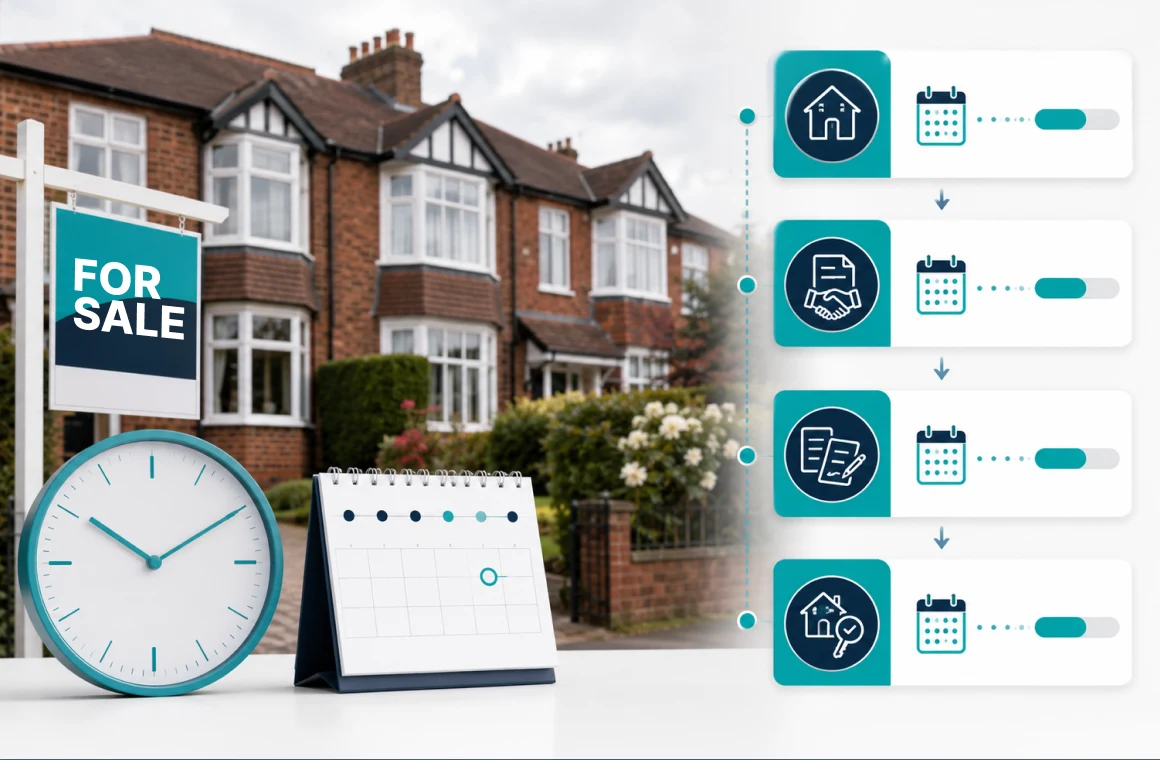
On average, it takes around 3 months (approximately 101 days) to sell a house in the UK from the first day of marketing to legal completion, according to analysis of Rightmove listing data by Online Mortgage Advisor. The full breakdown is roughly 5 to 6 weeks to find a buyer, then a further 8 to 12 weeks for conveyancing and legal completion. That means most UK sellers should plan for a 3 to 5 month process from start to finish.
But here is what nobody tells you alongside that statistic: if you are selling a £500,000 home with a traditional estate agent charging 2% commission, you owe them £10,000 on completion day. It does not matter whether your sale took 10 weeks or 10 months. The fee is the same. You pay it the moment you hand over the keys, regardless of how long the process dragged on, how many viewings fell flat, or how many buyers pulled out along the way.
That is the context this guide adds to the timeline question. Understanding how long it takes to sell a house in the UK in 2026 is genuinely useful for planning. But understanding what you are paying for that time, and whether there is a smarter way to sell, is where the real financial decision lives.
What Is the Average Time to Sell a House in the UK in 2026?
The average time to sell a house in the UK in 2026 is approximately 3 months from listing to completion, with the marketing phase alone averaging 38 to 58 days before an offer is accepted. According to Zoopla's House Price Index data, UK properties go under offer within an average of 38 days, while the complete process from first marketing to completion takes approximately 185 days, or around 25 weeks.
Different sources measure this slightly differently, which is why you'll see a range of figures quoted online. Here is how the main sources compare:
SourceAverage Days to Find a BuyerTotal Sale Time (Listing to Completion)Zoopla HPI (2026)38 days~185 days (25 weeks)HomeOwners Alliance (2026)58 days (8 weeks)Up to 5 monthsOnline Mortgage Advisor (Rightmove data analysis)Not separated101 days (just over 3 months)Pine (2026 Guide)~40 days5 to 6 monthsRightmove HPI (June 2026)60 days (current average)Not specified
The difference between sources mainly comes down to methodology. Zoopla and Rightmove measure days on portal to accepted offer. Online Mortgage Advisor measures listing to legal completion. The HomeOwners Alliance measures from first contacting an agent to completion. When your client says "the average is 3 months," that figure aligns well with the Rightmove and Online Mortgage Advisor data for the marketing-to-completion window in active markets.
What all sources agree on: the UK is one of the slowest countries in the world to sell a house. The United States completes an average sale in just over two months. Canada, France and Germany typically manage three to four months. The UK's outdated legal system and sequential conveyancing process are the primary reasons.
How Long Does Each Stage of Selling a House Take?
A UK house sale passes through four distinct stages, each with its own timeline and its own potential delays.
Stage 1: Preparation (1 to 2 weeks)
Before you go to market, you need to organise an Energy Performance Certificate (£60 to £120), gather your property documents, and arrange photography. Sellers who get this done in parallel before listing save at least a week. Skipping preparation is one of the most common reasons sales stall later in the process, when solicitors chase paperwork that should have been ready from day one.
Stage 2: Marketing and Finding a Buyer (4 to 12 weeks)
This is the most variable stage. According to Rightmove's June 2026 House Price Index, the current average time to secure a buyer in the UK is 60 days. In January 2026, it was 81 days, reflecting the slower winter market. Properties listed in spring (March to May) consistently find buyers faster.
According to HomeOwners Alliance 2026 research, homes that sell within 10 to 11 days typically achieve 100.4% of their asking price. Homes sold after one month drop to 98% of asking price. At the two to three month mark, the average falls further to 95.5%. That is a potential £22,500 gap on a £500,000 property, simply from staying on the market too long due to overpricing at the start.
Stage 3: Conveyancing (8 to 16 weeks)
Conveyancing is the legal transfer of ownership, and it is consistently the longest phase of any UK sale. It starts the moment you accept an offer and finishes at exchange and completion. During this stage, the buyer's solicitor conducts searches, reviews the contract, raises enquiries, and confirms their mortgage. Your solicitor responds, gathers replies to enquiries, and manages the transfer of title.
Around 30% of agreed sales fall through before exchange, with chain problems and buyer mortgage issues being the leading causes. Instructing a solicitor before you go to market, and having your TA6 and TA10 property information forms completed in advance, can cut this stage by four to six weeks.
Stage 4: Exchange to Completion (1 to 4 weeks)
The average gap between exchange of contracts and completion is seven days, though buyers and sellers agree the date at exchange and can negotiate a longer window. A chain-free sale can exchange and complete on the same day in some circumstances.
How Does the 3-Month Timeline Connect to Your Estate Agent Fees?
This is the angle no guide talks about, and it is worth understanding clearly before you instruct anyone.
A traditional estate agent charging 2% plus VAT on a £500,000 property earns £12,000 (including VAT). That figure is fixed as a percentage of your final sale price. It does not reduce if your sale takes longer. It does not increase if your agent works particularly hard. It is simply a percentage of the number at the bottom of your completion statement on the day you hand over the keys.
Now think about what that means across the full timeline:
Week 1: Your property goes live on Rightmove.
Week 8: A buyer makes an offer. You accept.
Week 12: Your solicitor receives the draft contract.
Week 20: Searches complete. Enquiries are raised.
Week 24: Exchange of contracts.
Week 26: Completion. Your agent receives £12,000.
Those 26 weeks are your three-to-six months average. And your agent's fee was set on the day you signed the instruction form, not based on the timeline. If it takes 6 months instead of 3, the fee is identical.
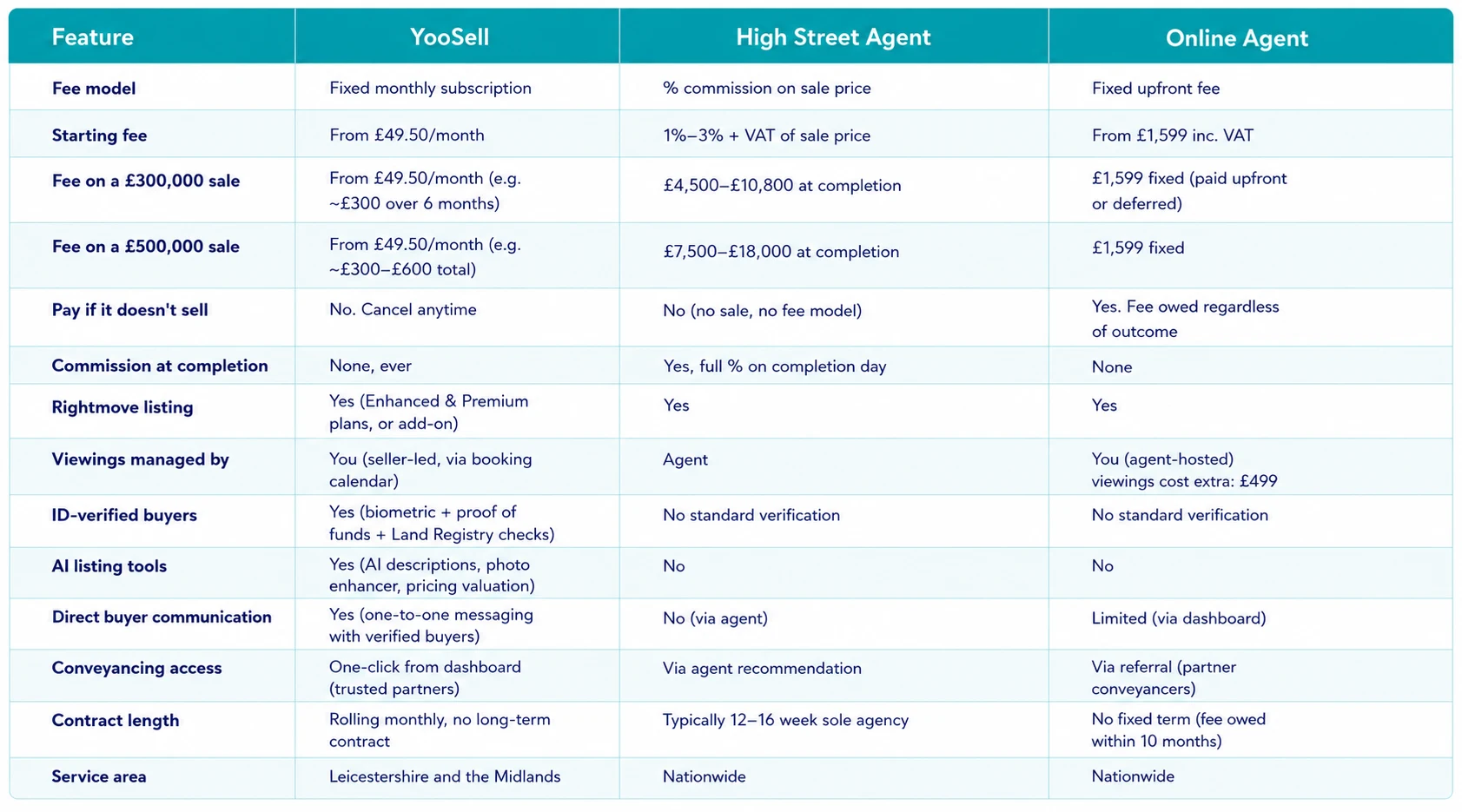
Compare that with YooSell's fixed-fee model. YooSell charges a flat monthly fee from £49.50 to list your property, including Rightmove access. You pay for the months you are on the market, not a percentage of what you sell for. On a £500,000 property:
Selling MethodFeeBased OnTraditional agent (2% + VAT)£12,000 at completionPercentage of sale priceYooSell Enhanced PlanFrom £99.50/monthFixed monthly flat fee6-month sale via YooSell~£600 totalTime on marketSaving vs. traditional agent~£11,400Entirely your money
The financial case is straightforward. On a £500,000 home, a traditional 2% commission costs you £12,000 whether the sale takes 10 weeks or 10 months. Selling through YooSell at a fixed monthly fee means your cost stays manageable regardless of timeline, and you keep the vast majority of your sale price at completion.
Use YooSell's Cost Saving Calculator to see exactly how much you would save on your specific property value.
What Factors Affect How Long It Takes to Sell a House?
Several factors consistently influence how long it takes to sell a house in the UK, and most of them are within the seller's control.
Pricing accuracy is the most powerful lever. Rightmove's June 2026 data showed that accurately priced properties took an average of 36 days to secure a buyer, compared to 127 days for those requiring a price reduction. A 91-day difference. In any chain, that delay has real consequences for everyone involved.
Property type matters significantly. According to Chancellors' analysis of Rightmove data, houses take an average of 42 days to sell, while flats average 62 days. Leasehold flats take even longer, as buyers factor in lease length concerns and management pack delays.
Location drives enormous variation:
Edinburgh: ~45 days (fastest major UK city)
Glasgow: ~47 days
Manchester: ~84 days
London average: 120 to 130 days
Inner London / South East: can exceed 200 days
Chain complexity is the most common cause of sale collapse. Approximately 30% of agreed UK sales fall through before exchange (Pine, 2026). Chain-free buyers, including first-time buyers and cash purchasers, typically complete 4 to 6 weeks faster than buyers with a property to sell.
Time of year has a consistent and measurable impact. Rightmove data shows properties listed in March secure buyers an average of 51 days from listing, compared to 80 days for November listings. Spring is the strongest selling season in the UK every year, and 2026 is no exception.
Solicitor speed varies substantially between conveyancers. Sellers who instruct before going to market and complete their property information forms upfront consistently cut 6 to 8 weeks from the conveyancing stage.
How Can You Speed Up the Sale of Your House?
You can meaningfully reduce how long it takes to sell a house in the UK by taking control of the factors within your reach. Here are the most effective steps, in priority order:
Price correctly from day one. Use HM Land Registry sold prices and Rightmove's sold prices tool to find genuine comparables within the past three to six months. Pair this with YooSell's free Valuation Calculator for a data-grounded opening price. Overpricing extends your timeline and costs you on the final price.
Instruct your solicitor before you list. Completing your TA6 and TA10 forms, gathering your title documents, planning permissions, and certificates before going to market eliminates the most common source of conveyancing delay.
Get your EPC done immediately. You cannot legally market your home without a valid EPC. Booking it before you go to market avoids a week of unnecessary delay at the start.
Use professional photography. Listings with professional photos consistently generate more viewings and faster offers. Most buyers make a shortlist from portal images before they ever book a viewing.
Target chain-free buyers. First-time buyers and cash purchasers move faster and are less likely to cause a chain collapse. If you are open to it, advertising your property as suitable for first-time buyers or explicitly welcoming cash offers can attract a faster-moving buyer pool.
Respond to enquiries within 24 hours. Buyers in a well-supplied market move on. Quick responses to viewing requests and offer-stage questions keep momentum alive and reduce the risk of buyers losing interest.
Chase your solicitor weekly. Conveyancing delays are frustrating, but sellers who stay proactively in contact with their solicitor consistently achieve faster completions than those who wait passively for updates.
Read YooSell's full property guides for practical advice on preparation, pricing, and presentation before you list.
How Long Does It Take to Sell a House Without an Estate Agent By Yoosell?
Selling your house without a traditional estate agent does not add time to the process. In many cases, it reduces the timeline because communication is more direct and decisions are faster.
The stages of a private sale are identical in length to an agent-led sale, with one exception: you manage your own enquiries and viewings rather than waiting for an agent to batch-process them. A well-prepared private seller who responds promptly to buyer enquiries and prices accurately from the start can expect the same 3 to 5 month total timeline as the UK average.
The key difference is financial. On a £500,000 property, a private seller using YooSell pays a flat monthly fee from £99.50 instead of 2% commission (£12,000). Over a 6-month sale, the total platform cost is approximately £600. The saving is approximately £11,400, and it has no effect on the timeline.
Over 90% of UK property searches start on Rightmove or Zoopla, according to Property Passport UK's 2026 analysis. YooSell's Enhanced and Premium plans include a full Rightmove listing, meaning you reach the same buyer pool as any agent-listed property without paying commission on your sale price.
See how YooSell works and browse properties currently listed on YooSell to understand what the live market looks like in your area.
YooSell vs High Street vs Online Agent: Side by Side
When Is the Best Time of Year to Sell a House in the UK?
Spring is consistently the best time of year to sell a house in the UK, with March and April generating the highest buyer demand and fastest accepted offer timelines across all major property indices.
According to Best Time to Sell data published by Ernest Brooks (2026), homes listed in February take an average of approximately 51 days to secure an accepted offer. Properties listed in November average closer to 80 days. That 29-day difference has direct financial implications for sellers with ongoing mortgage commitments, as it represents almost a full additional month of ownership costs before completion.
The Midlands and East Midlands, where YooSell operates most actively, follow the national seasonal pattern closely. Spring listings in Leicestershire and surrounding areas attract significantly stronger buyer demand than autumn or winter launches.
If you are planning a 2026 sale and missed the spring window, September and October are the next-strongest months in terms of buyer activity. The period from mid-November through to the New Year is consistently the weakest, and properties listed then almost always take longer to find a buyer.
For region-specific guidance, read YooSell's Area Guides covering the East Midlands and surrounding areas.
Conclusion
The average time to sell a house in the UK in 2026 sits at approximately 3 months from listing to legal completion, though total timelines of 5 to 6 months are common when you include preparation, conveyancing, and the occasional delay. That is the honest answer to the timeline question.
But the financial question that sits alongside it is equally important: what are you paying across that timeline, and does the payment model actually make sense?
On a £500,000 property sold through a traditional estate agent at 2% commission, you hand over £12,000 on completion day. It does not matter whether your sale took 10 weeks or 10 months. The fee is fixed as a percentage of your sale price, not tied to the service you received or the time it took. For three months of marketing and coordination, £12,000 is a significant sum. For six months of waiting, it is even harder to justify.
YooSell's fixed-fee model changes that calculation entirely. At £99.50 per month for a full Rightmove-listed sale, you are paying for what you actually use. A 3-month sale costs roughly £300. A 6-month sale costs roughly £600. Either way, you keep tens of thousands of pounds that would otherwise leave your hands on completion day.
Here is your clear next step. Use YooSell's free Valuation Calculator to find out what your property is worth in the current market. Then run your numbers through the Cost Saving Calculator to see exactly what you would save by selling at a fixed fee. When you are ready to list, register on YooSell and take control of your sale from day one, with no commission due on the day you complete.
The timeline is what it is. What you pay across it is entirely your choice.
Frequently Asked Questions
Start Selling Your Home Today!
Take control of your sale with YooSell. Get started today and explore how we can help you sell smarter, faster, and with less hassle.