What Happens If Your Buyer Pulls Out? A UK Seller's Guide
Around one in four agreed property sales in England and Wales collapsed before completion in 2026. When your buyer pulls out, understanding your legal position, what it costs you, and the fastest route to a new sale makes all the difference. This complete guide covers what to do immediately after a fall-through, how to relist effectively, and the practical steps that reduce the risk of it happening again.

George K.
George specialises in local area insights across Leicestershire and the wider Midlands. He highlights schools, transport, and neighbourhood character for relocating buyers.
Introduction: When an Agreed Sale Collapses
You accepted the offer weeks ago. Your solicitor is progressing the paperwork. You have started packing. Then the message arrives from your estate agent or the platform you are using. The buyer has pulled out.
It is one of the most frustrating things that can happen during a property sale. Months of viewings, negotiations, and legal work can disappear overnight. And in England and Wales, there is nothing to stop a buyer walking away at any point before exchange of contracts.
Sale fall-throughs are far more common than most sellers expect. Quick Move Now's quarterly tracker recorded a fall-through rate of 23.7% in the first quarter of 2026, roughly one agreed sale in four. According to research from Santander, more than 530,000 property sales fall through every year in England and Wales, costing consumers around £560 million in direct losses.
Understanding why sales collapse, what your legal position is at each stage, what it costs you, and exactly what to do next is the fastest way to recover and complete a successful sale.
If you are selling privately without an estate agent, the YooSell How It Works page explains how the full sale process works from listing to completion, including how to manage offers and progress to exchange efficiently.
How Common Are Sale Fall-Throughs in the UK?
Sale fall-throughs are a structural feature of the English and Welsh property system, not an exceptional event. The scale of the problem is significant.
The Fall-Through Rate in 2026
The government ran two consultations on home buying and selling reform in late 2025, with proposals including mandatory upfront property information, earlier binding agreements, and professionalising property agents. A roadmap is not expected to produce legislative change for some years. Until that reform materialises, sellers in England and Wales remain exposed to the risk of a buyer walking away right up to the moment of exchange.
Around 24% of agreed sales collapsed before completion in Q1 2026, according to Quick Move Now's quarterly tracker, with other measures running as high as one in three.
What a Failed Sale Costs the Seller
A collapsed sale typically costs the seller between one thousand and three thousand pounds in wasted legal and search fees. This covers solicitor time already spent on the file, searches ordered and paid for, and in some cases independent surveys or reports commissioned during the transaction. These costs are not recoverable from a buyer who withdraws before exchange.
Why Scotland Is Different
Scotland's legal framework requires solicitors to conclude binding missives, which are formal offer and acceptance letters, much earlier in the process. Once missives are concluded, walking away has real financial consequences. This is one reason fall-through rates in Scotland are lower than in England and Wales. The Scottish system is not available in England and Wales, where exchange of contracts remains the earliest legally binding commitment for both parties.
The Legal Position: What a Buyer Can and Cannot Do
Before you can respond effectively to a buyer pulling out, you need to understand precisely where you stand legally at each stage of the process.
Before Exchange of Contracts
Until contracts are formally exchanged, neither the buyer nor the seller is legally obliged to complete the sale. A buyer can withdraw at any time without penalty.
This is the defining reality of the English and Welsh property system. An accepted offer, a signed TA6 form, weeks of solicitor correspondence, and paid-for searches create no legal commitment on either side. The buyer who pulls out the day before an anticipated exchange has done nothing illegal. They owe you nothing beyond the costs already incurred, which they are not required to reimburse.
This is painful, but it is the system. Understanding it means you are not surprised by it, and you can structure your response around what is actually within your control.
After Exchange of Contracts
Once contracts are exchanged, the situation changes completely. If the buyer breaches the contract after exchange, usually by not having the funds to complete on the agreed date, the seller can issue a formal notice to complete giving the buyer ten days to proceed. If the buyer does not complete within those ten days, they lose their deposit, pay interest on the remaining property value over those ten days, and are liable for the seller's legal fees.
Exchange of contracts is therefore the critical milestone. Getting to exchange as quickly as possible after offer acceptance is the single most effective way to protect your sale against a buyer changing their mind.
The Deposit and Its Role
At exchange of contracts, the buyer pays a deposit, typically ten percent of the agreed purchase price, to the seller's solicitor. If the buyer withdraws after exchange, they lose this deposit. This financial consequence is specifically designed to deter withdrawal after the legally binding commitment has been made. Before exchange, no such deterrent exists.
Why Buyers Pull Out: The Most Common Reasons
Understanding why your buyer pulled out helps you assess what, if anything, could have been done differently and what you can do to reduce the risk with your next buyer.
Survey Problems
A buyer's survey revealing significant defects is one of the most frequent triggers for withdrawal. If a homebuyers report or full structural survey uncovers issues with the roof, damp, structural movement, or other problems the buyer did not anticipate, they may decide not to proceed, or may use the findings to request a price reduction you are not willing to accept.
What Sellers Can Do About Survey Issues
Being transparent about known defects in the TA6 Property Information Form before the survey takes place sets expectations accurately. A buyer who already knows about a repair issue will not be surprised by the survey confirming it. If you are aware of issues before listing, factoring them into your asking price removes the risk of a buyer feeling misled when the survey lands.
Mortgage Problems
A buyer who has agreed a sale but whose mortgage application is then declined by the lender, or whose lender's valuation comes in lower than the agreed purchase price, faces a practical problem that can end the transaction. A down-valuation, where the mortgage surveyor values the property lower than the agreed price, means the lender will only advance funds based on their valuation figure. If the buyer cannot fund the gap from their own resources, the sale cannot proceed at the agreed price.
Protecting Against Mortgage-Related Withdrawals
Accepting an offer only from buyers who have provided a confirmed mortgage in principle before making their offer reduces the risk of mortgage-related withdrawals significantly. On YooSell, every buyer completes financial verification including mortgage in principle confirmation before they can make an offer. This screens out buyers whose borrowing position is not already confirmed.
Chain Collapse
Around 68% of homes in the UK are in a chain, meaning a delay or issue at any stage can ripple through the entire transaction. If your buyer is also selling their own home, and their buyer pulls out, your buyer may no longer be able to proceed with their purchase of your property. The chain break is not your buyer's fault, but the effect on your sale is the same.
Change of Mind
Some buyers simply change their mind. In England and Wales, there is nothing stopping them before exchange. This can happen for any number of reasons: finding a different property they prefer, a change in personal circumstances, cold feet about committing to a major financial decision, or simply a reassessment of whether the property was right for them. A buyer who changes their mind leaves you with no recourse but to relist.
Slow Conveyancing
Solicitor delays are responsible for more failed sales than most people realise. A sale that drags on for months gives buyers more time and more opportunities to reconsider. Slow responses to enquiries, delays in ordering searches, and poor communication between solicitors all extend the period during which a buyer can lose confidence and withdraw. The risk of a buyer pulling out increases the longer the period between offer acceptance and exchange.
Undisclosed Issues Emerging During Enquiries
When the buyer's solicitor reviews the contract pack and raises enquiries, issues can emerge that were not visible from a physical inspection. Missing planning permissions, unresolved building regulations, ground rent provisions in a lease, or an unresolved boundary dispute can all prompt a buyer to reconsider. These are rarely fatal if dealt with proactively, but a seller who cannot or will not resolve them promptly can push a buyer towards withdrawal.
What to Do Immediately When Your Buyer Pulls Out
The hours and days immediately after a buyer withdraws are the most important for managing both your practical situation and your emotional response. Acting quickly and strategically gives you the best chance of recovering the sale or progressing with a new buyer in the shortest possible time.
Step One: Find Out Exactly Why
Before doing anything else, contact your solicitor or the platform managing your sale and establish precisely why the buyer has withdrawn. The reason matters.
If the buyer pulled out because of a survey finding, you need to understand what was identified and decide whether it is something you should address, disclose more clearly, or reflect in your asking price before relisting.
If the buyer pulled out because of their own financial position or a chain break, the issue is external and unlikely to affect your next buyer in the same way.
If the buyer pulled out because they simply changed their mind, that is harder to learn from but still worth understanding, particularly if there were signs of hesitation during the process.
Step Two: Confirm What You Have Lost Financially
Establish with your solicitor exactly what costs have been incurred on your side of the transaction. Solicitor time, searches ordered, and any indemnity policies arranged during the process represent real costs that you have absorbed. Knowing the precise amount helps you make clear-eyed financial decisions about relisting and pricing.
Use the free Cost Saving Calculator on YooSell to understand your net financial position including selling costs, which is a useful baseline before you decide how to proceed.
Step Three: Talk to Your Solicitor About Your Chain
If you are in a chain, your fall-through may affect your own onward purchase. Speak to your solicitor immediately about the implications. If you were due to complete a purchase of a new home on the same day as completing your sale, a buyer withdrawal may affect whether that purchase can proceed on its intended timeline. Your solicitor needs to understand the full picture to advise you on your options.
Step Four: Decide Whether to Renegotiate or Relist
In some cases, particularly where the buyer has withdrawn due to a survey finding or a price disagreement rather than a complete change of mind, there is an opportunity to renegotiate rather than relist. If the survey identified a genuine issue and the buyer has indicated they would proceed at a reduced price, consider whether that reduction is a better outcome than the time and cost of restarting the process with a new buyer.
If renegotiation is not possible or not appropriate, move to relisting as quickly as you can. Every day the property is off the market is a day of lost potential buyer activity.
How to Relist Effectively After a Fall-Through
Relisting after a failed sale is not simply a case of putting the property back on the market exactly as it was. Taking the opportunity to strengthen your listing before relisting reduces the risk of the same thing happening again.
Refresh Your Photographs and Description
If your original listing was live for several weeks or months, the listing will be associated in some buyers' minds with a prolonged time on market. Refreshing the photographs, rewriting the description, and republishing as a new listing removes the visible listing age and presents the property as fresh.
YooSell's AI photo enhancement tools and AI description generator allow you to improve your listing content quickly and without commissioning a professional shoot for each iteration.
Review Your Asking Price
If the survey identified issues that affected your buyer's willingness to proceed, reflect on whether your asking price accurately accounts for those issues. Repricing based on clear evidence is a stronger position than pricing unchanged and facing the same problem with the next buyer.
Use the free Valuation Calculator on YooSell to get an updated data-driven estimate of your property's current market value before setting your new asking price.
Address Known Issues Before Relisting
If the fall-through was caused by a specific problem, resolve it before relisting if you can. A missing building regulations certificate can be addressed with indemnity insurance. A survey defect can be dealt with through a repair and an updated quote. A lease issue can be clarified with your solicitor's help. Removing known obstacles before the next buyer's due diligence reaches them is the most effective way to prevent a repeat withdrawal.
Request a Fresh Rightmove Listing
On Rightmove, a listing that has been on the market for several months accumulates a visible time-on-market signal that buyers use to infer that something may be wrong. When you relist after a fall-through, request that your listing service publishes it as a new listing rather than reinstating the existing one. This resets the listing date and restores the initial boost that Rightmove gives new listings in its search algorithm. Visit the YooSell Rightmove page to understand how relisting works through your YooSell dashboard.
How to Reduce the Risk of a Fall-Through in the First Place
The best response to a buyer pulling out is to prevent it happening. While no system is entirely immune, sellers who take specific preparatory steps significantly reduce their fall-through risk.
Instruct Your Solicitor Before Your Listing Goes Live
Instructing your solicitor before you accept an offer means your legal team is prepared and the contract pack is ready to issue immediately when a buyer is found. The shorter the window between offer acceptance and exchange, the lower the risk of a buyer changing their mind or external events intervening.
Complete the TA6 Accurately and in Full
The TA6 Property Information Form is the disclosure document at the heart of your conveyancing process. Buyers who receive an incomplete or inaccurate TA6, or who discover during enquiries that something was not disclosed, lose confidence in the transaction. Complete it honestly, disclose everything material, and provide supporting documentation where you have it.
Gather Your Documents Before Listing
Planning permissions, building regulations certificates, FENSA certificates, Gas Safe records, and specialist guarantees are commonly requested during enquiries. Sellers who cannot provide them under pressure from the buyer's solicitor turn routine enquiries into delays, and delays into withdrawals. Having all relevant documents ready before your listing goes live means your solicitor can respond to enquiries immediately.
Verify Your Buyer's Financial Position Before Accepting
A buyer who has not confirmed their financial position when they make an offer is a higher withdrawal risk. Always ask for evidence of a mortgage in principle or proof of funds for cash buyers before accepting. On YooSell, this verification is built into the platform. Read more about how offer management and buyer qualification work in the YooSell property guides.
Choose a Responsive Conveyancer
A slow conveyancer adds weeks to the period between offer acceptance and exchange. The longer that window, the more exposed you are to events that can derail the transaction. Choose a firm with a clear communication policy, a named handler, and a track record of progressing transactions efficiently.
Protecting Yourself Through the Conveyancing Process
Once you have accepted an offer, the most effective protection against a fall-through is to progress as quickly as possible towards exchange of contracts.
Move Quickly on Every Request
When your solicitor or the buyer's solicitor asks for information, documents, or decisions, respond the same day. Every day of delay on either side adds to the overall timeline. Sellers who respond slowly to their own solicitor's requests are often the cause of the extended timelines that increase fall-through risk.
Chase Progress Actively
Do not assume that because you have instructed your solicitor and handed over documents, the process is running smoothly. Ask your solicitor for a weekly progress update. Find out whether enquiries have been raised, whether searches have returned, and whether a mortgage offer has been issued.
Flag Issues Early
If you become aware of a potential problem, whether a document you cannot locate, a concern raised by the buyer, or an enquiry you are unsure how to answer, raise it with your solicitor immediately. Issues flagged early can almost always be resolved. Issues that surface at the last minute before an anticipated exchange are much more likely to cause the transaction to collapse.
What Happens to Your Costs When a Sale Falls Through
Understanding your financial position after a fall-through helps you plan your next steps without additional uncertainty.
Legal Fees Already Incurred
Your solicitor will have spent time on your file between offer acceptance and the buyer's withdrawal. Most solicitors charge for this work even where a fixed fee quote was given for the overall transaction. Check your solicitor's terms of business at the point of instruction so you know what you would be liable for if the sale collapsed.
Search Fees
Searches are typically ordered and paid for by the buyer's solicitor. As a seller, you will not usually have paid for them directly. However, any work your own solicitor has commissioned, such as title investigations or indemnity policies, will be chargeable.
The Next Sale
When you relist and find a new buyer, you will need to restart the conveyancing process. If your solicitor already holds the title documents and has begun preparing the contract pack, the restart is faster and cheaper than beginning from scratch. Ask your solicitor whether any of the work already done can be reused with the new buyer.
Use the free Stamp Duty Calculator on YooSell to understand the buyer's SDLT liability so you are ready to answer this common buyer question promptly when your next buyer enquires.
Selling Your Home with YooSell
YooSell is a self-service home-selling platform for homeowners in Leicestershire and the Midlands. It is designed to reduce fall-through risk by building buyer verification and efficient sale management directly into the platform.
Why Verified Buyers Reduce Fall-Through Risk
Every buyer on YooSell completes multi-factor identity verification and provides proof of funds or a confirmed mortgage in principle before they can make an offer. This means every offer you receive comes from a buyer whose financial position has already been independently confirmed. The most common reason for a buyer withdrawing because they cannot fund the purchase is addressed before the offer is even made.
Direct Communication Keeps Sales Moving
When you sell through YooSell, you communicate directly with buyers through the platform. Direct conversations build trust and allow practical issues to be raised and resolved quickly, which reduces the risk of misunderstandings that can lead to a buyer losing confidence in the transaction.
Integrated Conveyancing Access
Once you accept an offer on YooSell, you can access trusted conveyancers directly from your seller dashboard. Instructing a solicitor immediately after offer acceptance, rather than spending time sourcing one, is one of the most effective ways to shorten the period between offer and exchange.
Free Tools to Support Your Sale
Mortgage Calculator: help your next buyer understand their monthly repayment position
Find a Home: browse verified listings to understand current buyer demand in your area
See the full plan options on the Pricing page.
Frequently Asked Questions
Read Our Blog
Tips, insights and expert advice to help you sell smarter.

Slough House Prices & Property Market Analysis 2026
Slough house prices averaged £334,000 in May 2026 according to ONS data, down modestly from £348,000 a year earlier. The market has softened in the short term, with flat prices falling 7.8% and transaction volumes down significantly. Average monthly rents, however, have risen to £1,572, strengthening the case for buying over renting. The Elizabeth Line puts Slough to Paddington in around 15 minutes, keeping buyer demand structurally strong. For buyers with a medium-term horizon, Slough remains one of the better-value commuter markets in the South East.

Nottingham House Prices 2026: What Buyers Should Know
Nottingham house prices in 2026 are holding steady, with the ONS recording an average of £192,000 in the city area as of June 2026. First-time buyers are paying around £177,000 on average, making Nottingham one of the more accessible cities in the East Midlands. Prices have risen 18.2% over the past five years, despite a brief flat period in 2025 and early 2026. Average monthly rents have reached £1,011, strengthening the financial case for buying over renting. West Bridgford commands the highest prices while areas like Sherwood and Bulwell offer strong value for budget-conscious buyers.
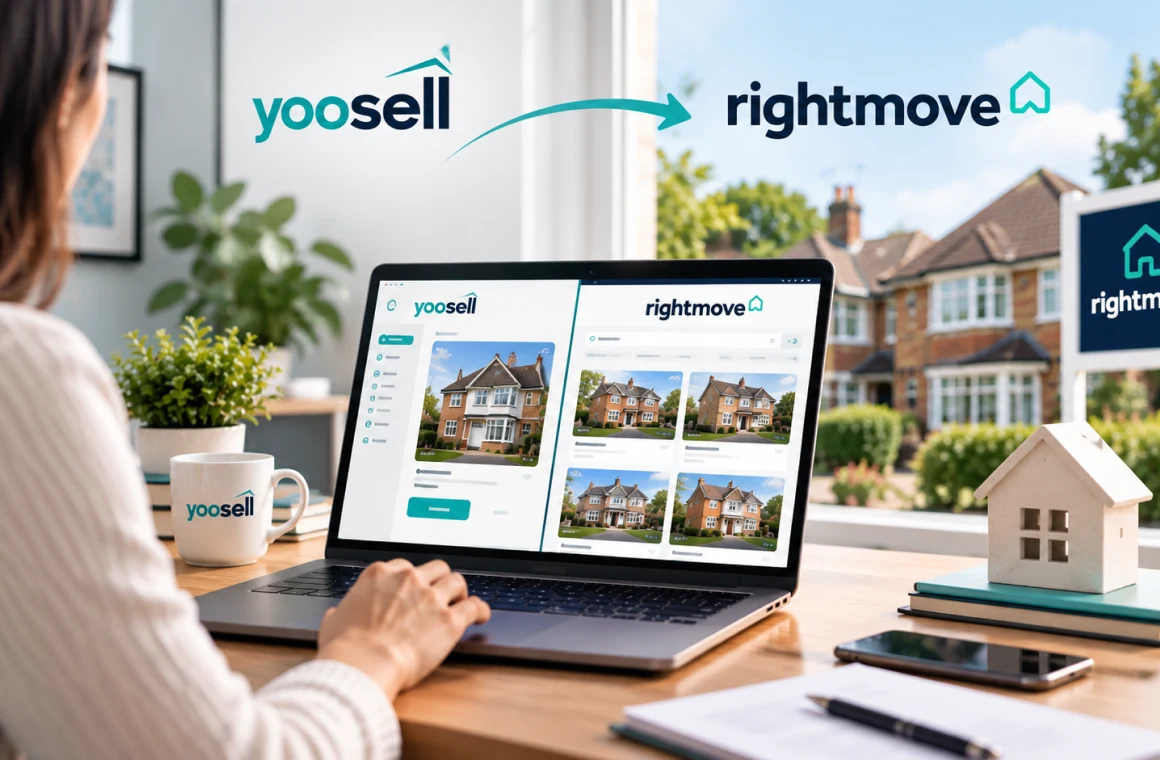
Why YooSell Is the Best Platform in the UK to List Property on Rightmove
You can list your property on Rightmove without an estate agent by using a Rightmove-registered listing platform such as YooSell. Private individuals cannot list directly on Rightmove, but portal-approved services can. YooSell includes Rightmove listing on all three plans from £29 per month, with the first month free, zero commission at completion, and ID-verified buyers as standard. Rightmove receives approximately 52.9 million monthly visits and accounts for around 70% of all time UK buyers spend on property portals, making it the most important portal for any UK seller in 2026.
Start Selling Your Home Today!
Take control of your sale with YooSell. Get started today and explore how we can help you sell smarter, faster, and with less hassle.