
Understanding Conveyancing for Sellers: The Complete UK Guide (2026)
Conveyancing is the legal process that transfers ownership of your property to the buyer, and for most sellers it is the least understood part of the sale. This complete guide explains every stage of the conveyancing process from a seller's perspective in plain English, covering costs, realistic timelines, the documents your solicitor needs, and the most practical steps you can take to keep your transaction moving in 2026.

Arthur B.
Arthur writes about conveyancing, paperwork, and the steps that keep a sale moving. His guides help buyers and sellers avoid common delays.

Introduction: What Every Seller Needs to Know About Conveyancing
Selling your home involves far more than agreeing a price and handing over the keys. Between the moment a buyer makes an offer and the day you receive the sale proceeds, a structured legal process takes place that transfers ownership of your property from your name to the buyer's. That process is called conveyancing.
For most sellers, conveyancing is the least understood part of the entire sale. Solicitors communicate in technical language, timelines feel unpredictable, and it can be difficult to know what is actually happening and what you should be doing at any given point. That uncertainty leads to anxiety, missed opportunities to speed things up, and sometimes costly mistakes.
This guide explains the complete conveyancing process from a seller's perspective in plain English. It covers every stage from accepting an offer to handing over the keys, the typical timeline at each point, the documents your solicitor needs from you, how to avoid the delays that most commonly slow transactions down, and what the legal process means in practice for sellers in England and Wales in 2026.
Whether you are selling for the first time or want to understand the process better before you list, this guide gives you the full picture.
Use the free Valuation Calculator on YooSell to understand your property's current market value as part of your preparation.
What Conveyancing Is and Why It Exists
Conveyancing is the legal process of transferring ownership of a property from one person to another. In England and Wales, property ownership is a matter of public record governed by statute and administered by HM Land Registry. You cannot simply agree a price and exchange money for keys. A formal legal procedure must be followed to ensure the transfer is valid, the seller has the legal right to sell, and the buyer receives clean, unencumbered title to the property.
What the Process Protects Against
Conveyancing exists to protect both parties. For buyers, it confirms that the person selling the property genuinely owns it, that there are no hidden legal issues that would affect their ownership after completion, and that any mortgage lender's requirements are satisfied. For sellers, it ensures the transaction is conducted lawfully, that any outstanding mortgage on the property is properly redeemed, and that the sale proceeds are transferred securely.
Without a formal legal process, buyers could unknowingly purchase a property with undisclosed boundary disputes, unresolved planning enforcement notices, title defects, or outstanding charges. Conveyancing removes those risks by requiring systematic legal due diligence before ownership can transfer.
Who Carries Out Conveyancing
Conveyancing is carried out by either a solicitor or a licensed conveyancer. Solicitors are regulated by the Solicitors Regulation Authority and can offer wider legal services if issues arise that go beyond property law. Licensed conveyancers are regulated by the Council for Licensed Conveyancers and specialise exclusively in property transactions.
As a seller, you instruct your own conveyancer. The buyer instructs theirs separately. The two firms communicate with each other throughout the process but each acts solely in their own client's interests.
England and Wales vs Scotland
This guide covers the conveyancing process in England and Wales. Scotland has a separate legal system and the property transfer process there works differently. In Scotland, the process involves solicitors making and accepting formal offers, and once accepted the transaction becomes legally binding earlier than in England and Wales. If your property is in Scotland, the stages and timelines in this guide do not apply.
How Long Conveyancing Takes in 2026
One of the first questions every seller asks is how long the process will take. The honest answer is that it varies, but understanding the realistic range and what drives it helps you plan.
The Realistic Timeline
In 2026, the average conveyancing transaction in England and Wales takes between sixteen and twenty weeks from offer acceptance to completion. Straightforward chain-free sales between motivated parties can complete in eight to ten weeks. Sales involving long chains, leasehold properties with complex management arrangements, or unusual title issues can take six months or more.
Research into current transaction data shows that timelines have lengthened over recent years. Local authority search delays remain a significant factor in many areas. Management pack delays for leasehold properties are consistently identified as one of the most common causes of extended timelines. Slow responses from any party in the chain affect everyone in it.
What Affects the Timeline Most
The factors that most consistently affect how long your sale takes are:
Chain Length
The more transactions linked to yours, the more risk there is of a delay in one affecting all the others. A chain-free buyer purchasing your property while you move into rented accommodation can complete much faster than a transaction where your buyer is selling to someone else, who is also selling, and so on. Each additional link adds both time and risk.
Property Type
Leasehold properties, typically flats, take longer to convey than freehold properties. Leasehold conveyancing requires additional enquiries about the lease, service charges, ground rent, and the management of the building. If the managing agent is slow to provide the management information pack, which typically takes two to four weeks and sometimes longer, the entire process waits.
Mortgage Complexity
Buyers with straightforward finances and standard mortgage applications move through the lender stage faster. Self-employed buyers, those with complex income structures, or purchases where the mortgage surveyor down-values the property can add weeks to the timeline.
Responsiveness of All Parties
The single most controllable factor in the timeline is how quickly everyone responds to requests. Delayed responses from the seller, the buyer, either solicitor, the mortgage lender, the local authority, or the managing agent all add time. Your responsiveness as a seller is within your control and is one of the most effective things you can do to keep the process moving.
Choosing and Instructing Your Conveyancer
The quality of your conveyancer is one of the most significant factors determining how smoothly your sale progresses. Choosing well before you have an accepted offer means you can move immediately when you need to.
When to Instruct
The best practice for sellers is to identify and instruct a conveyancer before you accept an offer, ideally while your property is still on the market. This allows your solicitor to begin gathering title documents and preparing the contract pack in advance, which shortens the period between offer acceptance and exchange.
Many sellers wait until after an offer is accepted before searching for a solicitor. This typically adds one to two unnecessary weeks to the early stages of the process and puts you behind a buyer who may already have their legal team instructed and ready.
What to Look for When Choosing a Conveyancer
When comparing conveyancers, focus on the following:
Regulation
Your conveyancer must be regulated by the Solicitors Regulation Authority (SRA) if they are a solicitor, or the Council for Licensed Conveyancers (CLC) if they are a licensed conveyancer. Membership of the Law Society's Conveyancing Quality Scheme (CQS) is an additional mark of quality. Verify regulation before instructing anyone.
Fee Structure
Look for a fixed fee quote that covers both the legal fees and the disbursements separately. Disbursements are the costs your conveyancer pays on your behalf such as Land Registry fees and bank transfer charges. An hourly billing arrangement for conveyancing is unusual and difficult to budget against. Ask for a complete written quote before instructing.
Typical conveyancing fees for a straightforward freehold sale in 2026 range from around six hundred to one thousand pounds in legal fees, with disbursements on top. Leasehold sales cost more due to the additional legal work involved.
Named Handler and Responsiveness
Ask whether you will have a named contact who handles your file throughout. Large volume conveyancing operations often pass files between team members or have cases handled by unqualified staff under supervision. A named, experienced handler who knows your file and responds promptly to communications is worth more than a marginally lower headline fee.
Referral Fee Transparency
If a platform, estate agent, or other intermediary recommends a conveyancer to you, your solicitor is legally required to disclose any referral fee paid for that recommendation. This does not automatically mean the service is poor, but it is worth knowing whether a referral fee is involved.
How to Instruct Your Conveyancer
Once you choose a conveyancer, you will receive a client care letter and terms of business setting out their fees, the scope of their work, and your obligations as their client. Read these carefully before signing. You will also be asked to provide identity documents to satisfy anti-money laundering requirements. This is a legal obligation and applies to every seller.
Through YooSell, you can access trusted conveyancers directly from your seller dashboard once an offer is accepted, which removes the need to source a solicitor independently.
Stage One: Offer Accepted and Memorandum of Sale
When you accept a buyer's offer, the first formal step in the conveyancing process is the issue of a memorandum of sale.
What the Memorandum of Sale Contains
The memorandum of sale records the agreed purchase price, the property address, the names and contact details of both parties, and the solicitors instructed on each side. It is the formal signal for both legal teams to begin work. Check it carefully as soon as it arrives. Errors in names, addresses, the purchase price, or solicitor details can cause confusion and delay if not corrected immediately.
The Legal Position Before Exchange
In England and Wales, an accepted offer is not legally binding until exchange of contracts. Both parties can withdraw from the transaction before exchange without legal penalty, though withdrawal involves practical disruption and the loss of costs already incurred. This means the period between offer acceptance and exchange is the most vulnerable stage of a sale. Working efficiently to reach exchange reduces the window during which the transaction can fall apart.
Notifying Relevant Parties
Once an offer is accepted, notify your mortgage lender that you are selling if you have an outstanding mortgage. Your solicitor will need details of your lender and mortgage account number to obtain an official redemption figure in due course.
Stage Two: Identity Checks and Anti-Money Laundering Compliance
Before any legal work can begin on your file, your conveyancer must verify your identity and carry out anti-money laundering checks. This is a statutory requirement under the Money Laundering, Terrorist Financing and Transfer of Funds Regulations 2017.
What You Need to Provide
You will need to provide two documents: one confirming your identity and one confirming your current address.
Acceptable Identity Documents
A valid passport
A full UK driving licence with photograph
A current national identity card issued by an EEA country
Acceptable Address Documents
A bank or building society statement dated within the last three months
A utility bill dated within the last three months
A council tax statement for the current year
An HMRC letter or tax document dated within the last three months
Some conveyancers carry out these checks digitally using identity verification technology, which speeds up the process considerably. If you are selling jointly, both parties must complete identity checks separately.
Why This Cannot Be Skipped
Without completed anti-money laundering checks, your conveyancer cannot legally open your file or begin work. Providing your documents on the first day you are asked for them, rather than allowing them to wait, ensures your file is opened and work begins without delay.
Stage Three: Preparing the Contract Pack
The contract pack is the collection of documents your conveyancer prepares and sends to the buyer's solicitor. It is the foundation of the entire legal transaction and the quality and completeness of it directly affects how smoothly the process runs from this point forward.
The Title Register and Title Plan
Your conveyancer will obtain official copies of the title register and title plan from HM Land Registry. These confirm that you are the registered owner of the property, identify any charges such as a mortgage registered against it, and disclose any restrictive covenants, easements, or other entries affecting the title.
Your conveyancer uses this information to prepare the draft contract. The buyer's solicitor reviews the title register carefully as part of their due diligence and may raise enquiries about any entries that require clarification.
The Draft Contract for Sale
The draft contract sets out the purchase price, the property description, the conditions of sale, and a blank space for the completion date, which is agreed later. Your conveyancer prepares it and sends it to the buyer's solicitor as part of the contract pack. The buyer's solicitor reviews it and may propose amendments before both parties sign the final agreed version at exchange.
The TA6 Property Information Form
The TA6 is one of the most important documents you will complete as a seller. It is a detailed form that asks you to disclose everything material about your property that a buyer needs to know. It covers:
Boundaries and Disputes
Which boundaries belong to your property, who is responsible for maintaining them, and whether there have been any disputes with neighbours.
Alterations and Building Works
All building works carried out during your ownership, with details of any planning permissions obtained and building regulations completion certificates. Any works without the appropriate consents must also be disclosed here.
Guarantees and Warranties
Details of any guarantees in place for works such as damp-proofing, timber treatment, double glazing installation, roofing, or structural repairs.
Environmental Matters
Whether the property has ever been affected by flooding, subsidence, or contamination and what action if any was taken.
Notices and Planning History
Any planning notices, enforcement notices, or formal communications from any authority about the property received during your ownership.
Complete the TA6 as early as possible, ideally before you list your property. Your conveyancer can review it in advance and identify any missing documents or potential issues before they become a problem during the transaction. Sellers have a legal duty to disclose all known material facts. Inaccuracies or omissions can expose you to legal claims after completion if a buyer suffers loss as a result.
The TA10 Fixtures, Fittings and Contents Form
The TA10 records what is and is not included in the sale. It works through the property room by room and asks you to confirm whether items such as kitchen appliances, fitted wardrobes, curtain poles, light fittings, carpets, garden sheds, and outdoor structures are included or excluded from the sale price.
Complete this carefully and honestly. Disputes about what was agreed to be included in a sale are a common and entirely avoidable source of friction around completion day.
Additional Documents for the Contract Pack
Your conveyancer will also need to include copies of any relevant planning permissions, building regulations completion certificates, FENSA certificates for replacement windows, Gas Safe certificates for boiler installations, and any other documents that evidence compliance with legal requirements for works carried out on the property.
Stage Four: Leasehold Conveyancing Requirements
If you are selling a leasehold property, the contract pack requires significantly more documentation than a freehold sale. Understanding what is needed and arranging it early prevents the delays that are one of the most common causes of extended timelines in leasehold transactions.
The Lease Document
Your conveyancer needs a copy of the original lease. This sets out the remaining term, the ground rent provisions, the service charge arrangements, and your obligations as a leaseholder. If you cannot locate your original lease, your conveyancer can obtain a copy from HM Land Registry.
The TA7 Leasehold Information Form
The TA7 is a leasehold-specific form that you complete alongside the TA6. It covers the service charge history, the contact details of the freeholder and managing agent, the current ground rent, and any outstanding disputes or demands involving the building.
The Management Information Pack
The management information pack, sometimes called an LPE1 pack, is provided by the freeholder or managing agent. It contains the service charge accounts, buildings insurance documents, details of any planned major works, the reserve fund balance, and confirmation of whether there are any current disputes or enforcement actions involving the building.
You are responsible as the seller for requesting this pack and paying the fee for it, which typically ranges from around two hundred to four hundred pounds. The most important thing to understand about the management pack is that it must be requested as early as possible. Managing agents typically take between two and four weeks to produce it, and some take considerably longer. Waiting until after an offer is accepted before requesting the pack adds an entirely preventable delay of several weeks.
Lease Length Considerations
If the remaining term on your lease is approaching eighty years, many mortgage lenders will apply stricter criteria. Below seventy years, the pool of mortgage buyers narrows significantly. If your lease is in this range, speak to your conveyancer before listing your property so you understand the implications and can consider whether extending the lease before sale is appropriate.
Stage Five: Property Searches
Once the contract pack has been sent to the buyer's solicitor, the buyer's side begins its due diligence. This includes ordering a set of formal property searches.
What Searches the Buyer Orders
The buyer's solicitor orders searches to reveal any registered legal, planning, or environmental issues affecting the property that would not be visible from an inspection alone. The standard searches are:
Local Authority Search
The local authority search reveals the planning history of the property, any planning obligations or enforcement notices, road adoption status, conservation area or listed building designation, and other matters registered with the council. Local authority search turnaround times vary significantly across England and Wales. Some councils return results within a few days. Others can take four to six weeks. This is one of the most common sources of delay in the early conveyancing stage and is largely outside the control of any party to the transaction.
Drainage and Water Search
This confirms whether the property is connected to the mains water and drainage network and whether any public sewer runs through the land. The presence of a public sewer in the garden can affect future development and is important information for buyers.
Environmental Search
The environmental search checks for proximity to contaminated land, former industrial sites, landfill locations, flood risk zones, and other environmental factors that could affect the property's value, insurability, or mortgageability.
Additional Searches in Specific Areas
Depending on the location of the property, additional searches may be recommended. These can include coal authority searches in former mining areas, chancel repair searches for properties near certain churches, and detailed flood risk assessments for properties near watercourses. Your conveyancer will advise on what is standard for your area.
Your Role During the Search Stage
The searches are ordered and reviewed by the buyer's solicitor. Your direct involvement is limited at this stage. However, if any search reveals an issue, your conveyancer will ask you about it. Responding promptly and providing any relevant documentation or clarification removes the risk of a straightforward issue becoming a protracted enquiry.
Stage Six: Enquiries
After reviewing the contract pack and search results, the buyer's solicitor raises formal written enquiries. These are legal questions seeking clarification or additional information about the property. The enquiries stage is typically where most of the delay occurs in a typical conveyancing transaction.
What Enquiries Cover
Enquiries can cover a wide range of subjects. Common examples include:
Requests for copies of planning permissions and building regulations certificates for works carried out
Questions about boundary features and whether they match the title plan
Requests for indemnity insurance where a title defect or missing certificate is identified
Clarification of rights of way, easements, or restrictive covenants affecting the property
Evidence of compliance with conditions attached to planning permissions
For leasehold properties, detailed questions about the lease terms, the management of the building, and the service charge history
How to Respond Effectively
Your conveyancer will pass enquiries to you where they require information only you can provide. Respond to your conveyancer the same day wherever possible. Every day a request sits unanswered is a day added to the overall transaction timeline.
If you cannot locate a document that is being requested, tell your conveyancer immediately. They can advise whether indemnity insurance is appropriate as an alternative solution. Indemnity insurance is a practical and commonly used resolution for missing planning permissions, building regulations certificates, and similar documentation issues. It involves a one-off premium and provides the buyer with financial protection against any loss arising from the specific defect.
Documents Worth Having Ready in Advance
Gathering the following documents before your listing goes live means you are prepared when enquiries arrive:
Planning permissions and building regulations completion certificates for any extensions, loft conversions, or structural alterations
FENSA or CERTASS certificates for replacement windows or doors
Gas Safe certificates for boiler or gas appliance installation
NAPIT or NICEIC electrical installation certificates
Damp-proofing, timber treatment, or roof repair guarantees
NHBC or equivalent structural warranty if the property is less than ten years old
Stage Seven: The Survey and Its Implications for Sellers
While the survey is arranged and paid for by the buyer, its findings directly affect sellers. Understanding what it involves and how to respond if it raises issues protects your sale.
Types of Survey the Buyer May Commission
The buyer's mortgage lender will instruct a basic valuation to confirm the property is worth the agreed purchase price and provides adequate security for the loan. This is not a detailed inspection and the buyer does not receive a copy.
Most buyers should also commission an independent survey. The common options are a homebuyers report, which covers the condition of accessible parts of the building and flags material issues, and a full structural survey, which is the most thorough inspection and is recommended for older, non-standard, or higher-value properties.
What Happens if the Survey Raises Issues
If the buyer's survey identifies problems, the buyer may come back to you with a request to:
Reduce the Agreed Price
A request for a price reduction based on survey findings is common. Whether to accept, negotiate, or refuse depends on the severity of the issue identified, whether it was already known to you and reflected in your asking price, and what independent quotes for any remedial work suggest.
Carry Out Remedial Work Before Completion
In some cases, buyers request that the seller addresses the issue before completion rather than reducing the price. This is more complex because it adds time and introduces questions about the quality and completion of the work.
Obtain Specialist Reports
Where a survey flags a concern that requires further investigation, such as a structural engineer's opinion on cracking or a damp survey, the buyer may ask for time to obtain a specialist report before deciding how to proceed.
How to Handle a Survey Renegotiation
The most effective approach to a survey renegotiation is to respond calmly, ask to see the relevant section of the survey report if you have not already, and obtain independent quotes for any work cited. This gives you a factual basis for your response rather than a reactive one. Agreeing to a reduction that is disproportionate to the actual cost of an issue is not in your interests. Refusing to engage with legitimate concerns risks the buyer withdrawing.
Stage Eight: Your Mortgage Redemption
If you have an outstanding mortgage on the property, your conveyancer will need to arrange for it to be redeemed on completion day.
Obtaining the Redemption Statement
Your conveyancer will contact your mortgage lender to request an official mortgage redemption statement. This sets out the exact amount required to repay the mortgage in full on a specific date, including any accrued daily interest. As the transaction approaches exchange and a completion date becomes more certain, your conveyancer will request a redemption figure calculated to that date.
Early Repayment Charges
If your mortgage is still within a fixed or tracker rate period, repaying it through the sale may trigger an early repayment charge. Check your mortgage terms before the sale proceeds to understand whether this applies and what the cost would be. Your conveyancer handles the mechanics of the redemption, but the financial decision is yours.
Porting Your Mortgage
If you are purchasing a new property at the same time and your mortgage is portable, you may be able to transfer your existing mortgage product to your new home rather than redeeming it and taking a new deal. This is a matter to discuss with your mortgage lender directly. If porting is an option, your conveyancer needs to be aware of it as it affects the financial arrangements on completion day.
Stage Nine: Exchange of Contracts
Exchange of contracts is the single most important milestone in the conveyancing process. It is the point at which the transaction becomes legally binding for both buyer and seller.
What Happens at Exchange
In the days leading up to exchange, your conveyancer will ask you to sign the final version of the contract and the transfer deed. Your conveyancer holds these signed documents. On the day of exchange, both solicitors speak by telephone, confirm that their respective clients' contracts are identical, and simultaneously exchange. The buyer's deposit, typically ten percent of the purchase price, is transferred to your solicitor. A completion date is written into the contracts.
From this moment, both parties are legally committed. You cannot withdraw from the sale without forfeiting the buyer's deposit and potentially facing a damages claim. The buyer cannot withdraw without losing their deposit and facing the same risk.
The Deposit at Exchange
The buyer pays a deposit at exchange, usually ten percent of the agreed purchase price. This is held by your solicitor until completion. If the buyer withdraws after exchange, you retain the deposit. If you withdraw after exchange, you must return the deposit and can be sued for breach of contract.
Setting the Completion Date
The completion date is agreed by all parties at or before exchange. In most cases it is set two to four weeks after exchange, though it can be agreed further ahead if the parties need more time for removal arrangements, notice periods on rented accommodation, or other practical considerations. In some transactions, particularly chain-free sales between motivated parties, exchange and completion take place on the same day.
Chain Coordination at Exchange
If your sale is part of a chain, all transactions in the chain must exchange simultaneously. Every buyer and seller in the chain, and every solicitor acting for them, must be ready to exchange on the same day. This requires all outstanding legal issues in every transaction to have been resolved. A delay in any one transaction prevents exchange for the entire chain.
Stage Ten: Pre-Completion Preparations
The period between exchange and completion is typically one to four weeks. Several practical and legal steps take place during this time.
What Your Conveyancer Does Before Completion
Your conveyancer will:
Obtain a final mortgage redemption figure from your lender calculated to the actual completion date
Prepare the completion statement setting out all the financial elements of the transaction, including the sale price, your legal fees, the mortgage redemption amount, and any other deductions
Confirm receipt of the signed transfer deed and check it is in order
Prepare to receive the buyer's completion funds and distribute them on completion day
What You Need to Do Before Completion
Your responsibilities in the pre-completion period include:
Review the Completion Statement
Your conveyancer will send you a completion statement showing exactly how the sale proceeds will be distributed. Check it carefully. The statement should show the agreed sale price, your legal fees and disbursements, the mortgage redemption amount, any agreed deductions, and the net amount you will receive.
Arrange Removal and Vacate the Property
Organise your removal well in advance. Book a removal company before exchange so your preferred date is secured. Plan to vacate the property by the time specified in your contract, typically 1pm or 2pm on completion day.
Take Meter Readings and Notify Utilities
Before you leave the property on completion day, take final meter readings for gas, electricity, and water. Notify your energy suppliers, water company, council tax office, and other relevant parties of your change of address and the date the new owner takes possession.
Maintain Buildings Insurance Until Completion
As the seller, your buildings insurance policy should remain in force until completion. From exchange of contracts, the buyer carries the risk and most buyers arrange their own insurance from exchange. However, maintaining your cover until completion is standard practice as a precaution.
Stage Eleven: Completion Day
Completion day is the day ownership formally transfers from you to the buyer. It is the day you hand over the keys and receive the sale proceeds.
What Happens on Completion Day
On completion morning, the buyer's solicitor requests the mortgage funds from the buyer's lender. Once received, the buyer's solicitor transfers the balance of the purchase price, which is the agreed total minus the deposit already paid at exchange, to your solicitor by bank transfer. This transfer is typically made through the CHAPS same-day payment system.
Once your solicitor confirms receipt of the funds, completion occurs. Your solicitor then:
Releases the keys to the buyer or their representative
Redeems your outstanding mortgage by transferring the redemption amount to your lender
Transfers the net sale proceeds to you
Sends the title documents and signed transfer deed to the buyer's solicitor
When to Expect the Keys to Be Released
Keys are typically released once completion has been confirmed, which in a straightforward transaction happens between midday and 2pm. In longer chains where multiple fund transfers must clear in sequence, completion may be later in the afternoon. Your conveyancer will keep you informed of progress throughout the day.
What to Do if Funds Are Delayed
Occasionally, the buyer's mortgage funds arrive later than expected on completion day. This is frustrating but relatively common and does not mean the sale has collapsed. Your conveyancer will communicate with you throughout the day if there are timing issues. Most delays on completion day are resolved the same day.
Stage Twelve: Post-Completion
Once you have received your proceeds and vacated the property, a small number of legal steps take place in the days following completion.
Land Registry Registration
The buyer's solicitor is responsible for registering the change of ownership with HM Land Registry. This must be done within a specified period following completion. Until registration is complete, the buyer is the legal owner by virtue of the completed transfer deed but the Land Registry record will not yet show them as the registered proprietor. This is normal and does not require any action from you.
Stamp Duty Land Tax
The buyer's solicitor submits an SDLT return to HMRC and pays any stamp duty owed within fourteen days of completion. This is the buyer's obligation, not the seller's. As the seller of a property that is your main residence, you have no SDLT liability on the transaction.
Keeping Records After Completion
Keep copies of all documents relating to your sale including the completion statement, the contract, and any certificates you provided during conveyancing. These may be needed if any question about the sale arises in the future.
Conveyancing Costs for Sellers
Understanding your costs before the transaction begins allows you to plan accurately and avoids surprises when you receive your completion statement.
Legal Fees
Your conveyancer's fees for managing the sale are the main cost. For a straightforward freehold sale, legal fees in 2026 typically range from around six hundred to one thousand pounds. Leasehold sales cost more due to the additional legal work involved, particularly around the management pack and lease enquiries.
Always ask for a written quote broken down into the legal fee and disbursements before instructing. Disbursements are the costs your conveyancer pays on your behalf such as the official copies of the title register from Land Registry, bank transfer fees for moving funds, and any additional searches or indemnity policies needed.
Mortgage Redemption Administration Fee
Some mortgage lenders charge a small administration fee for processing the redemption of your mortgage. This will be shown on your mortgage statement or in your mortgage terms.
Bank Transfer Fee
Your conveyancer will charge a fee for the electronic bank transfer of your sale proceeds to you. This is typically a modest amount and will be listed in your disbursements.
Leasehold Seller Costs
If you are selling a leasehold property, you will also pay for the management information pack, which typically costs between two hundred and four hundred pounds. If your lease needs to be extended before sale, the cost of the statutory lease extension process is an additional and separate expense.
Using the Cost Saving Calculator
If you are also saving on estate agent commission by selling through a private platform, understanding the full financial picture includes both your conveyancing costs and your selling costs. Use the free Cost Saving Calculator on YooSell to see exactly how much you save by selling without a traditional agent's commission.
Common Causes of Delay and How to Avoid Them
Understanding what most commonly slows down conveyancing allows you to take practical steps to prevent unnecessary delays in your own transaction.
Slow Responses to Solicitor Requests
The most controllable cause of delay is the time parties take to respond to their solicitors. Every unanswered request pauses the transaction. Commit to responding to every communication from your conveyancer the same day wherever possible.
Missing Certificates and Documents
Planning permissions, building regulations completion certificates, FENSA certificates, and Gas Safe records that cannot be located cause delays while alternatives such as indemnity insurance are arranged. Gathering all relevant documents before listing means you are ready when enquiries arrive.
Late Management Pack Requests for Leasehold
Waiting until after an offer is accepted to request the management pack from your managing agent adds two to four weeks of entirely preventable delay. Request it as soon as you decide to sell.
Slow Local Authority Searches
Local authority search turnaround times vary significantly by council and are outside your direct control. Your conveyancer can advise on typical turnaround times for your local authority. Some conveyancers use personal search companies as an alternative to the local authority's own search service, which can be faster in some areas.
Chain Collapse
A transaction elsewhere in your chain falling through can delay or collapse your own sale. Moving as quickly as possible towards exchange on your own transaction reduces the window during which a chain collapse can affect you. Once exchange is reached, the financial commitments made by all parties provide significant protection against further withdrawal.
Poor Conveyancer Communication
A conveyancer who does not proactively update clients, fails to chase enquiries, or lets requests sit unanswered adds unnecessary time to the process. Choose a conveyancer with a clear communication policy and a named handler who will keep you informed throughout.
Government Reforms to the Home Buying and Selling Process
The conveyancing and home buying process in England and Wales is subject to ongoing government reform in 2026. Understanding what is changing helps sellers plan ahead.
The Government's Reform Consultation
The government completed a consultation in 2025 on proposals to reform the home buying and selling process in England and Wales, with a focus on reducing transaction times, improving transparency, and reducing the number of sales that fall through before completion. Proposals under consideration include material information requirements that sellers must provide upfront before listing, measures to reduce the gap between offer acceptance and exchange, and improvements to the digital infrastructure supporting property searches.
As of 2026, the reforms are still being developed and no legislation has yet been passed implementing the full set of proposals. Sellers can follow the progress through official government channels.
Material Information Requirements
Portals including Rightmove have already moved ahead of any formal legislation by requiring sellers and their agents to provide specified material information about a property as part of every listing. This includes information about the tenure, service charges and ground rent for leasehold properties, and other matters material to a buyer's decision. Ensuring your listing and your TA6 form contain accurate and complete information from the outset aligns with both the current portal requirements and the direction of the broader reform agenda.
Selling Your Home with YooSell
YooSell is a self-service home-selling platform for sellers in Leicestershire and the Midlands that gives you full control of your sale from listing to completion, without paying traditional estate agent commission.
Why Sellers in the Midlands Choose YooSell
YooSell lets you list and manage your sale directly. You set your asking price, manage viewings through a built-in booking diary, communicate with verified buyers through the platform, and keep one hundred percent of your sale price with no commission taken at completion.
See how the full process works on the How It Works page or explore plan options on the Pricing page.
Integrated Conveyancing Access
Once you accept an offer on YooSell, you can access trusted conveyancers directly from your seller dashboard. This removes the need to source a solicitor independently and connects you with regulated professionals experienced in residential property sales.
Verified Buyers for a More Certain Sale
Every buyer on YooSell completes identity and financial verification before they can make an offer. This means you are only dealing with buyers who are confirmed as financially qualified, which reduces the risk of a sale falling through after offer acceptance.
List on Rightmove Through YooSell
You can list your property directly on Rightmove through YooSell by choosing the Enhanced or Premium plan. Rightmove is the UK's largest property portal. Visit the YooSell Rightmove page for full details on how it works.
Free Tools to Plan Your Sale and Move
Valuation Calculator: get a data-driven estimate of your property's current market value before you price your listing
Cost Saving Calculator: see exactly how much you save compared to a traditional estate agent's commission
Stamp Duty Calculator: understand the buyer's SDLT liability at the current April 2025 rates
Mortgage Calculator: plan your onward purchase
Frequently Asked Questions
Read Our Blog
Tips, insights and expert advice to help you sell smarter.

Slough House Prices & Property Market Analysis 2026
Slough house prices averaged £334,000 in May 2026 according to ONS data, down modestly from £348,000 a year earlier. The market has softened in the short term, with flat prices falling 7.8% and transaction volumes down significantly. Average monthly rents, however, have risen to £1,572, strengthening the case for buying over renting. The Elizabeth Line puts Slough to Paddington in around 15 minutes, keeping buyer demand structurally strong. For buyers with a medium-term horizon, Slough remains one of the better-value commuter markets in the South East.

Nottingham House Prices 2026: What Buyers Should Know
Nottingham house prices in 2026 are holding steady, with the ONS recording an average of £192,000 in the city area as of June 2026. First-time buyers are paying around £177,000 on average, making Nottingham one of the more accessible cities in the East Midlands. Prices have risen 18.2% over the past five years, despite a brief flat period in 2025 and early 2026. Average monthly rents have reached £1,011, strengthening the financial case for buying over renting. West Bridgford commands the highest prices while areas like Sherwood and Bulwell offer strong value for budget-conscious buyers.
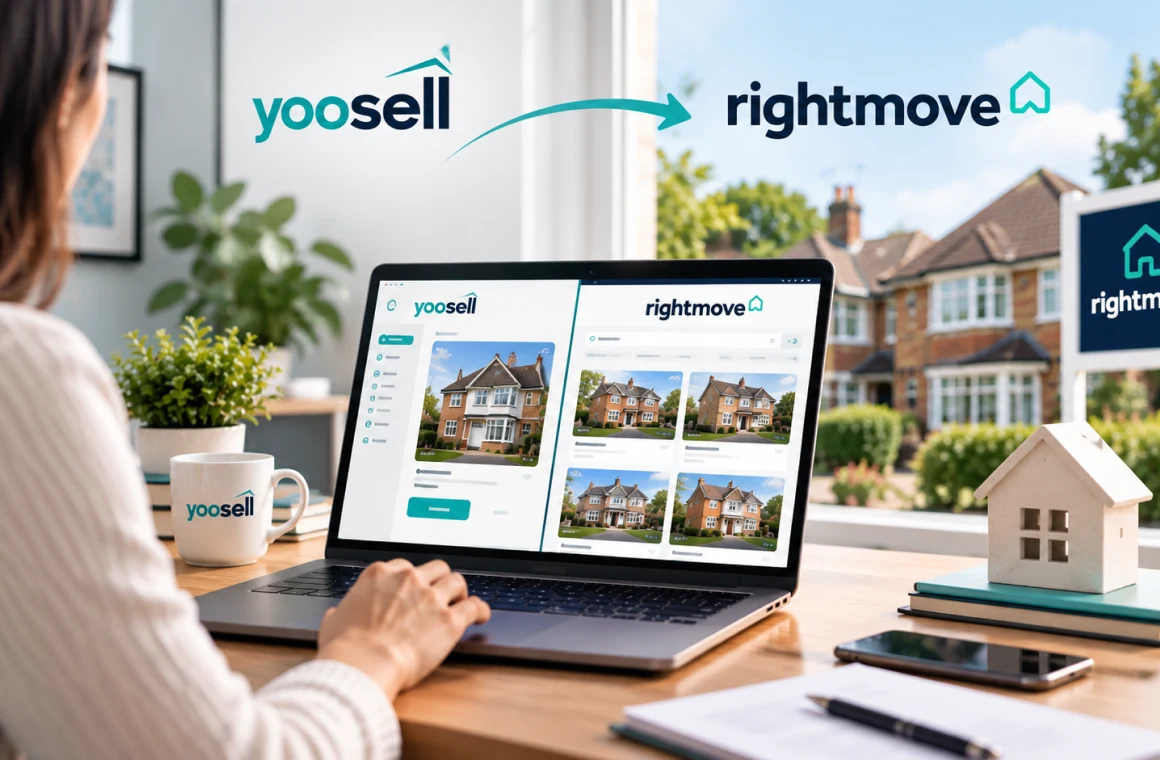
Why YooSell Is the Best Platform in the UK to List Property on Rightmove
You can list your property on Rightmove without an estate agent by using a Rightmove-registered listing platform such as YooSell. Private individuals cannot list directly on Rightmove, but portal-approved services can. YooSell includes Rightmove listing on all three plans from £29 per month, with the first month free, zero commission at completion, and ID-verified buyers as standard. Rightmove receives approximately 52.9 million monthly visits and accounts for around 70% of all time UK buyers spend on property portals, making it the most important portal for any UK seller in 2026.
Start Selling Your Home Today!
Take control of your sale with YooSell. Get started today and explore how we can help you sell smarter, faster, and with less hassle.