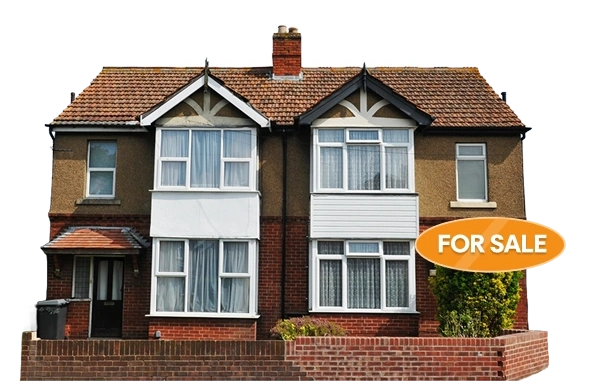
How to Sell Your House by Yourself: A Complete Step-by-Step Guide
Selling your house by yourself or privately is entirely legal, increasingly common, and can save you thousands of pounds in estate agent commission. This complete step-by-step guide covers every stage of the private sale process in England and Wales, from preparing your property and setting the right price to conducting viewings, negotiating offers, and completing the legal transfer.

Sarah M.
Sarah focuses on pricing strategy, presentation, and getting listings ready for market. She helps sellers present homes clearly without overcomplicating the process.

Selling a house Yourself, without an estate agent, is completely legal in England and Wales, and every year more UK homeowners choose to do it. Whether you call it sell your house by yourself, a private house sale, or going the "no agent" route, the process lets you control the price, the viewings, and the negotiation, and keep the commission an agent would otherwise take. This guide walks through every stage of selling a house privately, from preparing the property and pricing it correctly, right through to legal completion.
If you're ready to get started, YooSell is a self-service home-selling platform built specifically for people selling a house privately, giving you the listing tools, verified buyers, and conveyancer access you need to do it properly, without the commission.
Can You Sell a House Without an Estate Agent?
Yes, there is no legal requirement anywhere in England or Wales to use an estate agent to sell your own home. Selling your house by yourself is a legitimate, well-established route that thousands of homeowners use every year specifically to avoid paying agent commission. The only part of a sale that legally must involve a licensed professional is conveyancing: the transfer of legal ownership has to be handled by a qualified solicitor or licensed conveyancer, regardless of whether an estate agent is involved. Selling privately simply means removing the agent from the marketing and negotiation stages; the legal safeguards around the transaction itself stay exactly the same.
Why Homeowners Choose to Sell Their House Privately
Cost. Traditional estate agents typically charge 1–3% commission. On a £300,000 sale, that's £3,000–£9,000 taken directly from your proceeds at completion.
Control. You set the price, manage your own viewing diary, and decide how to respond to every offer, with no agent adding their own timeline or agenda in between.
Speed of communication. Buyers deal with you directly, which often means faster answers and fewer messages lost in translation.
Transparency. You see every enquiry and every offer as it comes in, rather than a filtered version passed on by a third party.
Selling Your House by Yourself vs Using an Estate Agent: What Actually Changes
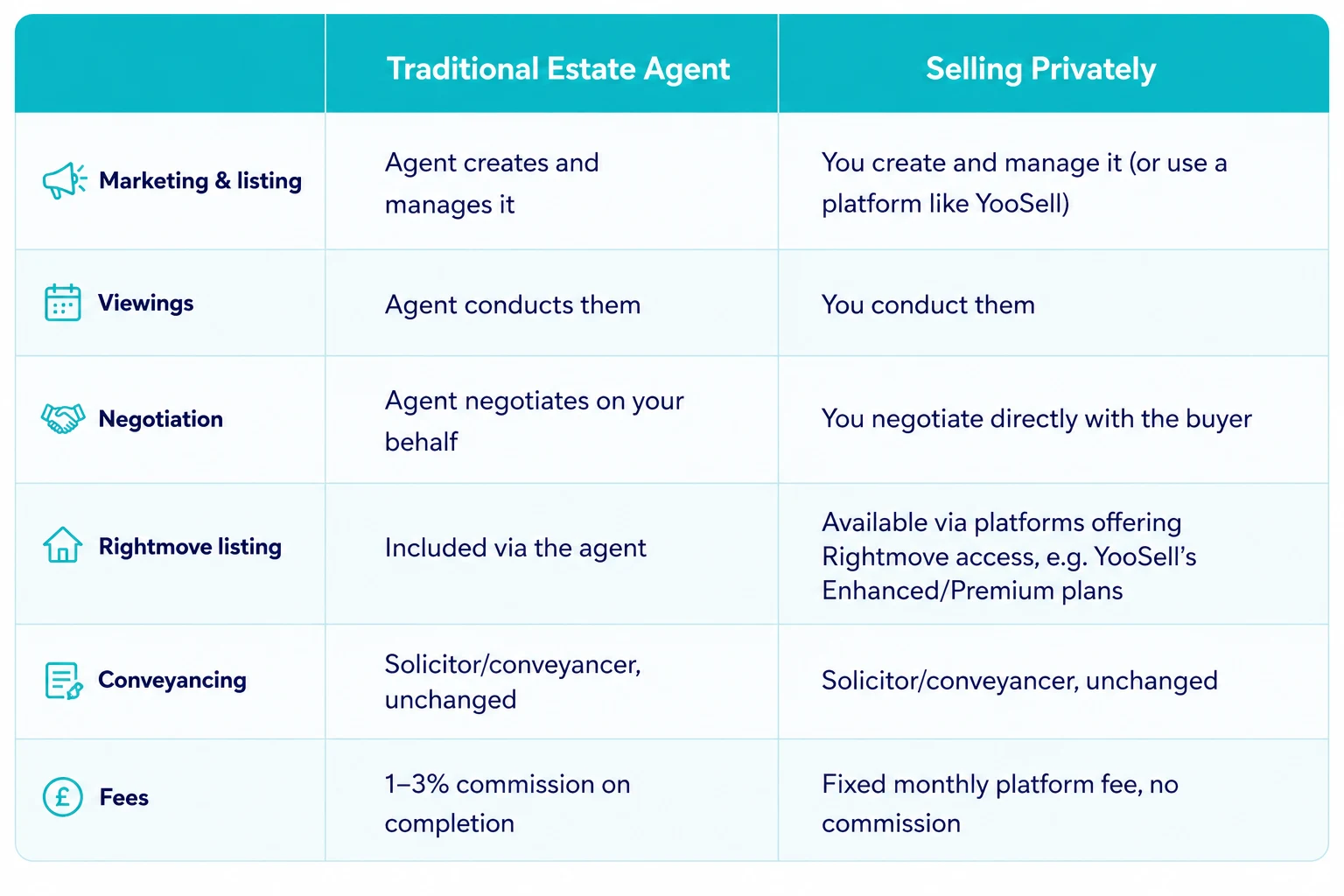
As a private seller you take on responsibility for: setting and justifying your asking price, preparing the property, arranging a valid Energy Performance Certificate (EPC), creating and publishing the listing, running viewings, negotiating and accepting offers, instructing a solicitor, and progressing the sale to completion. None of these require a professional qualification. They require organisation, responsiveness, and a clear process, which is exactly what this guide provides.
Step 1: Prepare Your Property for Sale
Presentation directly affects how buyers respond, both online and in person. Time spent preparing before you list pays off in the speed and quality of interest you get.
Declutter and Deep Clean
Go room by room and remove anything that makes a space feel smaller or busier than it needs to: bulky furniture blocking the flow of a room, personal items crowding surfaces, overfull cupboards buyers will open during a viewing. Once decluttered, clean thoroughly, paying particular attention to kitchens and bathrooms, where buyers scrutinise hardest. Clean grout, descaled taps, and fresh silicone around a bath or shower all signal a well-maintained home.
Fix the Small Stuff First
Walk the property before listing and note anything visibly in need of attention:
Cracked or peeling paint on walls, skirting, or door frames
Loose handles, stiff hinges, or doors that don't close properly
Dripping taps or slow-draining sinks
Cracked or missing tiles in kitchens and bathrooms
Leaking gutters or damaged downpipes visible from the street
Bare lawn patches or overgrown borders
None of these are individually expensive, but several small issues together make a buyer wonder what bigger problems might be hiding.
Kerb Appeal
The exterior is the first thing a buyer sees, both in person and in your listing photos. Sweep paths and driveways, clean the front door, clear weeds, trim hedges and grass, and remove bins or clutter from the frontage. A freshly painted front door is one of the cheapest, highest-impact changes you can make before photography.
Consider a Professional Deep Clean
If the property has been lived in for many years, a professional deep clean (carpets, oven interiors, extraction fans, bathrooms) is worth the modest cost relative to the impression it creates in photos and viewings.
Step 2: Get a Valid Energy Performance Certificate (EPC)
A valid EPC is a legal requirement before you can market any UK property for sale. It must be in place before your listing goes live, not after you accept an offer. Marketing without a valid EPC risks a £200 fixed penalty fine.
Check if you already have one: EPCs are valid for 10 years from the date they're lodged. Search the free government EPC register using your postcode: if your property was sold or let in the last decade, a valid certificate may already exist.
Commissioning a new one: If no valid certificate exists, book an accredited Domestic Energy Assessor. The assessment takes 30–90 minutes and typically costs £65–£120. Compare a few quotes before booking. The certificate rates your home from A (most efficient) to G, which affects how buyers perceive running costs and, for buy-to-let purchasers, whether the property meets minimum rental standards.
Step 3: Price Your Property Accurately
Getting the price right is the single biggest driver of how quickly, and how well, a private house sale goes. Price too high and the property sits unsold while buyers look elsewhere; price too low and you leave money on the table.
Research Comparable Sold Prices
Start with HM Land Registry sold price data: actual prices paid, not asking prices. Look for properties similar in type, size, bedrooms, and condition that sold within the last 6–12 months, and as close to yours as possible in location and specification. A three-bed semi on a quiet street isn't directly comparable to one on a main road, even in the same postcode.
Use an Online Valuation Tool
Valuation tools combine Land Registry data with local market activity to give you an estimated range. They're a useful starting point but can't account for your property's condition or improvements. Use the free Valuation Calculator on YooSell as part of your research when working out how to value a house you're planning to selling your house by yourself.
Adjust for Your Property's Specifics
Extensions, loft conversions, or kitchen/bathroom renovations
Condition relative to similar properties nearby
Garden size versus the street average
Parking provision, especially where it's scarce locally
Freehold vs leasehold, and remaining lease length if applicable
Any restrictive covenants or known issues affecting value
Asking Price vs Sale Price
Most properties sell slightly below the asking price, so build in a small margin without pricing so far above market value that buyers disengage entirely. An overpriced listing gets an initial flurry of clicks and then goes quiet, and a property that lingers on the market starts to look like something is wrong with it.
Step 4: Create a Professional Listing
Most buyers in the UK start their search online, so your listing has to earn a viewing against every other option a buyer is comparing it to.
Photography
Photography is the single most impactful element of any listing.
Shoot in daylight, with curtains and blinds fully open
Turn on every light, including under-cabinet lighting in kitchens
Clear all surfaces before photographing kitchens and bathrooms
Remove personal items from prominent positions
Shoot each room from the corner that makes it look largest
Include the front exterior, rear garden, and any standout features
At a higher price point, professional photography is worth the cost. YooSell also includes AI photo enhancement tools that improve your own images without paying for a shoot.
Floor Plans
A floor plan is now expected, not optional: buyers who can see a layout in advance arrive at viewings already knowing whether it suits them. Many buyers skip listings without one entirely.
Writing Your Property Description
Cover the key rooms and dimensions, outdoor space, notable features, and location: nearby amenities, schools, transport. Write in plain English, skip the agent clichés, and mention what photos can't show: a south-facing garden, a recently replaced boiler, a particularly quiet road. YooSell's AI writing tools can generate a strong first draft from the details you enter.
Publishing the Listing
Once your EPC, photos, floor plan, and description are ready, publish. Through YooSell, you can list directly on the platform and, on the Enhanced or Premium plan, get your listing on Rightmove, the UK's largest property portal.
Step 5: Market Your Property
Rightmove and Portals
The majority of UK property searches start on Rightmove, which makes portal visibility the single biggest lever in reaching buyers when selling a house privately. See the YooSell Rightmove page for how private sellers get listed there without an agent.
Social Media and Local Groups
Local Facebook community groups reach buyers actively searching a specific town or neighbourhood who may not yet have found your listing on a portal.
Word of Mouth
Telling friends, family, neighbours, and colleagues costs nothing and occasionally surfaces a buyer looking for exactly your street.
Step 6: Conduct Viewings
Before Each Viewing
Return the property to the same standard as your listing photos: curtains open, lights on in darker rooms, a comfortable temperature, pets removed or contained. For evening viewings, make sure every room feels warm and welcoming rather than dim.
Running the Viewing
As the seller, you know the property and the area better than any agent ever could. Use that. Let buyers move at their own pace rather than rushing them room to room, and be ready to answer questions honestly without becoming defensive about any concern they raise. Cover:
Improvements you've made and when
Approximate running costs
The neighbourhood, amenities, schools, and transport links
Your reason for selling, if asked
Under the Consumer Protection from Unfair Trading Regulations, you're legally required to disclose known material facts that could affect a buyer's decision. Misrepresenting the property, by act or omission, can expose you to legal action after completion.
After the Viewing
Follow up for feedback. It signals responsiveness and tells you whether pricing or presentation needs adjusting if the same concern comes up more than once.
Step 7: Handle Offers and Negotiate
Assessing an Offer
Weigh the amount against your bottom line, but also weigh the buyer: are they a cash buyer or mortgage-dependent, chain-free or in a chain, and how quickly do they want to complete? A slightly lower offer from a chain-free buyer often carries less risk than a higher offer from someone several links deep in a chain.
Responding
You can accept, reject, or counter. A counter-offer is usually the most productive response to a below-target offer: it keeps the conversation moving while making your position clear. Give a specific figure and a reasonable deadline, typically 24–48 hours.
Accepting
Confirm any accepted offer in writing. In England and Wales, an offer isn't legally binding until exchange of contracts. Either side can still withdraw before then, which is why moving briskly toward exchange matters. A memorandum of sale is then issued, recording the price and both parties' solicitors, and conveyancing begins on both sides.
Step 8: Instruct a Solicitor
Conveyancing (the legal transfer of ownership) must be handled by a qualified solicitor or licensed conveyancer. This is the one part of selling a house privately that can't be self-managed.
Instruct early. Ideally before you've even accepted an offer, so title documents and paperwork are ready in advance and exchange happens faster.
What your solicitor does: identity and anti-money-laundering checks, obtaining title documents from HM Land Registry, preparing the contract pack (TA6 property information form, TA10 fixtures form), responding to the buyer's solicitor's enquiries, obtaining your mortgage redemption figure, preparing the transfer deed, and managing exchange and completion. Through YooSell you can access trusted conveyancers directly from your seller dashboard.
Complete the TA6 thoroughly. This covers boundaries, disputes, building works, and guarantees. Sellers have a legal duty to disclose known material facts; inaccuracies can expose you to claims after completion. Gather in advance, where you have them: planning permissions and building regs certificates, FENSA/CERTASS certificates for windows and doors, Gas Safe certificates, electrical (NICEIC) reports, damp/timber/structural guarantees, and, for leasehold properties, the lease, service charge demands, and management company details.
Step 9: Progress Through Conveyancing to Exchange
Between offer acceptance and exchange, the buyer's solicitor orders local authority, drainage, and environmental searches; enquiries are raised and answered; the buyer's mortgage offer is finalised; and both parties sign the contract and transfer deed before a completion date is agreed.
Stay responsive. Slow seller responses are one of the most common reasons a private sale drags on. Answer every request for a document or signature the same day where you can, and flag missing paperwork (e.g. a building regs certificate) to your solicitor immediately so they can advise on indemnity insurance if needed.
Exchange of contracts is the point the sale becomes legally binding for both sides. The buyer pays a deposit (typically 10%), and a fixed completion date is written into the contract.
Step 10: Complete the Sale
On completion day, the buyer's solicitor transfers the balance to your solicitor. Once confirmed, your solicitor releases the keys, redeems your existing mortgage if applicable, transfers your net proceeds, and sends the title documents to the buyer's side. You must vacate by the time stated in the contract (typically 1–2pm), so plan removals in advance and take final meter readings before you go. Afterwards, your solicitor registers the change of ownership with HM Land Registry. Keep copies of the completion statement, contract, and any certificates in case a question arises later.
What Does It Cost to Sell Your House by Yourself?
Conveyancing fees: a few hundred to around £1,000 for a straightforward freehold sale; leasehold sales cost more. Get a full written quote broken into fees and disbursements.
EPC: £65–£120 if you need a new one.
Photography: professional shoots from under £200 in most areas, or use YooSell's AI photo enhancement on your own images at no extra cost.
Listing platform fee: a fixed monthly fee rather than a percentage commission, see YooSell Pricing.
Use the free Cost Saving Calculator on YooSell to see exactly how much selling privately saves versus a traditional agent's commission on your specific property value.
Common Mistakes When Selling a House Privately
Overpricing based on emotional attachment or a target moving budget rather than comparable evidence, the most common private-seller mistake.
Marketing without a valid EPC, illegal, and it can delay conveyancing if raised by the buyer's solicitor.
Poor-quality photography taken without preparation in dark or cluttered rooms.
Slow responses to enquiries or viewing requests, private selling means active, daily management.
Not vetting buyers before accepting an offer, always ask for a mortgage agreement in principle or proof of funds. YooSell verifies every buyer's identity and finances automatically before they can make an offer.
Leaving the solicitor until after acceptance, instruct as early as possible, ideally before you list.
Selling Your Home Privately with YooSell
YooSell is a self-service home-selling platform built for homeowners across Leicestershire and the Midlands who want to sell a house privately without paying estate agent commission.
No commission, ever, a fixed monthly fee from £49.50, instead of the 1–3% commission a traditional agent takes (£2,500–£7,500 on a £250,000 sale).
Verified buyers only, every buyer completes identity and proof-of-funds checks before making an offer.
Rightmove listing included on the Enhanced and Premium plans, see the YooSell Rightmove page.
Integrated conveyancer access directly from your seller dashboard once an offer is accepted.
Free tools to support your sale:
Valuation Calculator, estimate your property's current market value
Cost Saving Calculator, see your saving versus a traditional agent
Mortgage Calculator, estimate repayments on your onward purchase
Stamp Duty Calculator, work out the buyer's SDLT liability
See the How It Works page or explore Pricing to get started selling your house yourself, today.
Related Guides
Frequently Asked Questions
Read Our Blog
Tips, insights and expert advice to help you sell smarter.
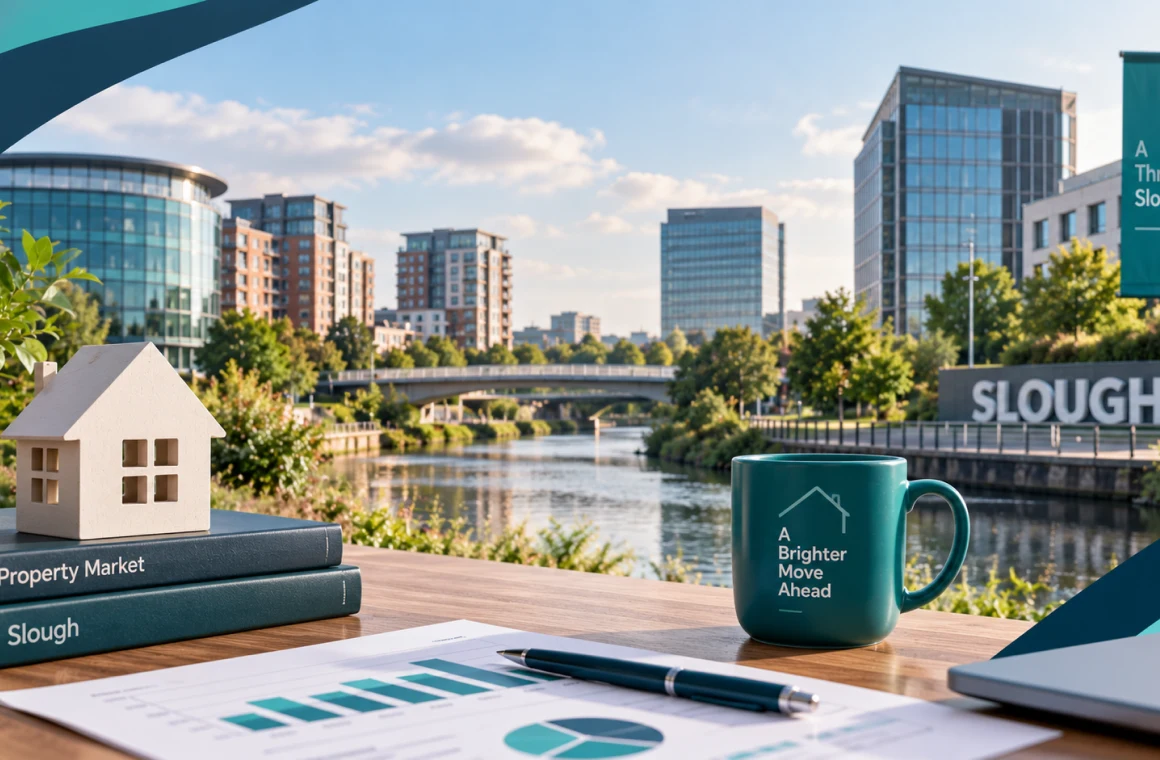
Slough House Prices & Property Market Analysis 2026
Slough house prices averaged £334,000 in May 2026 according to ONS data, down modestly from £348,000 a year earlier. The market has softened in the short term, with flat prices falling 7.8% and transaction volumes down significantly. Average monthly rents, however, have risen to £1,572, strengthening the case for buying over renting. The Elizabeth Line puts Slough to Paddington in around 15 minutes, keeping buyer demand structurally strong. For buyers with a medium-term horizon, Slough remains one of the better-value commuter markets in the South East.

Nottingham House Prices 2026: What Buyers Should Know
Nottingham house prices in 2026 are holding steady, with the ONS recording an average of £192,000 in the city area as of June 2026. First-time buyers are paying around £177,000 on average, making Nottingham one of the more accessible cities in the East Midlands. Prices have risen 18.2% over the past five years, despite a brief flat period in 2025 and early 2026. Average monthly rents have reached £1,011, strengthening the financial case for buying over renting. West Bridgford commands the highest prices while areas like Sherwood and Bulwell offer strong value for budget-conscious buyers.
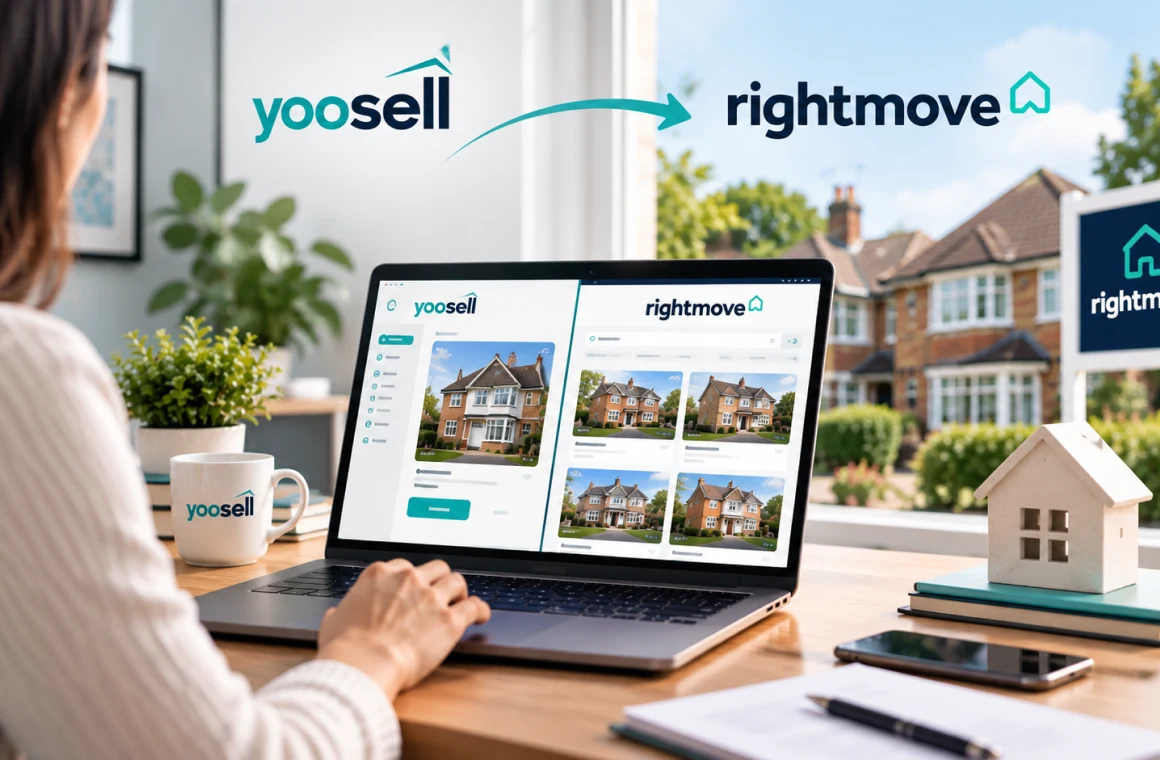
Why YooSell Is the Best Platform in the UK to List Property on Rightmove
You can list your property on Rightmove without an estate agent by using a Rightmove-registered listing platform such as YooSell. Private individuals cannot list directly on Rightmove, but portal-approved services can. YooSell includes Rightmove listing on all three plans from £29 per month, with the first month free, zero commission at completion, and ID-verified buyers as standard. Rightmove receives approximately 52.9 million monthly visits and accounts for around 70% of all time UK buyers spend on property portals, making it the most important portal for any UK seller in 2026.
Start Selling Your Home Today!
Take control of your sale with YooSell. Get started today and explore how we can help you sell smarter, faster, and with less hassle.