How Long Does It Take to Buy a Home in the UK?
Buying a home in the UK takes longer than most people expect, with the full process often running between four and six months. This guide breaks down every stage from mortgage in principle to completion, explains what causes delays, and gives practical advice on how to keep your purchase moving as quickly as possible.

Elizabeth C.
Elizabeth covers costs, timelines, and what to expect at each stage of a home sale. She keeps explanations practical for first-time and experienced sellers alike.
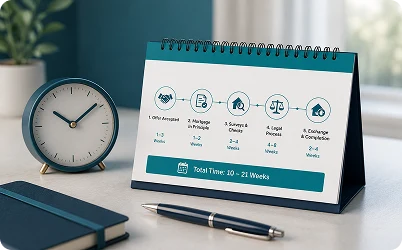
Buying a home in the UK takes longer than most people expect. From the moment you start searching to the day you collect your keys, the full process commonly runs between four and six months. In some cases, particularly where chains are involved or complications arise during conveyancing, it can stretch to eight months or beyond.
Understanding what happens at each stage, how long each part typically takes, and what causes delays gives you a significant advantage. You can plan your finances more accurately, manage your expectations, and take practical steps to keep things moving when they start to slow down.
This guide breaks the home-buying process into each key stage, explains the realistic timeframes involved, and covers the factors most likely to affect your timeline.
The UK Home Buying Timeline at a Glance
The table below summarises the key stages, their typical durations, and the main actions involved at each point. The full guide then explains each stage in detail.
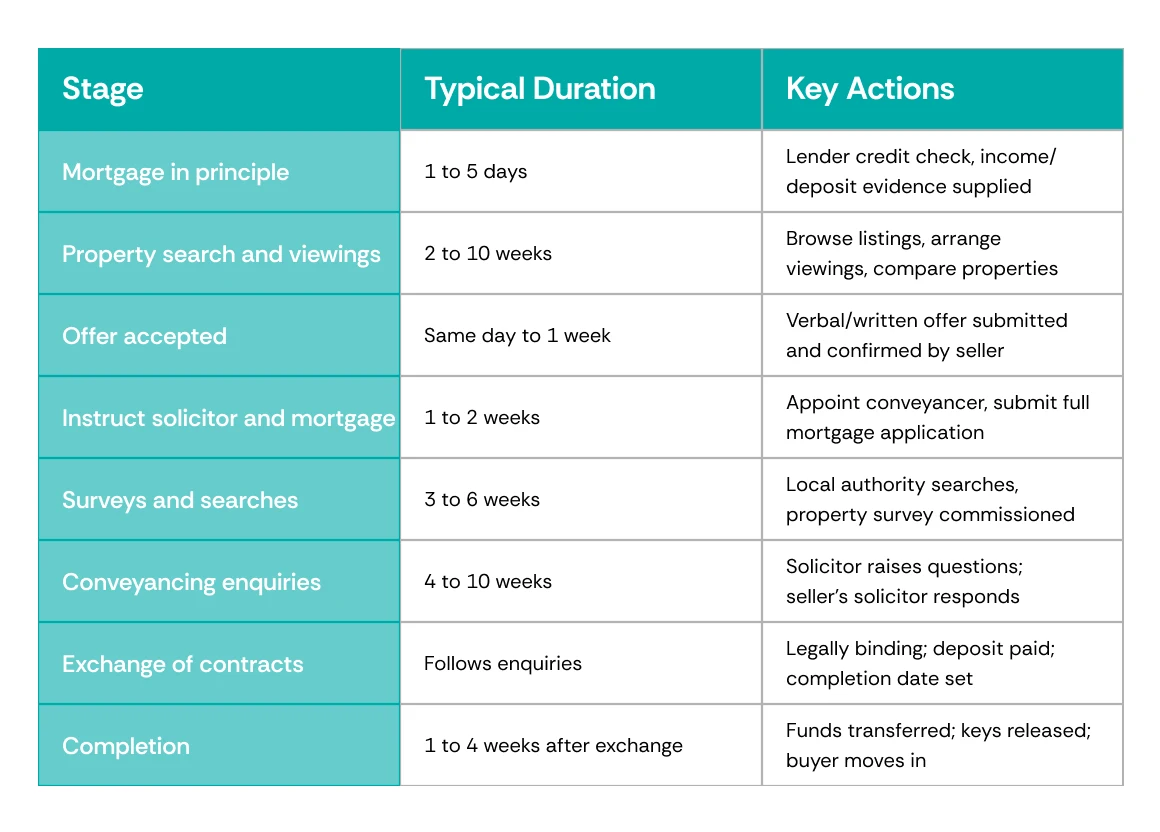
Timelines vary. A straightforward chain-free purchase between motivated parties can complete in as little as eight weeks from offer acceptance. A purchase with a long chain, a complex survey, or a slow local authority search can take considerably longer.
What Affects How Long It Takes to Buy a Home
No two property purchases follow an identical timeline. Several factors consistently have the biggest impact on how fast or slow the process moves.
Whether You Are in a Chain
A property chain is where multiple buyers and sellers are linked. Your purchase depends on your seller completing their onward purchase, which may in turn depend on another transaction, and so on. A chain of four or five properties is common, and if any one of those transactions stalls or collapses, it can freeze every other sale in the chain.
Chain-free purchases, where a seller has no onward property to buy or a buyer has nothing to sell, consistently complete faster. If speed is a priority, properties listed as chain-free are worth seeking out.
The Type of Property
Leasehold properties, such as flats and some houses, generally take longer to convey than freehold properties. Leasehold conveyancing involves additional checks on the lease itself, service charges, ground rent, and the management company's accounts. These enquiries add time even when everything proceeds smoothly.
New-build properties follow a different timeline entirely. Because the property does not yet exist or is in the process of being built, exchange often happens months before completion. Delays in construction can push the completion date back with little warning.
Mortgage Complexity
A buyer with a large deposit, stable employment, and straightforward finances will move through the mortgage process faster than someone who is self-employed, has recently changed jobs, or is buying with a complex ownership structure. Lenders require a formal valuation of the property before issuing a mortgage offer, and this adds time on top of the standard credit assessment.
The Responsiveness of All Parties
Delays caused by slow responses to solicitor enquiries are among the most common reasons property purchases take longer than necessary. This applies to buyers, sellers, their respective solicitors, mortgage lenders, and local authorities. The more quickly and completely everyone responds to requests for information, the smoother the process runs.
Local Authority Search Turnaround Times
Local authority searches are a mandatory part of the conveyancing process. They reveal planning history, road adoption, environmental issues, and other matters that may affect the property. There are over 340 local authorities across England and Wales, and they all process searches at different speeds. Some return results in a matter of days. Others have been known to take more than five weeks. This is a factor outside your direct control, though choosing a conveyancer who orders searches promptly and monitors them closely can reduce the risk of unnecessary delays.
The Home Buying Process Stage by Stage
Below is a detailed breakdown of each stage of the home buying process in England and Wales, with realistic timeframes for each.
Getting a Mortgage in Principle
Before you start viewing properties seriously, most sellers and estate agents expect you to have a mortgage in principle, also called an agreement in principle or decision in principle. This is a conditional indication from a lender that they are willing to lend you up to a certain amount based on a preliminary assessment of your finances.
Getting a mortgage in principle typically takes between one and five working days. Some lenders offer instant decisions online, while others require documents to be reviewed manually. Having one ready before you start viewing puts you in a stronger position when making an offer.
What You Will Need
• Proof of identity and address
• Three to six months of bank statements
• Payslips or two to three years of accounts if self-employed
• Details of any existing debts or financial commitments
• Evidence of your deposit
Property Search and Viewings
The time it takes to find the right property varies enormously. Some buyers find their home within weeks. Others search for months before finding something that suits their needs, budget, and location.
Using the YooSell property search allows you to browse verified listings directly from sellers, with detailed descriptions, enhanced photos, and floor plans included. Booking a viewing is handled directly through the platform, removing delays caused by intermediaries.
When browsing, setting up alerts for your preferred area, price range, and property type means you are notified as soon as matching homes come to market, reducing the time spent searching manually.
Making an Offer and Having It Accepted
Once you have found a property you want to buy, you submit an offer. This can be done verbally or in writing. In England and Wales, an accepted offer is not legally binding until contracts are exchanged, so either party can withdraw before that point without financial penalty, though this can cause significant disruption.
The time between making an offer and receiving a decision from the seller is usually short. Motivated sellers respond within a day or two. In competitive markets, sellers may take a little longer if they are weighing up multiple offers. Once accepted, you should receive written confirmation promptly.
Instructing a Solicitor and Applying for Your Mortgage
As soon as an offer is accepted, two things should happen simultaneously: you should instruct a conveyancing solicitor and submit your full mortgage application.
Choosing a solicitor before your offer is accepted means you can move quickly. Many buyers wait until after acceptance before searching for a conveyancer, which can add one to two weeks to the process unnecessarily.
A full mortgage application typically takes between two and four weeks to be assessed and approved. During this time, the lender will instruct an independent valuation of the property to confirm it is worth the amount being borrowed.
If you are still working out your borrowing capacity or monthly repayments, the free Mortgage Calculator on YooSell lets you estimate monthly payments based on your loan amount, interest rate, and term.
Property Surveys
A mortgage lender carries out a basic valuation of the property. This is for their benefit, not yours. It only confirms the property is worth the purchase price and flags major structural concerns that might affect security for the loan. It is not a detailed inspection.
Most buyers should consider commissioning an independent survey. The main options are a homebuyers report, which is a mid-level inspection, and a full structural survey, which is the most thorough option and recommended for older or non-standard properties.
Surveys typically take between one and two weeks to arrange and complete. If the survey reveals issues, further investigations or renegotiations can add additional weeks to the process.
Common Survey Findings That Cause Delays
• Damp or penetrating moisture
• Roof condition or damage
• Structural movement or subsidence concerns
• Electrical system age or safety issues
• Japanese knotweed or invasive vegetation
If issues are identified, you have several options: renegotiate the price, ask the seller to carry out remedial work before completion, seek specialist reports to quantify the cost, or withdraw from the purchase. All of these add time to the process.
The Conveyancing Process
Conveyancing is the legal process of transferring ownership of a property from one person to another. It begins after offer acceptance and runs through to exchange of contracts. This stage accounts for the majority of the total time involved in buying a home.
What Happens During Conveyancing
• Your solicitor requests the draft contract pack from the seller's solicitor
• Local authority, drainage, and environmental searches are ordered
• Your solicitor raises enquiries about the property based on the contract pack and search results
• The seller's solicitor responds to those enquiries
• Your mortgage offer is received and reviewed
• Your solicitor reports to you on all findings and seeks your approval to proceed
• A completion date is agreed by all parties
• Contracts are exchanged
The conveyancing stage typically takes between twelve and sixteen weeks, though straightforward chain-free purchases can sometimes complete in as little as eight. Where chains are long or local authority searches are slow, this stage can stretch to twenty weeks or more.
Exchange of Contracts
Exchange of contracts is the point at which the transaction becomes legally binding for both buyer and seller. Up until exchange, either party can withdraw without legal consequences, though this is disruptive and can involve losing costs already incurred such as survey fees.
At exchange, the buyer pays a deposit, typically ten percent of the purchase price, directly to the seller's solicitor. A completion date is set at this point. If the buyer pulls out after exchange, they lose their deposit. If the seller pulls out, they can be sued for breach of contract.
The period between exchange and completion is usually one to four weeks, though it can be longer if the parties have agreed a specific date further ahead to align with school terms, notice periods, or other circumstances.
Completion
Completion is the final stage. The balance of the purchase price, minus the deposit already paid at exchange, is transferred by your solicitor to the seller's solicitor. Once the funds are received and confirmed, the keys are released. You are now the legal owner of the property.
Completion typically happens on a weekday morning, with the buyer able to access the property from midday onwards once funds have cleared. On the same day, stamp duty must be accounted for, and your solicitor will register the change of ownership with HM Land Registry on your behalf.
To understand your stamp duty liability in advance, use the free Stamp Duty Calculator on YooSell which covers all buyer types and the April 2025 rates.
Realistic Timeline Scenarios
Rather than a single average, it helps to understand how the timeline differs depending on your circumstances.
Fastest Possible Purchase
A cash buyer purchasing a chain-free property from a motivated seller, instructing a proactive conveyancer, and with searches returned quickly, can complete in as little as four to six weeks from offer acceptance. This is the exception rather than the norm.
Typical First-Time Buyer Purchase
A first-time buyer using a mortgage, purchasing in a short chain, will typically take three to five months from offer acceptance to completion. The mortgage application, survey, and conveyancing process all need to run without significant complications for this to be achieved.
Longer Purchase with a Chain
A buyer who is also selling their existing home, and whose seller is also buying elsewhere, can expect the total process to take five to eight months. Each additional link in the chain brings additional risk of delay, and the slowest transaction in the chain dictates the pace for everyone.
New Build Properties
Buying a new build off-plan can involve exchanging contracts months before the property is ready. The developer sets a target completion date, but construction delays can push this back. Buyers in this position need to factor in the possibility of a gap between exchanging contracts and moving in, which has implications for temporary accommodation and mortgage offer validity.
How to Speed Up Your Home Purchase
While some delays are beyond your control, there is a great deal you can do to avoid unnecessary hold-ups.
Get Your Mortgage in Principle Early
Having a mortgage in principle in place before you start viewing means you are ready to move immediately when you find the right property. Sellers are more likely to accept offers from buyers who can demonstrate they are financially ready to proceed.
Choose a Responsive Conveyancer
The quality and responsiveness of your conveyancer is one of the biggest factors within your control. A firm that manages a high volume of cases without adequate staffing may take days to respond to routine enquiries. Ask prospective conveyancers about their average completion times and how they communicate with clients throughout the process.
Respond Quickly to Every Request
Every time your solicitor, lender, or surveyor asks you for information or a decision, respond as quickly and completely as you can. Delays caused by slow responses from the buyer or seller are among the most common reasons purchases take longer than they need to.
Order Your Survey Promptly
As soon as your offer is accepted, arrange your survey. Do not wait for the mortgage valuation to come back first. Running the survey and mortgage application in parallel saves time.
Look for Chain-Free Properties
If speed is a priority, filter your property search to include chain-free listings where possible. A seller who has already moved into rented accommodation or is selling an empty property has no onward purchase to coordinate, which removes one of the most common sources of delay.
Keep Communication Open with Your Seller
Direct communication between buyer and seller, handled through a secure platform or via your respective solicitors, helps build trust and allows practical issues to be resolved more quickly. Being responsive and professional throughout encourages your seller to do the same.
How the Timeline Differs in Scotland
The property buying process in Scotland works differently from England and Wales. The Scottish system involves a formal process of submitting offers through solicitors, and once an offer is accepted, both parties are legally bound by a contract called the missives. This makes the Scottish system less vulnerable to gazumping and late withdrawals.
In Scotland, the offer is made after a survey has already been carried out, because properties are marketed with a Home Report that includes a structural survey. This front-loads some of the due diligence that happens later in the English process. The overall timeline from offer to completion in Scotland typically runs between six and ten weeks, though it can be shorter for straightforward transactions.
Buying and Selling Your Home with YooSell
If you are selling your current home to buy a new one, the speed and certainty of your sale directly affects your position as a buyer. A sale that is progressing smoothly gives you more confidence to commit to a purchase and move towards exchange with fewer concerns about your chain.
Why Sellers Choose YooSell
YooSell is designed for homeowners who want full control of their sale without paying traditional estate agent commission. You manage your listing, viewings, and offers directly through the platform, with verified buyers and integrated professional services available when you need them.
Find out exactly how the process works on the How It Works page, or compare plan options on the Pricing page.
Verified Buyers for a Faster Sale
Every buyer on YooSell completes identity and financial verification before they can make an offer. This means you are only dealing with buyers who are genuinely qualified to proceed, reducing the risk of a sale collapsing after offer acceptance because a buyer's finances were not in order.
Free Tools to Help You Plan
YooSell provides a range of free calculators to help you plan your move. The Valuation Calculator helps you set the right asking price. The Cost Saving Calculator shows you how much you save versus a traditional agent. The Mortgage Calculator estimates your monthly repayments, and the Stamp Duty Calculator works out your exact SDLT liability based on the April 2025 rates.
List on Rightmove Through YooSell
You can list your property directly on Rightmove through YooSell, giving your home maximum exposure on the UK's largest property portal and helping attract serious buyers faster. Visit the YooSell Rightmove page to find out how it works.
Frequently Asked Questions
Read Our Blog
Tips, insights and expert advice to help you sell smarter.
Slough House Prices & Property Market Analysis 2026
Slough house prices averaged £334,000 in May 2026 according to ONS data, down modestly from £348,000 a year earlier. The market has softened in the short term, with flat prices falling 7.8% and transaction volumes down significantly. Average monthly rents, however, have risen to £1,572, strengthening the case for buying over renting. The Elizabeth Line puts Slough to Paddington in around 15 minutes, keeping buyer demand structurally strong. For buyers with a medium-term horizon, Slough remains one of the better-value commuter markets in the South East.

Nottingham House Prices 2026: What Buyers Should Know
Nottingham house prices in 2026 are holding steady, with the ONS recording an average of £192,000 in the city area as of June 2026. First-time buyers are paying around £177,000 on average, making Nottingham one of the more accessible cities in the East Midlands. Prices have risen 18.2% over the past five years, despite a brief flat period in 2025 and early 2026. Average monthly rents have reached £1,011, strengthening the financial case for buying over renting. West Bridgford commands the highest prices while areas like Sherwood and Bulwell offer strong value for budget-conscious buyers.
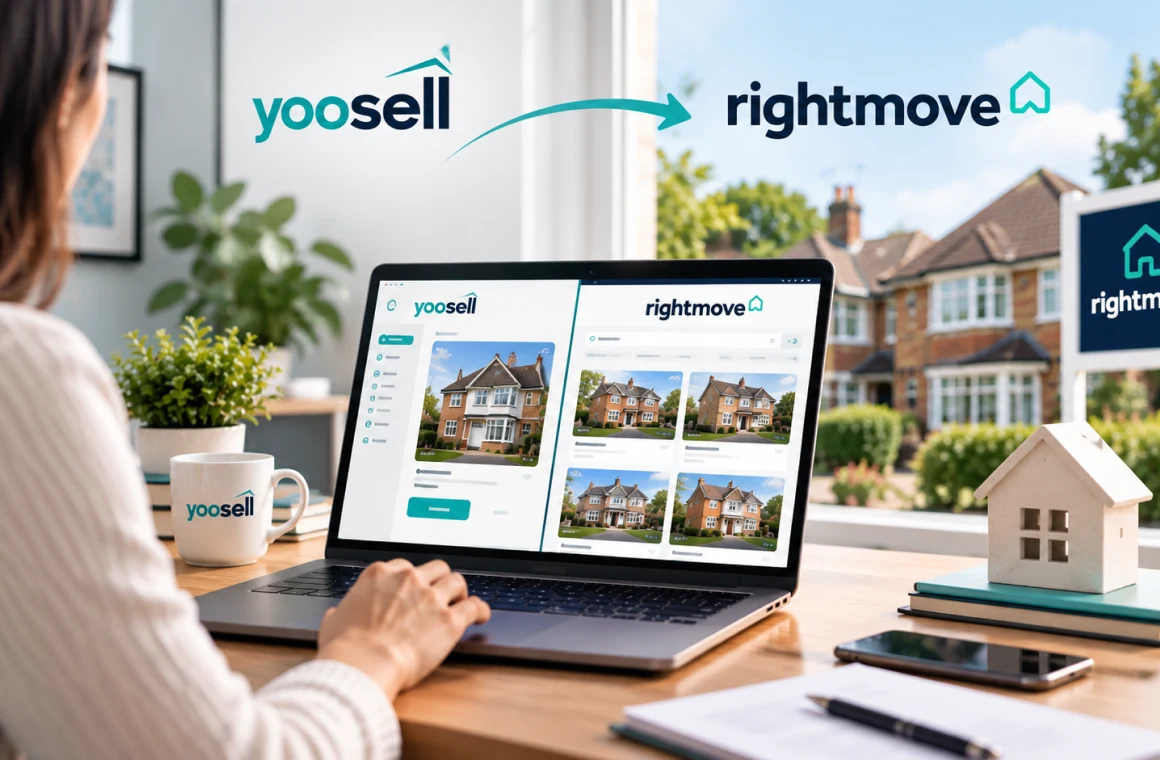
Why YooSell Is the Best Platform in the UK to List Property on Rightmove
You can list your property on Rightmove without an estate agent by using a Rightmove-registered listing platform such as YooSell. Private individuals cannot list directly on Rightmove, but portal-approved services can. YooSell includes Rightmove listing on all three plans from £29 per month, with the first month free, zero commission at completion, and ID-verified buyers as standard. Rightmove receives approximately 52.9 million monthly visits and accounts for around 70% of all time UK buyers spend on property portals, making it the most important portal for any UK seller in 2026.
Start Selling Your Home Today!
Take control of your sale with YooSell. Get started today and explore how we can help you sell smarter, faster, and with less hassle.