What Happens After You Accept an Offer: Your Step-by-Step Guide to Completion
Between accepting an offer and receiving your money, there are weeks of legal work, paperwork, checks, and coordination. Most sellers do not fully understand what happens during this period. They wait. They worry. They wonder why things are taking so long.

George K.
George specialises in local area insights across Leicestershire and the wider Midlands. He highlights schools, transport, and neighbourhood character for relocating buyers.
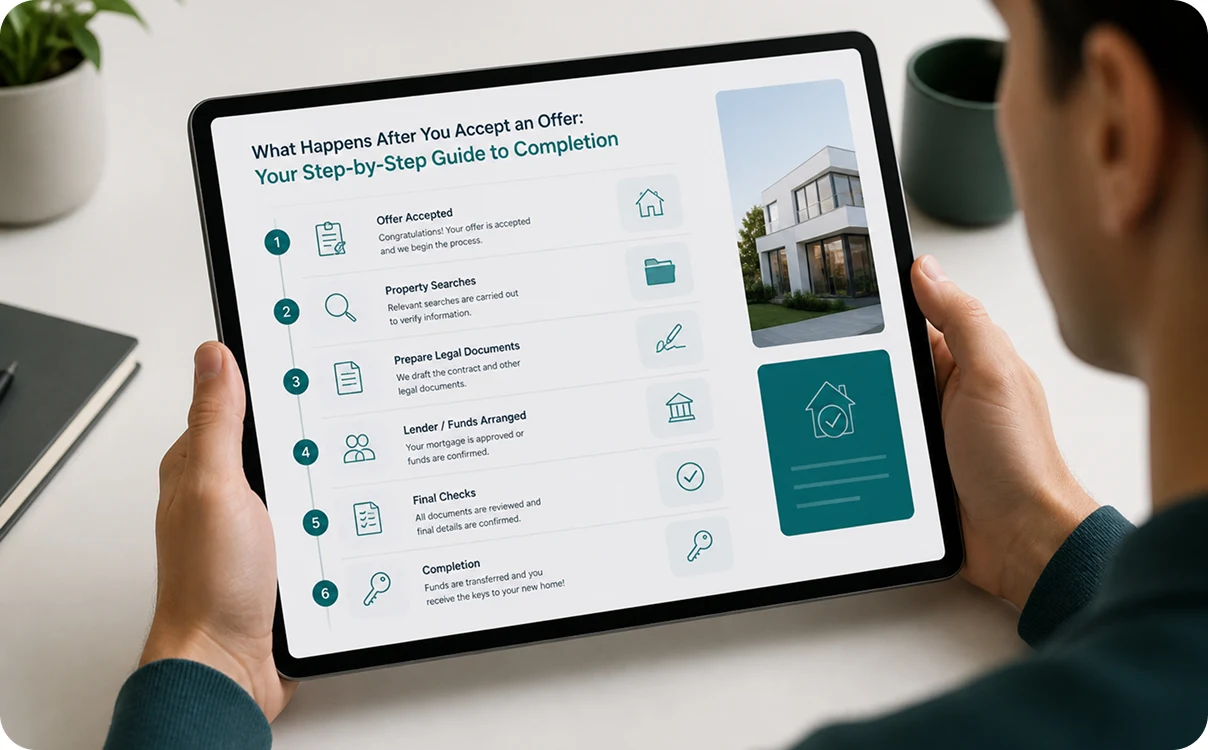
What Happens After You Accept an Offer: Your Step-by-Step Guide to Completion
Introduction
You have accepted an offer on your home. It feels like the hard part is over.
It is not. Not yet.
Between accepting an offer and receiving your money, there are weeks of legal work, paperwork, checks, and coordination. Most sellers do not fully understand what happens during this period. They wait. They worry. They wonder why things are taking so long.
Around one in four agreed home sales in the UK do not make it to completion. That is roughly 25% of all accepted offers falling through before the deal is done. The reasons range from survey issues and mortgage problems to buyer hesitation and slow communication.
This guide walks you through every step from accepted offer to completion day. You will understand what is happening, who is doing what, what you need to do, and how to keep your sale on track. No surprises. No confusion. Just a clear path from offer to keys handed over.
1. The First 48 Hours After Accepting an Offer
The clock starts now. What you do in the first two days sets the pace for everything that follows.
Confirm the offer in writing Make sure the agreed price, any conditions, and the expected timeline are confirmed in writing through your YooSell dashboard. Both you and the buyer should be clear on what has been agreed.
Instruct your solicitor immediately If you have not already appointed a solicitor, do it now. Do not wait. Delays in instructing a solicitor are one of the most common reasons sales take longer than necessary.
Your solicitor will need: Your full name and address Proof of identity (passport or driving licence) Proof of address (utility bill or bank statement) Your mortgage details (lender name, account number, outstanding balance) Title deeds or Land Registry details for your home Details of the buyer and their solicitor
If you are using YooSell's integrated conveyancing and legal support, you can instruct a solicitor directly through your dashboard.
Provide your home's legal documents Your solicitor will prepare a draft contract and a property information form. You will need to complete questionnaires about the home, including details about boundaries, disputes, building work, guarantees, and any issues you are aware of.
Be thorough and honest. Incomplete or inaccurate information causes delays later. If you are unsure about something, say so rather than guessing.
Confirm the buyer's position Through YooSell, your buyer has already been verified. But now is the time to understand their full position. Are they a cash buyer or do they need a mortgage? Are they in a chain? Do they have a home to sell first? This information affects your timeline and your risk.
A verified cash buyer with no chain can complete in 6 to 8 weeks. A buyer who needs a mortgage and is in a chain may take 12 to 20 weeks. Knowing this helps you plan.
2. The Conveyancing Process: What Your Solicitor Does
Conveyancing is the legal process of transferring ownership of a home from you to the buyer. Your solicitor handles this. Here is what happens step by step.
Week 1 to 2: Draft contract preparation Your solicitor prepares the draft contract and gathers all the legal information about your home. This includes title information from the Land Registry, your completed property information forms, and any certificates or guarantees you hold (building regulations, electrical certificates, warranties).
Your solicitor sends this draft contract pack to the buyer's solicitor.
Week 2 to 4: Searches and enquiries The buyer's solicitor carries out searches on your home. These typically include:
Local authority search (checks planning, building control, highways, and environmental information) Environmental search (checks flood risk, contamination, and ground stability) Water and drainage search (checks water supply and drainage connections) Land Registry search (confirms you are the legal owner)
Local authority searches should take around 10 working days, but some councils take longer. This is one of the most common causes of delay.
The buyer's solicitor may also raise additional questions (called enquiries) about your home based on the draft contract and search results. Your solicitor will pass these to you to answer. Respond quickly and accurately. Slow responses extend the timeline.
Week 3 to 6: Buyer's survey and mortgage While searches are happening, the buyer will usually arrange a survey (a physical inspection of your home) and finalise their mortgage application.
The survey may reveal issues that lead to further questions or renegotiation. Common findings include damp, roofing concerns, electrical issues, or structural movement. If the surveyor identifies something significant, the buyer may ask you to reduce the price, carry out repairs, or provide further information.
How you handle this matters. Stay calm and practical. Not every survey finding is a deal-breaker. Your solicitor can advise you on what is reasonable.
If the buyer is getting a mortgage, their lender will also carry out a valuation. If the lender values your home lower than the agreed price (called a down-valuation), the buyer may not be able to borrow enough. This can lead to renegotiation or the sale falling through.
Pricing your home correctly from the start reduces the risk of down-valuations.
Week 6 to 10: Final checks and preparation for exchange Once searches are complete, enquiries are answered, the survey is done, and the mortgage is confirmed, both solicitors prepare for exchange of contracts.
Your solicitor will: Confirm your mortgage redemption figure (the exact amount needed to pay off your mortgage) Prepare the transfer deed Agree a completion date with the buyer's solicitor Confirm all conditions are satisfied
Week 8 to 12: Exchange of contracts Exchange is the moment your sale becomes legally binding. Before exchange, either party can walk away without penalty. After exchange, pulling out has serious financial consequences.
At exchange: Both you and the buyer sign the contract The buyer pays a deposit (usually 10% of the purchase price) A completion date is set (usually one to two weeks after exchange)
Once contracts are exchanged, your sale is secure. This is the point where you can fully commit to your moving plans.
Week 10 to 14: Completion Completion day is when ownership officially transfers. The buyer's solicitor sends the purchase funds to your solicitor via the CHAPS banking system. Once your solicitor confirms the funds have arrived, the sale is complete. Keys are released. Your solicitor pays off your mortgage and transfers your net proceeds to your bank account within one to two working days.
3. Your Role During the Process
Your solicitor handles the legal work. But you have a crucial role in keeping things moving.
Respond to enquiries quickly When your solicitor sends you questions from the buyer's solicitor, answer them the same day if possible. Every day you delay adds a day to the timeline. Some sellers lose weeks by sitting on paperwork.
Be available Your solicitor may need to reach you for signatures, approvals, or quick decisions. Keep your phone on. Check your emails. Be responsive.
Keep your home in the agreed condition Between accepting the offer and completion, your home should remain in the condition the buyer saw it in. Do not remove fixtures or fittings that were included in the sale. Do not let maintenance slip. The buyer has a right to inspect before completion.
Stay in communication with your buyer Through YooSell, you can communicate directly with your buyer. Keep the relationship positive. If there are delays, explain them. If the buyer has concerns, address them promptly. Good communication prevents misunderstandings that can derail sales.
Prepare for moving Do not wait until exchange to start planning your move. Begin preparing early:
Get removal quotes 4 to 6 weeks before your expected completion date Start packing non-essential items Begin notifying organisations of your address change Set up Royal Mail redirection (at least five working days before moving, from £39.50 for three months) Arrange utility meter readings for completion day
4. The Common Reasons Sales Fall Through and How to Prevent Them
Around 25% of agreed sales do not reach completion. Understanding why helps you protect your sale.
Survey issues The buyer's survey reveals problems you did not know about or did not disclose. Damp, structural movement, roof damage, or electrical issues are common findings.
How to prevent it: Be honest in your property information forms. If you know about issues, disclose them early. Consider getting a pre-sale survey so there are no surprises. If the buyer raises concerns after their survey, respond calmly and negotiate practically. Not every finding is a reason to walk away.
Mortgage problems The buyer's mortgage falls through. Their lender withdraws the offer, their financial situation changes, or the lender's valuation comes in lower than the agreed price.
How to prevent it: On YooSell, buyers are verified before they can make an offer. But verification does not guarantee a mortgage will complete. Ask your buyer early on whether they have a mortgage agreement in principle. Cash buyers and buyers with confirmed mortgages are lower risk.
If a down-valuation happens, you have options: reduce the price to match the valuation, ask the buyer to make up the difference, or meet somewhere in the middle.
Buyer hesitation The buyer gets cold feet. They change their mind. They find another home they prefer. This is increasingly common and is one of the hardest reasons to prevent.
How to prevent it: Maintain a good relationship with your buyer. Keep communication open and positive. Respond quickly to questions. A buyer who feels connected to you and confident in the process is less likely to walk away.
Chain complications If your buyer is in a chain (selling their own home to fund the purchase of yours), problems anywhere in the chain can affect your sale.
How to prevent it: Understand your buyer's chain position early. If possible, favour buyers with shorter chains or no chain at all. Cash buyers and first-time buyers are chain-free, which reduces risk.
Slow conveyancing Delays in searches, enquiries, or paperwork can cause frustration and lead to sales collapsing.
How to prevent it: Instruct your solicitor immediately after accepting the offer. Respond to all enquiries the same day. Chase your solicitor regularly for updates. Keep the process moving. Two thirds of fall-throughs are considered preventable, and many can be avoided simply by speeding up the process.
5. Understanding the Timeline: Realistic Expectations
Do not expect your sale to complete in four weeks. Here are realistic timelines based on different buyer situations.
Cash buyer, no chain Fastest scenario. Typical timeline: 6 to 8 weeks from offer to completion.
Buyer with mortgage, no chain (first-time buyer) The mortgage application adds time, but no chain means fewer complications. Typical timeline: 8 to 12 weeks.
Buyer with mortgage, in a short chain The chain adds complexity. Each link needs its own conveyancing. Typical timeline: 12 to 16 weeks.
Buyer in a long chain Long chains are unpredictable. Any link can break. Typical timeline: 16 to 20 weeks or longer.
What affects the timeline most?
How quickly both solicitors work How fast the local authority returns searches Whether the survey raises issues Whether the mortgage is approved without delays Whether you and your buyer respond to paperwork promptly
You cannot control all of these. But you can control your own speed of response. That alone can save weeks.
6. Exchange of Contracts: What You Need to Know
Exchange is the most important milestone between accepting an offer and completion.
What exchange means Before exchange, either party can walk away without legal consequence. After exchange, the sale is legally binding. If the buyer pulls out after exchange, they lose their deposit (usually 10% of the purchase price). If you pull out, you may be liable for the buyer's costs.
When exchange happens Exchange typically happens once all searches are complete, the buyer's mortgage is confirmed, all enquiries are answered, and both parties are satisfied. Your solicitor will agree a date with the buyer's solicitor.
What happens at exchange Both solicitors exchange signed contracts over the phone. The buyer's deposit is transferred to your solicitor. A completion date is set, usually one to two weeks later.
After exchange Once contracts are exchanged, you can fully commit to your moving plans. Book your removal company. Confirm your completion day arrangements. Begin final packing.
Do not exchange until you are certain of your own plans. If you are buying another home, your exchange should be coordinated with your purchase to avoid being left without a home.
7. Completion Day: Hour by Hour
Before 10am Finish any last-minute packing. Do a final walkthrough of every room, cupboard, loft, garage, and shed. Take meter readings for gas, electricity, and water. Photograph the readings.
10am to 12pm The buyer's solicitor sends the purchase funds to your solicitor via CHAPS. The transfer is guaranteed same-day but is not instant. Your solicitor waits for the funds to arrive.
12pm to 2pm Most completions are confirmed during this window. Your solicitor receives the funds and contacts you to confirm completion has taken place. This is the moment ownership transfers.
After confirmation Keys are released to the buyer. You hand them over directly (or leave them as arranged). Your solicitor pays off your mortgage from the proceeds. Your net proceeds are transferred to your bank account within one to two working days.
What to do before leaving
Hand over all keys, including spare sets Leave any alarm codes, fob codes, or gate remotes Leave appliance manuals and warranties if agreed Submit your final meter readings to your utility suppliers Lock all windows and doors Take one last look
8. Your Money: What Happens to the Proceeds
On completion day Your solicitor receives the full purchase price from the buyer's solicitor. From this amount, they deduct:
Your outstanding mortgage balance Their own fees Any other agreed costs (search fees, Land Registry fees, etc.)
The remainder is your net proceeds.
When you receive your money Your solicitor transfers your net proceeds to your bank account. This usually takes one to two working days after completion. Some solicitors transfer on the same day. Ask your solicitor about their process.
Check the completion statement Your solicitor will send you a detailed breakdown showing the sale price, all deductions, and your final net proceeds. Check every line. If anything looks wrong, query it immediately.
Tax considerations If you sold your main home, you are generally exempt from capital gains tax under Private Residence Relief. If you sold a second home or investment home, you must report and pay any capital gains tax within 60 days of completion. Speak with an accountant if this applies to you.
9. After Completion: The Essential Checklist
Within the first 48 hours
Submit final meter readings to old utility suppliers Register with council tax at your new address Notify your bank of your new address Set up Royal Mail redirection if not already done Update your address with DVLA (driving licence and vehicle registration V5C, legal requirement, up to £1,000 fine if not updated)
Within the first week
Cancel or transfer broadband and phone contracts Update home insurance Register with a GP, dentist, and optician near your new address Notify your employer and payroll Register on the electoral roll at your new address Update car insurance with new address Change locks at your new home
Within the first month
Update all direct debits and standing orders Notify subscription services, online shopping accounts, and loyalty cards Update TV licence Notify pension providers and life insurance Notify HMRC if self-employed Send your new address to friends and family
10. If Things Go Wrong: What to Do
The buyer pulls out before exchange This is frustrating but not uncommon. You are not legally bound before exchange. Relist your home on YooSell and continue accepting enquiries. Some sellers keep their listing active (marked as "offer accepted") until exchange, so they have backup interest.
The survey reveals a problem Stay calm. Not every survey finding is a deal-breaker. Discuss with your solicitor. You may need to negotiate a price reduction, agree to repairs, or provide additional information. Most survey issues can be resolved without the sale collapsing.
The buyer's mortgage is declined If the buyer cannot secure a mortgage, the sale cannot proceed. Ask whether they can reapply with a different lender or whether they can increase their deposit. If not, you may need to find a new buyer.
The chain breaks If someone else in the chain pulls out, it can affect your sale. Communicate with your buyer. Understand what is happening. In some cases, the chain can be restructured. In others, you may need to wait or find a new buyer.
Completion is delayed Delays on completion day happen, usually due to slow fund transfers in long chains. Stay in contact with your solicitor. Most delays resolve within hours. If completion cannot happen on the agreed day, both solicitors will negotiate a new date.
You change your mind Before exchange, you can withdraw from the sale. You are not legally obligated to proceed. However, you will have spent money on solicitor fees and other costs that you cannot recover. Only withdraw if you are certain. If you are having doubts, speak with your solicitor before making a decision.
Frequently Asked Questions
How long does it take from accepting an offer to completion? Typically 8 to 16 weeks for straightforward sales. Cash buyers with no chain can complete in 6 to 8 weeks. Buyers with mortgages and chains can take 12 to 20 weeks. Your responsiveness to paperwork directly affects the speed.
Can I accept another offer after accepting one? Legally, yes, before exchange. But it damages trust and can lead to complications. If you receive a significantly better offer, discuss it with your solicitor before making any decisions.
What is the difference between exchange and completion? Exchange is when contracts are signed and the sale becomes legally binding. Completion is when funds transfer and ownership officially changes hands. There is usually a one to two week gap between them.
Do I need to be at home on completion day? You need to have vacated the home by the time completion is confirmed. You do not need to be physically present at the moment of completion. Arrange key handover in advance with your buyer.
What if the buyer asks for a price reduction after the survey? This is common. Evaluate the request with your solicitor. If the survey found genuine issues, a small reduction may be reasonable. If the request feels opportunistic, you can negotiate or refuse. You are not obligated to reduce the price.
Can I still use my home between exchange and completion? Yes. You still own the home until completion. But keep it in the agreed condition. Do not remove fixtures or fittings included in the sale. Do not carry out any work that changes the home's condition.
What happens if I have not found my next home by completion? If you are not buying immediately, you have options: rent temporarily, stay with family, or negotiate a later completion date. Plan this before exchange so you are not caught without a home on completion day.
How much does the conveyancing process cost? Solicitor fees for sellers typically range from £800 to £1,500 plus disbursements (searches, Land Registry fees, bank transfers). Total legal costs usually fall between £1,000 and £2,500. If you are using YooSell's integrated conveyancing and legal support, you can instruct a solicitor directly through your dashboard.
Read Our Blog
Tips, insights and expert advice to help you sell smarter.
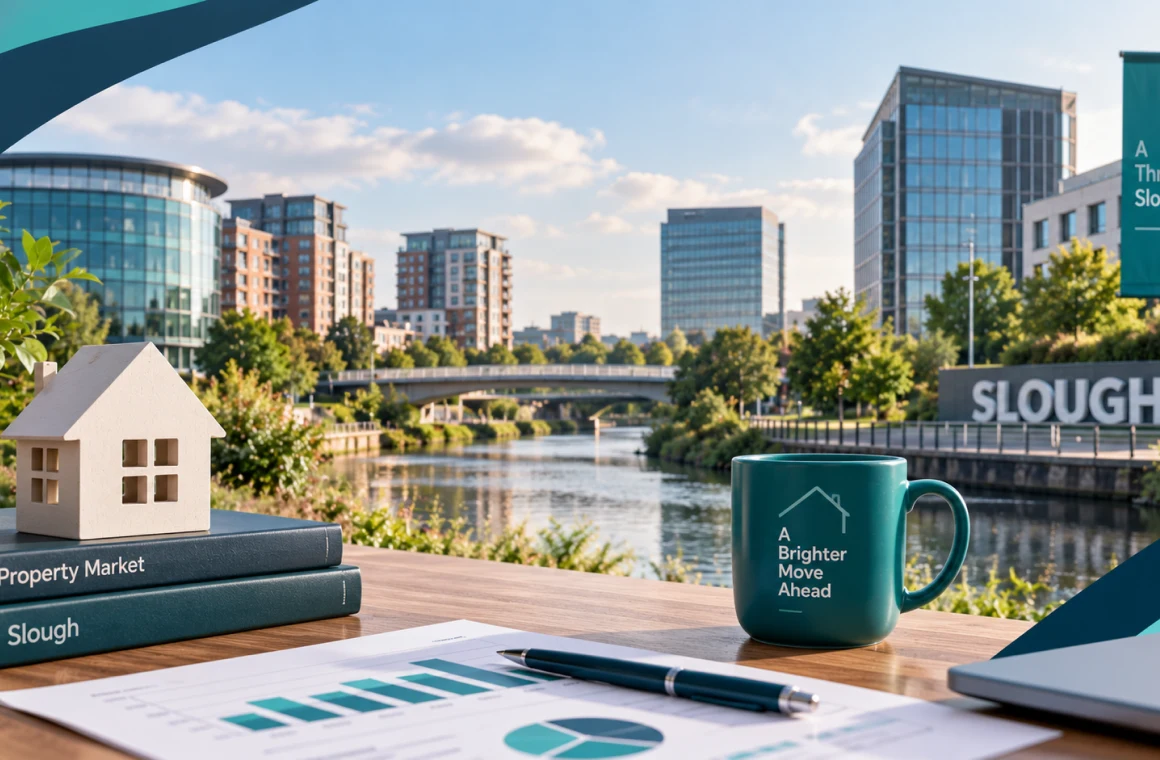
Slough House Prices & Property Market Analysis 2026
Slough house prices averaged £334,000 in May 2026 according to ONS data, down modestly from £348,000 a year earlier. The market has softened in the short term, with flat prices falling 7.8% and transaction volumes down significantly. Average monthly rents, however, have risen to £1,572, strengthening the case for buying over renting. The Elizabeth Line puts Slough to Paddington in around 15 minutes, keeping buyer demand structurally strong. For buyers with a medium-term horizon, Slough remains one of the better-value commuter markets in the South East.

Nottingham House Prices 2026: What Buyers Should Know
Nottingham house prices in 2026 are holding steady, with the ONS recording an average of £192,000 in the city area as of June 2026. First-time buyers are paying around £177,000 on average, making Nottingham one of the more accessible cities in the East Midlands. Prices have risen 18.2% over the past five years, despite a brief flat period in 2025 and early 2026. Average monthly rents have reached £1,011, strengthening the financial case for buying over renting. West Bridgford commands the highest prices while areas like Sherwood and Bulwell offer strong value for budget-conscious buyers.
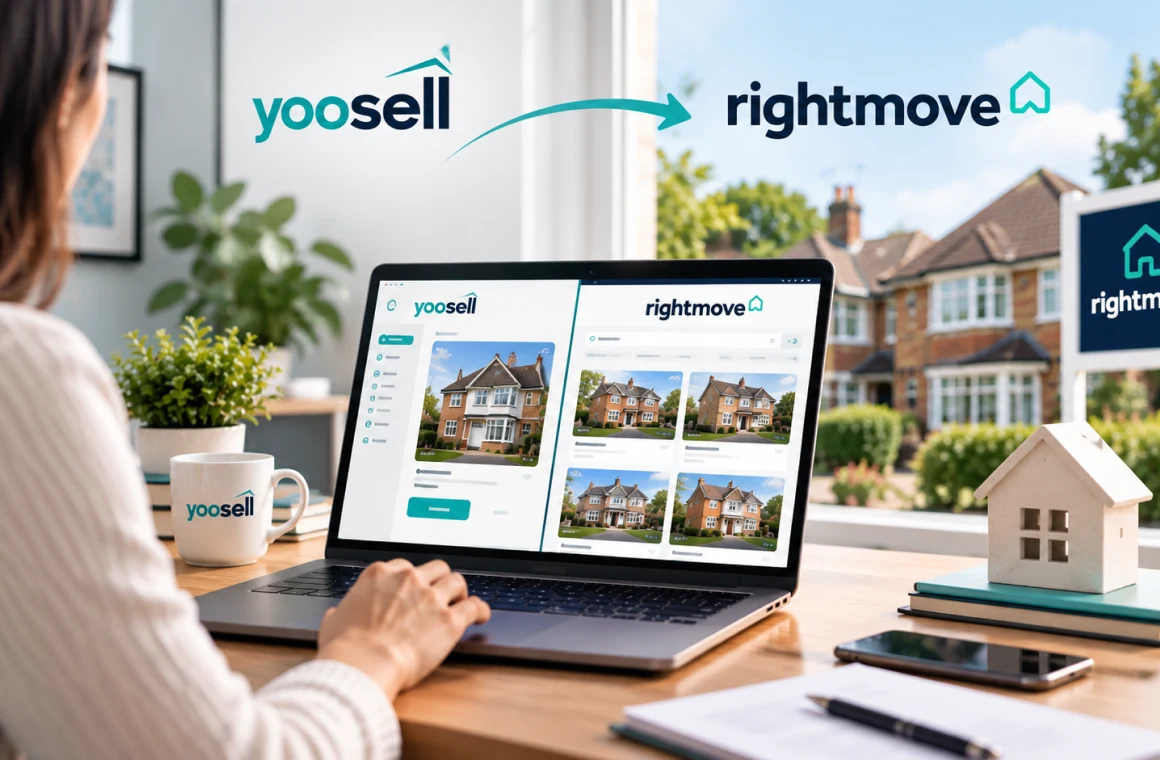
Why YooSell Is the Best Platform in the UK to List Property on Rightmove
You can list your property on Rightmove without an estate agent by using a Rightmove-registered listing platform such as YooSell. Private individuals cannot list directly on Rightmove, but portal-approved services can. YooSell includes Rightmove listing on all three plans from £29 per month, with the first month free, zero commission at completion, and ID-verified buyers as standard. Rightmove receives approximately 52.9 million monthly visits and accounts for around 70% of all time UK buyers spend on property portals, making it the most important portal for any UK seller in 2026.
Start Selling Your Home Today!
Take control of your sale with YooSell. Get started today and explore how we can help you sell smarter, faster, and with less hassle.