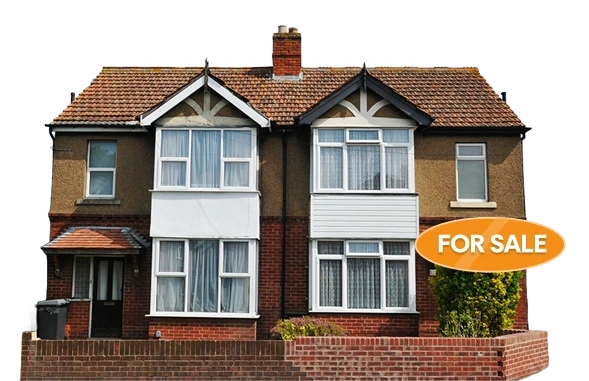
Selling Your Home in a Slower Market: A UK Seller's Survival Guide
Selling in a slower property market does not mean accepting a poor outcome. It means adjusting your strategy. This guide covers pricing correctly from day one, maximising presentation, generating viewings, managing offers, and keeping a sale together through to exchange in a market where buyers have more choice and more confidence to negotiate.

George K.
George specialises in local area insights across Leicestershire and the wider Midlands. He highlights schools, transport, and neighbourhood character for relocating buyers.

Introduction: Why a Slower Market Demands a Different Approach
A slower property market does not mean you cannot sell your home. Thousands of properties sell in flat or falling markets every year. What it does mean is that the strategies that work well when demand is strong and buyers are competing over limited stock are no longer enough on their own.
In a slower market, buyers have more choice, more time to think, and more confidence to negotiate. They can afford to walk away from a property that is overpriced or poorly presented because there will be another option along shortly. The sellers who succeed in these conditions are the ones who understand the market they are actually in, not the one they wish they were in, and who adjust their approach accordingly.
This guide covers everything a UK seller needs to know about navigating a slower or falling market in 2026, from pricing strategy and presentation to managing viewings, handling offers, and keeping a sale together once a buyer is found. It is written for sellers who want to sell and complete, not just list and wait.
Before you decide how to approach your sale, use the free Valuation Calculator on YooSell to get a data-driven estimate of your property's current market value based on 2026 conditions in your area.
Understanding What a Slower Market Actually Means
The phrase slower market gets used loosely. Understanding what it actually means in practice helps you calibrate the right response.
What Characterises a Slower Market
A slower market is one in which the balance of supply and demand has shifted towards buyers. There are more properties available relative to the number of buyers actively searching. Homes take longer to go under offer. The gap between asking prices and achieved sale prices tends to widen. Buyer enquiries take longer to convert into viewings, and viewings are less likely to convert into offers.
In a slower market, the time it takes to find a buyer increases noticeably. Rightmove data from 2026 shows that homes in the UK that did not require a price reduction found a buyer in an average of 36 days. Homes that did require a price reduction took an average of 127 days. That 91-day gap illustrates the compounding cost of getting the initial pricing wrong.
The UK Market in 2026
The UK property market in 2026 is characterised by high stock levels relative to recent years. Rightmove reported a twelve-year high in the number of homes for sale in September 2026. Buyer demand exists but buyers are more selective than in the boom years of 2020 to 2022. Properties that are well-priced, well-presented, and sold by motivated sellers are still transacting. Properties that are overpriced relative to comparable sold evidence are sitting on the market for extended periods.
Zoopla's 2026 data shows that the national fall-through rate for agreed sales stands at approximately 23.7 percent in the first quarter of 2026, meaning nearly one in four agreed sales collapses before completion. This means that even securing a buyer is not the end of the challenge.
Your Immediate Neighbourhood is What Matters
A national picture of market conditions is useful context but your property sells in a specific street, area, and price bracket. What matters most is what comparable properties in your immediate vicinity are actually achieving in terms of price and time on market. Your solicitor can pull recent Land Registry sold data, and the YooSell property guides explain how to research your local market before listing.
The First Fourteen Days: Your Most Important Window
In any market, the period immediately after a property goes live on Rightmove generates the highest volume of buyer attention. In a slower market, this window is even more critical because there is less organic follow-on interest to compensate for a poor start.
Why the First Two Weeks Define the Sale
When a new listing appears on Rightmove, the portal's algorithm boosts it in search results for the first fourteen days. Every buyer with matching search alerts receives a notification. The listing gets the highest volume of views it will ever receive. If the property is correctly priced and well-presented, this window generates viewings and offers. If it is not, it passes without generating the expected interest, and the listing begins to age visibly.
A listing that has been on the market for several weeks without progress signals to buyers that something is wrong, whether that is price, condition, or some other factor. The longer a property sits, the stronger that signal becomes, and the more buyers assume there is a reason to be cautious.
What This Means for Your Strategy
In a slower market, you cannot afford to list at an aspirational price and plan to reduce later if needed. The evidence is clear that this approach costs far more than it saves. Pricing correctly from the start, with a full understanding of what comparable properties have actually sold for in the last three months, is the most effective single strategy available to any seller.
Pricing Strategy in a Slower Market
Pricing is the lever that has the greatest single impact on how quickly and at what level a property sells. In a slower market, it requires more precision and less optimism than sellers might prefer.
How to Research the Right Price
The only reliable measure of value is what similar properties have recently sold for, not what they were asking. Land Registry sold price data is publicly available and shows actual completion prices for all properties sold in England and Wales. Compare your property against sales in the last three to six months for properties that closely match yours in type, size, number of bedrooms, and location.
Pay particular attention to properties that match yours as closely as possible. A four-bedroom detached house in your road is a better comparable than a four-bedroom detached house two miles away, even if both are described as similar.
Pricing Below Round Number Thresholds
On Rightmove, buyers search using maximum price filters set at standard round number thresholds. Common upper limits are two hundred thousand, two hundred and fifty thousand, three hundred thousand, three hundred and fifty thousand, and four hundred thousand pounds, continuing upward in similar increments.
If your property is priced at three hundred and five thousand pounds, every buyer whose maximum filter is set at three hundred thousand will not see it in their search results. Pricing at two hundred and ninety-five thousand instead keeps the property visible to the entire audience searching up to that threshold, while the practical difference in the achieved price after negotiation is likely to be minimal.
Rightmove data shows that when a seller reduces their price by two percent or more, the listing is rebroadcast to buyers who have matching alerts, in effect giving the property a fresh start in the algorithm. A price reduction that crosses below a round number threshold can therefore have a disproportionate impact on enquiry levels.
What to Do If You Are Not Getting Viewings
If your listing goes live and generates no viewings within the first two weeks, the market is giving you clear feedback. Low enquiries after the first two to three weeks almost always indicate a pricing problem rather than a presentation problem.
The most effective response is a meaningful, single price reduction rather than a series of small incremental cuts. Multiple small reductions, such as dropping by one to two percent every few weeks, rarely generate a meaningful response from buyers and accumulate a visible history of cuts on the listing that reinforces the impression that the property is struggling.
A reduction of five percent or more in a single step, ideally crossing below a round number threshold, consistently generates a stronger buyer response than the equivalent amount spread across several smaller cuts. Property analysts including Zoopla and Rightmove consistently confirm that decisive cuts secure buyers where gradual reductions do not.
What to Do If You Are Getting Viewings But No Offers
If viewings are happening but no offers are materialising, the issue is more likely to be presentation, condition, or a price that is very close to but not quite at the market level. In this situation, asking for specific feedback after each viewing is essential.
Are viewers commenting on the same issue repeatedly? Are they comparing the property unfavourably to something else they have seen at the same price? Is there a feature of the property, such as a layout issue, a lack of parking, or a condition problem, that is consistently mentioned? The pattern of feedback tells you where the problem is.
Presentation: Why It Matters More in a Slower Market
In a fast market, buyers compete fiercely for available properties and are willing to overlook presentation issues. In a slower market, they are not. When a buyer has ten properties to choose from rather than two, they will consistently choose the better-presented one, all else being equal. Presentation is one of the few factors a seller can directly control.
Declutter Before Photography and Every Viewing
Decluttering is the single most cost-effective preparation step available to any seller. It makes rooms look larger, lighter, and more appealing. It removes the visual noise that prevents buyers from seeing the space rather than the seller's possessions.
Go through every room before photography and remove anything that makes the space feel smaller or busier. Clear all kitchen and bathroom surfaces. Remove excess furniture from bedrooms that makes them feel cramped. Clear hallways and entrance areas completely. Buyers will open cupboards during viewings. Keep those tidy too.
Professional Photography Is Not Optional
In a slower market, your listing photographs are competing against more alternatives for buyers' attention. Poor-quality photographs taken on a phone in a dark or cluttered room will cost you viewings regardless of how attractive the property is in person.
If you are serious about selling, commissioning professional property photographs is a worthwhile investment. Professional photographers understand lighting, angles, and how to present a space to its best advantage. The difference in enquiry rates between professionally and poorly photographed listings is well established.
YooSell includes AI photo enhancement tools within the platform that improve your listing images without the cost of a professional shoot. For higher-value properties, professional photography on top of AI enhancement is worth considering.
Address Minor Repairs Before Listing
In a slower market, every visible minor maintenance issue becomes a point of negotiation. Cracked paint, stiff doors, dripping taps, tired grouting, and damaged skirting boards are all things buyers use to justify lower offers. None of them costs much to fix. Cumulatively, they create an impression of deferred maintenance that buyers find off-putting and expensive to price in.
Walk through the property before listing and address every visible minor repair. This is not about expensive renovation. It is about removing the small ammunition buyers use in negotiations.
Kerb Appeal Sets the First Physical Impression
The exterior of the property is the first thing a buyer sees when they arrive for a viewing, and it sets their emotional expectation before they step through the front door. In a slower market where buyers are more discriminating, a poor first impression at the kerb is more likely to predispose them negatively before they have even seen the interior.
Before photography and before your first viewing, clean the front of the property, repaint or clean the front door, clear the path and driveway, tidy the garden, and remove any items from the front of the property that create clutter.
Your Listing: Getting the Maximum Attention from Rightmove
In a slower market, the quality and reach of your listing matters more than in a period of high demand.
Getting onto Rightmove
Private sellers cannot upload directly to Rightmove. You need to use a portal-registered listing service. YooSell's Enhanced and Premium plans include a direct Rightmove listing. Since Rightmove is where the vast majority of UK buyers search, getting your property there is non-negotiable if you want maximum exposure to the active buyer pool. See how the full listing and sale process works on the How It Works page.
The Floor Plan Cannot Be Skipped
In a slower market where buyers are more cautious about investing time in viewings, the floor plan does more work than it used to. Buyers who can see the layout before visiting arrive better prepared and more committed. Listings without floor plans are routinely skipped in favour of ones that have them.
Writing a Description That Sells the Property Specifically
Generic descriptions that could apply to any three-bedroom semi-detached house do not stand out in a slower market where buyers are comparing multiple options. Write a description that tells buyers specifically why your property is worth viewing: mention features that are not visible in photographs, the orientation of the garden, a recent renovation, proximity to a specific school or transport link, or anything else that is genuinely distinctive.
YooSell's AI writing tools help you generate a clear and specific property description from the details you enter, which can be edited and personalised before publishing.
Managing Viewings in a Slower Market
In a slower market, generating a viewing is an achievement. Converting it to an offer requires more deliberate effort than in a rising market.
Be Flexible With Viewing Times
In a seller's market, buyers work around the seller's schedule. In a slower market, the opposite is more likely to produce results. Being willing to accommodate viewings at evenings and weekends, at short notice, and without requiring multiple conditions to be met before confirming gives you an advantage over sellers who are more restrictive.
A buyer who cannot easily arrange a viewing will simply move to the next listing on their list. In a slower market, there are plenty of alternatives.
Prepare the Property for Every Single Viewing
There is no viewing that is not worth preparing for. Open all curtains and blinds. Turn on every light in the property including under-cabinet lights in kitchens and hall lights. Make sure the temperature is comfortable. Remove pets or confine them to one area. Ensure all surfaces are clear and the property is in the same condition as it was for photography.
A buyer who arrives at a dark, cold, or cluttered property on a Tuesday evening when you assumed it was a low-priority viewing still makes the same decision about whether to offer based on what they see.
Follow Up After Every Viewing
In a slower market, buyers take longer to decide. Following up with viewers to ask for feedback keeps you in the conversation and can surface the objection or concern that would otherwise simply result in no further contact. Responding to concerns directly and specifically, whether about price, condition, or a specific feature, gives you a chance to address them rather than losing the buyer without knowing why.
Handling Offers in a Slower Market
In a slower market, offers are more likely to come in below the asking price. Managing the offer stage well protects your financial outcome.
Do Not Respond Immediately
When an offer arrives, particularly a low one, do not respond immediately. Take time to assess the offer against the buyer's position. A chain-free buyer with a mortgage in principle offering slightly below asking price is a better prospect than a buyer in a complex chain offering at asking price. Think about the total transaction rather than just the headline figure.
A Counter-Offer Is Almost Always Better Than Rejection
In a slower market, rejecting an offer outright without counter-offering often means losing the buyer entirely. A polite counter-offer at a figure you are comfortable with, with a clear and reasonable timeframe for a response, keeps the negotiation alive and gives both parties a chance to find common ground.
If you counter, be specific and be credible. Counter at a figure that reflects the current market rather than your original asking price aspirations. A buyer who has done their research on comparable sold prices will see through a counter that is not grounded in real market evidence.
The True Cost of Waiting for a Better Offer
In a slower market, holding out for a higher offer while a realistic offer is on the table carries a real cost. Every additional month on the market accumulates holding costs including mortgage payments, insurance, and maintenance. The Cost Saving Calculator on YooSell helps you understand your net proceeds at any given sale price and selling cost, which makes it easier to assess whether holding out is financially justified or not.
Keeping a Sale Together After Offer Acceptance
In a slower market, the fall-through rate is higher. The work of a seller does not end at offer acceptance. Keeping the transaction together through to exchange requires active effort.
Instruct Your Solicitor Before You Accept an Offer
The single most effective step a seller can take to reduce the risk of a sale collapsing after offer acceptance is to instruct a solicitor before the offer arrives, not after. A solicitor who is already briefed and has begun preparing the contract pack can respond to searches and enquiries far faster than one who is starting from scratch.
Through YooSell, you can access trusted conveyancers from your seller dashboard once an offer is accepted. Browse verified listings on YooSell to see how other sellers in your area are presenting their properties, which can help you calibrate your own presentation and pricing before listing.
Gather Your Documents in Advance
The most common cause of delay during conveyancing is missing documentation: planning permissions for building works, building regulations completion certificates, FENSA certificates for replacement windows, Gas Safe certificates for boiler installations. Gather all relevant certificates and documents before your listing goes live so you are ready when solicitor enquiries arrive.
Use the free Stamp Duty Calculator on YooSell to help your buyer understand their total purchase costs before they commit, which reduces the risk of them re-assessing their finances after the offer has been accepted.
Respond to Every Solicitor Request Immediately
In a slower market, the conveyancing period is the highest-risk stage for a fall-through. A buyer who is waiting weeks for responses to solicitor enquiries begins to wonder whether the seller is motivated. Treating every communication from your solicitor as urgent and responding the same day wherever possible keeps the transaction moving and maintains buyer confidence.
Stay in Communication with the Buyer
In a private sale through a platform like YooSell, you communicate directly with your buyer. Regular, brief updates during the conveyancing period, confirming that you are actively progressing, that you have signed and returned documents, or that you are chasing a missing certificate, keep the buyer engaged and reassure them that the sale is moving. A buyer who feels informed is far less likely to withdraw than one who feels they have heard nothing for three weeks.
The Mindset of Selling in a Slower Market
Alongside the practical strategies, the right mindset makes a significant difference to how effectively sellers navigate a slower market.
The Market Is What It Is
The market does not care what you paid for the property, what you spent improving it, or what you need to achieve to fund your next move. The market is a set of current conditions that determine what buyers are willing to pay. Fighting those conditions by holding out for a price the market will not support costs time and ultimately money.
Sellers who accept the market as it is and price, present, and respond to feedback accordingly consistently achieve better outcomes than those who hold rigidly to an asking price the market is not supporting.
If You Are Also Buying, the Saving Is Real
One of the most important shifts in perspective for sellers in a slower market is recognising that if you are also buying your next property in the same market, you are buying at lower prices too. Accepting a price that is lower than you hoped for is partially offset by paying a lower price for the property you are buying. The net financial impact of a slower market on a simultaneous sale and purchase is often less severe than the focus on the selling price alone suggests.
Patience Has a Cost
Every month a property sits on the market without selling accumulates costs. Mortgage payments, council tax, insurance, utilities, and maintenance all continue. A decisive and accurate pricing decision at the start of the sale, even if it means accepting a lower price than hoped, may deliver a better net financial outcome than waiting for a market that may not arrive.
Selling Your Home with YooSell
YooSell is a self-service home-selling platform for sellers in Leicestershire and the Midlands that gives you full control of your sale from listing to completion, without paying traditional estate agent commission.
Why YooSell Suits Sellers in a Slower Market
In a slower market, every pound of selling cost matters more. A traditional estate agent charging one and a half percent on a property worth two hundred and fifty thousand pounds costs three thousand seven hundred and fifty pounds in commission at completion. YooSell charges a fixed monthly fee from £29.00 with no commission taken at any point. In a slower market where you may already be accepting a price below your original expectation, keeping those selling costs in your pocket makes a real difference to your net outcome.
See the full plan options on the Pricing page.
Verified Buyers Mean Fewer Fall-Throughs
Every buyer on YooSell completes identity and financial verification before they can make an offer. In a slower market where fall-through rates are elevated, dealing only with buyers whose finances have been confirmed reduces your exposure to one of the most common risks. You are not wasting months progressing a sale that was never going to complete because the buyer could not secure their mortgage.
List on Rightmove Through YooSell
You can list your property directly on Rightmove through YooSell by choosing the Enhanced or Premium plan. In a slower market, Rightmove reach is more important than ever because buyer activity is concentrated there. Visit the YooSell Rightmove page for full details on how it works.
Free Tools to Support Your Sale
The free Mortgage Calculator on YooSell helps buyers work out their monthly repayment position, which supports their confidence in committing to a purchase in a period when buyers are more cautious.
Frequently Asked Questions
Read Our Blog
Tips, insights and expert advice to help you sell smarter.

Sell Your House on Rightmove and Manage Buyers Directly: How YooSell Works
You can't list on Rightmove directly as a private seller, but you can do it without a traditional estate agent. YooSell publishes your home on Rightmove, included on the Enhanced and Premium plans and available as an add-on on Starter, from £29 a month.

Sell Your Home Without an Estate Agent in the UK with YooSell AI Tools
With YooSell, AI tools write your property description, enhance your photos and build your floor plan, and on the Premium plan an AI-assisted report helps you set your price. Plans start at £29 per month with no commission at completion.

Is It a Good Idea to Sell Your House at Christmas?
Selling your house at Christmas can be a smart move for motivated sellers. Rightmove recorded its busiest ever Boxing Day in 2025, with visits up 93% and buyer enquiries rising 67% in the five days after Christmas compared to the five days before. Competition from other sellers is at its lowest point of the year in December, giving well-priced homes more visibility per listing than they would get in spring. Listing through a self-service platform like YooSell with no tie-in contract and no commission makes testing the festive market a low-risk option.
Start Selling Your Home Today!
Take control of your sale with YooSell. Get started today and explore how we can help you sell smarter, faster, and with less hassle.