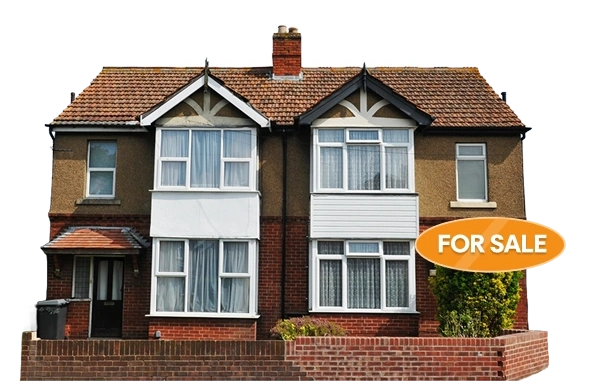
Selling a Non-Standard Construction or Ex-Local Authority Property in the UK
Non-standard construction and ex-local authority properties can absolutely be sold, but the process needs more preparation than a standard sale. This guide covers every construction type, the mortgage restrictions that affect your buyer pool, the documentation you need in advance, your disclosure obligations on the TA6 form, and practical steps to market your property to buyers who can actually proceed.

Oliver H.
Oliver covers Midlands property trends and practical selling tips for homeowners. He focuses on clear, jargon-free advice that helps private sellers stay in control.

Introduction: Why These Properties Need a Different Approach
Most homes in the UK are built from brick or stone walls under a tiled or slate roof. Mortgage lenders treat this as their baseline. When a property falls outside it, whether because of how it was built or who built it, the sale process changes in ways that catch many sellers completely off guard.
Non-standard construction homes and ex-local authority properties are not difficult to sell because they are inferior. Many are structurally sound, well-maintained, and genuinely good places to live. The challenge is a narrower pool of mortgage lenders, additional survey requirements, and a conveyancing process that generates more questions than a standard sale. Sellers who understand this in advance can prepare properly, price accurately, and reach completion without the surprises that derail so many transactions of this type.
This guide explains what makes a property non-standard, how different construction types affect mortgageability, what ex-local authority properties face that is specific to their status, how to prepare for the sale process, and how to market your property to the buyers most likely to proceed successfully.
Before you list, use the free Valuation Calculator on YooSell to get a data-driven estimate of your property's current market value, taking your area's local conditions into account.
What Non-Standard Construction Actually Means
In mortgage lending terms, standard construction means one thing: brick or stone external walls under a pitched tiled or slate roof. If your property uses anything else as its primary structural method, it is classified as non-standard, regardless of its age, condition, or visual appearance.
This classification is not a judgment about quality. It is a lender risk categorisation that triggers a different assessment process. A modern timber-frame home built to current building regulations and indistinguishable from a standard brick house on the outside is still non-standard in the eyes of most mainstream lenders. So is a post-war prefab, a 1970s concrete panel block, and a 19th century cob cottage.
Why the Classification Matters to Sellers
The classification matters because it determines who can buy your property using a mortgage. Mainstream high street lenders, the ones that provide the vast majority of residential mortgages in the UK, have automated underwriting systems that decline non-standard construction at the initial credit check stage without any individual assessment. This does not mean no lender will consider the property, but it does mean the buyer's options are more restricted and the process takes longer.
For sellers, the practical implication is clear. A property that only specialist lenders will consider has a smaller buyer pool than one available to the full mortgage market. That affects both the time it takes to find a buyer and, in some cases, the price achievable. Understanding this before listing is the difference between a realistic strategy and a frustrating one.
The Main Types of Non-Standard Construction in the UK
Different construction types create different challenges. Knowing your property's specific type is the starting point for understanding your sale options.
Precast Reinforced Concrete and System-Built Properties
Precast reinforced concrete homes, commonly abbreviated to PRC, were built in large numbers after the Second World War as part of emergency housing programmes. Hundreds of thousands of homes were constructed using concrete panel systems developed by various builders. Many were originally intended as temporary housing but remained in use for decades.
The main PRC types found in the UK include Airey houses, Reema, Wimpey No-Fines, Unity type houses, and the Cornish Unit. Each has slightly different structural characteristics but shares the common challenge of steel reinforcement embedded in concrete, which deteriorates over time through a process called carbonation and results in structural degradation if left unaddressed.
PRC Certificates and What They Mean for Sellers
Many PRC homes have been repaired through approved repair programmes. When a structural repair has been carried out by an approved installer and signed off to a recognised standard, a PRC certificate is issued confirming the repair. Most specialist lenders require a PRC certificate before they will consider a mortgage on a system-built concrete property.
If your property has been repaired and you hold a PRC certificate, your buyer pool is meaningfully wider than for an unrepaired property. If your property has not been repaired or the certificate cannot be found, speak to your solicitor before listing, as this will need to be addressed during conveyancing.
BISF and Steel-Framed Properties
BISF stands for British Iron and Steel Federation. BISF houses were built from the late 1940s onward and are typically recognisable by their distinctive profile, often with a different cladding material on the upper storey. Steel-framed properties more broadly include various system-built homes where the primary structural frame is steel rather than masonry.
Getting a mortgage on a steel-framed property is harder than on a repaired PRC home. The lender pool is restricted and lenders typically require a full structural survey from a qualified engineer to confirm the current condition of the steel frame and any cladding before they will consider a lending decision. Properties where the frame is in good condition and has been maintained or recently inspected are in a stronger position than those where the structural condition is unknown.
Timber-Framed Properties
Modern timber-frame construction, built from the 1980s onward, is now widely accepted by mainstream lenders, provided the property meets current building regulations and has a structural warranty. Most post-1985 timber-frame properties under a rendered or brick skin are treated as standard residential by high street lenders.
Older timber-frame properties, including traditional exposed-frame buildings, present a different picture. Pre-1980s timber frame requires assessment by a specialist. The condition of the frame, the presence of any decay or infestation, and the overall structural integrity determine whether mainstream lenders will consider it. Many will not.
Thatched properties often come with a timber frame and present additional insurance challenges, which are covered separately below.
Flat-Roof Properties
Properties where a significant portion of the roof, typically more than a quarter, is flat rather than pitched are considered non-standard by many lenders. The concern is the lifespan of flat roofing materials and the maintenance required to keep them weathertight. Properties where the flat roof has been recently replaced using a modern material such as GRP fibreglass, which carries a long guarantee, are in a better position with lenders than those with ageing felt roofs.
Wimpey No-Fines Concrete
Wimpey No-Fines is a specific in-situ concrete construction type used extensively by George Wimpey from the 1940s through the 1970s. Unlike PRC systems using precast panels, Wimpey No-Fines uses poured concrete with a coarse aggregate and no fine sand, giving it a distinctive appearance when cores are taken. It is subject to different structural concerns than PRC panel systems and requires individual assessment. Some specialist lenders will consider well-maintained Wimpey No-Fines properties with satisfactory structural survey evidence.
Thatched Properties
Thatched roofs are considered non-standard by most mainstream lenders because of the specialist maintenance they require and the elevated fire risk associated with organic roofing materials. Buildings insurance for thatched properties is a specialist market with significantly higher premiums than standard residential policies. Buyers of thatched properties need both a specialist mortgage lender and specialist buildings insurance. Sellers should be ready to confirm the age of the thatch, the most recent maintenance carried out, and the current insurer.
Other Non-Standard Construction Types
Further construction types that generate lender concern include properties built using mundic block in Cornwall, where certain local aggregates contain sulphite compounds that deteriorate over time, and properties with large amounts of glass or unusual modular construction. The common thread across all of these types is that they require individual lender assessment rather than the automated standard residential process.
What Ex-Local Authority Properties Are and How They Differ
Ex-local authority properties are homes that were originally built and owned by a local council, subsequently sold either under the Right to Buy scheme or through open market sale, and are now in private ownership.
The majority of ex-council homes in England were sold under the Right to Buy legislation introduced in 1980. Many are well-built, structurally sound properties in areas with good transport links and established communities. The challenges they present are specific to their history and construction rather than any inherent problem with the properties themselves.
Why Construction Type Matters for Ex-Council Homes
A significant portion of the local authority housing stock built in the post-war period used system-built construction, the same PRC and steel-frame types described above. A brick-built ex-council house from the 1960s or 1970s is treated very differently by lenders from a concrete panel flat in a high-rise block. Knowing your property's specific construction type is essential before listing.
High-Rise Flats and Mortgage Challenges
Ex-local authority flats in blocks above a certain height, and particularly those using non-standard construction, face the most severe mortgage lending restrictions. High-rise concrete blocks were built across the UK from the 1960s onward and presented significant structural, maintenance, and social challenges in subsequent decades. Many blocks have been demolished. Those that remain in private ownership face a lender market that has become increasingly restrictive, particularly since the building safety concerns raised by the Grenfell Tower fire in 2017.
For sellers of flats in ex-council tower blocks, the EWS1 and building safety considerations covered in the YooSell guide to cladding certificates are directly relevant. A building without the right building safety documentation will significantly restrict the mortgage market for your buyer.
Leasehold Complications Specific to Ex-Council Flats
Most ex-council flats are held on long leases, with the local council retaining the freehold. The lease terms for former local authority properties can be unusual, and the management of the building sits with the council or a managing agent appointed by it. Service charges, major works notices, and the conduct of building maintenance are all subject to the council's control, which buyers' solicitors will scrutinise carefully.
The management information pack for an ex-council flat, equivalent to the LPE1 pack required for any leasehold property, must be requested from the local authority. These can take longer to arrive than packs from private managing agents, which is a reason to request it as early as possible after deciding to sell.
Stigma and Perception Challenges
Beyond the technical and legal complexities, some ex-council properties face buyer hesitation based on perception rather than any objective problem with the property itself. Low-rise former council houses in desirable areas often attract strong demand from buyers who value the space, solid construction, and community they offer. High-rise flats in less sought-after areas face a harder market regardless of construction type.
Pricing your property accurately to reflect current demand in your specific area, rather than comparing against non-council properties with different buyer pools, is the most effective way to market an ex-council home.
Insurance for Non-Standard Construction Properties
Non-standard construction properties require specialist buildings insurance, and this is a practical matter sellers should be aware of because buyers will need to confirm insurance before exchange.
Why Standard Insurers Will Not Cover Non-Standard Properties
Most mainstream home insurers decline non-standard construction at the point of application. Their pricing models are built around standard brick and tile properties and they do not have the actuarial data or underwriting expertise to price the risk for concrete, steel, thatch, or other non-standard types accurately.
Specialist non-standard construction insurers assess each property individually, taking into account the specific construction type, condition, age, and any recent structural work. Premiums are typically higher than standard residential, sometimes significantly so for thatched properties or unrepaired PRC homes.
What Sellers Need to Do
As a seller, you should be ready to confirm to potential buyers what specialist insurer currently covers the property and what the premium is. A buyer who is budgeting based on standard home insurance costs and discovers the specialist premium during conveyancing may have to revisit their financial position, which can cause delays. Being transparent about insurance from the outset prevents this.
Disclosure Obligations on the TA6 Form
The TA6 Property Information Form is a mandatory disclosure document that every seller completes as part of the conveyancing process. For non-standard construction and ex-council properties, several sections of the TA6 require particular care.
Declaring the Construction Type
The TA6 asks you to describe the property's construction. Be specific and accurate. Do not describe a concrete panel house as built with masonry, even if the external appearance has been altered by rendering or cladding. Your conveyancer will instruct you on how to complete this section accurately, and the buyer's solicitor will commission a structural survey that will confirm the construction type in any case.
Disclosing Known Structural Issues
If you are aware of any structural problems, past remediation work, or any engineer's report relating to the property's construction, disclose them fully in the TA6. This includes any reports from local authority surveys, any correspondence with housing associations or repair contractors, and any structural guarantees from previous repair programmes.
Under the Misrepresentation Act 1967 and the Consumer Protection from Unfair Trading Regulations 2008, you have a legal duty to disclose known material facts. Failing to disclose known structural issues can expose you to significant legal liability after completion.
PRC and Steel Frame Documentation
If your property has been repaired and a PRC certificate or structural engineer's report exists, provide copies to your solicitor before the TA6 is submitted. These documents are the most important items in a non-standard construction sale because they directly affect your buyer's ability to obtain a mortgage.
Getting Your Property Ready for Sale
The preparation steps for a non-standard construction sale are similar to any other sale in many respects, but with additional priorities around documentation and structural evidence.
Commission a Pre-Sale Structural Survey
For non-standard construction properties, commissioning your own structural survey before listing is a step worth considering. This serves two purposes. First, it gives you a clear understanding of the property's current condition and any issues that are likely to be raised when the buyer's surveyor visits. Second, it provides a document you can share with seriously interested buyers to give them and their lenders confidence in the property's structural integrity.
The cost of a pre-sale structural survey varies by construction type. A specialist report on a BISF steel-frame typically costs between £900 and £2,200. A PRC assessment costs between £800 and £1,500. These costs are modest relative to the benefit of knowing your position before a buyer has been found and before legal costs have started to accumulate.
Locate All Relevant Documentation in Advance
Gather the following before listing your property. Missing documentation in a non-standard sale does not just cause delays. It can cause the sale to collapse if a buyer's lender requires evidence that simply is not available.
The documents most commonly needed include the PRC certificate from any approved repair programme, any structural engineer's reports commissioned during your ownership, all guarantees for structural or specialist repair work, planning permissions and building regulations completion certificates for any alterations, any correspondence with local authorities about the property's structural status, and in the case of ex-council properties, the original right to buy documentation if relevant and any building safety certification for the block.
Price Your Property Accurately
Non-standard construction and ex-council properties are often priced below comparable standard-construction homes in the same area to reflect the narrower buyer pool and the additional due diligence costs buyers face. How much of a discount is appropriate depends on the construction type and the degree to which it restricts the mortgage market.
Use the free Cost Saving Calculator on YooSell to understand how much you save by selling without a traditional agent's commission, which gives you more flexibility when pricing relative to the costs buyers face.
An unrepaired PRC home or a BISF steel-frame property without recent structural inspection will require more significant pricing adjustment than a modern timber-frame property or a well-maintained ex-council brick house. Your solicitor can advise on realistic expectations, and comparable sold prices for the same construction type in your area, available through HM Land Registry, are the most reliable benchmark.
Instruct a Solicitor with Non-Standard Experience
Non-standard construction conveyancing generates enquiries that a solicitor without relevant experience may not handle efficiently. Solicitors who have dealt with PRC sales, ex-council leasehold transactions, and structural disclosure matters know what documentation is needed, what the buyer's solicitor will ask, and how to resolve the issues that arise. This experience is worth seeking out specifically rather than instructing a general conveyancing firm based on lowest cost.
Through YooSell, sellers can access trusted conveyancers directly from their seller dashboard once an offer is accepted, which removes the need to source specialist legal support independently.
Marketing a Non-Standard Construction Property Effectively
How you present your property in the listing and in your communications with buyers directly affects the quality of enquiries you receive and the likelihood of completing a sale.
Be Upfront About the Construction Type
Trying to obscure or downplay the construction type in your listing does not serve your interests. Buyers whose lenders decline the property at the mortgage valuation stage, weeks after they have spent money on legal fees and surveys, are more likely to withdraw and less likely to come back. Buyers who understood the construction type from the start and came prepared for specialist lending are the ones most likely to complete.
Highlight What Makes the Property Attractive
Many non-standard properties have genuine advantages over standard construction homes. Ex-council houses often have larger room sizes and more garden space than equivalent private-build properties from the same era. PRC properties in their original form or following repair sometimes offer more generous layouts than comparable terraced houses. Timber-frame properties often have excellent insulation characteristics and low running costs. Lead with these strengths in your listing description.
Use Quality Photography and a Clear Floor Plan
The principles of good listing photography apply equally to non-standard properties. Show the property at its best, in good natural light, with rooms well-prepared and clutter removed. A floor plan is an expectation from buyers and helps those unfamiliar with the property type understand the layout before viewing.
If you are listing through YooSell, your listing appears directly on Rightmove on the Enhanced and Premium plans, giving it maximum visibility to the buyer pool most likely to be searching for properties at your price point and in your area.
Target Your Marketing at the Right Buyers
Cash buyers and investors with experience of non-standard properties are a significant part of the market for these homes. They do not face mortgage lender restrictions and are often quicker to proceed than buyers who are reliant on specialist lending approval. Every buyer on YooSell completes financial verification before they can make an offer, which helps you identify whether you are dealing with a cash buyer early in the process.
Handling Offers and Managing the Sale Process
When an offer arrives on a non-standard or ex-council property, assessing the buyer's position is even more important than on a standard sale.
Verify the Buyer's Mortgage Position Early
Before accepting an offer, confirm whether the buyer is using a mortgage or purchasing with cash. If they are using a mortgage, ask which lender they are applying through and whether that lender has confirmed it will lend on the property's construction type. This step can save weeks of wasted time if the buyer's chosen lender turns out to be a mainstream provider that does not offer mortgages on your property type.
The Stamp Duty Calculator on YooSell can help your buyer understand their full purchase costs at the April 2025 rates, which supports them in confirming their total financial commitment before proceeding.
Expect a Longer Conveyancing Timeline
Non-standard construction sales take longer than standard ones on average. A specialist structural survey adds time. Lender underwriting for non-standard properties takes longer than automated mainstream processing. Additional enquiries from the buyer's solicitor around the construction type and documentation need time to answer. Planning for a minimum of sixteen to twenty weeks from offer acceptance to completion, rather than the standard twelve to sixteen, sets realistic expectations for both sides.
Respond Promptly to Every Request
The most effective thing you can do to keep a non-standard construction sale moving is to respond to every request from your solicitor the same day. Documentation requests, TA6 clarifications, and structural evidence queries cannot be answered by anyone other than you. Delays caused by slow seller responses are one of the most common reasons non-standard sales take longer than necessary.
Use the YooSell property guides for detailed guidance on every stage of the conveyancing process so you know what to expect and when your input will be needed.
Survey Renegotiations Are Common
A buyer's structural survey on a non-standard property is more likely to surface findings that generate a price renegotiation than on a standard sale. If issues are identified, ask to see the relevant section of the survey, obtain independent quotes for any work cited, and respond based on evidence rather than immediately conceding. Some requests are reasonable and some are not. Your solicitor can advise on how to handle specific renegotiation requests proportionately.
Selling Your Home with YooSell
YooSell is a self-service home-selling platform for homeowners in Leicestershire and the Midlands that gives you full control of your sale from listing to completion, without paying traditional estate agent commission. Whether you are selling a standard brick house, a former council property, or a non-standard construction home, YooSell gives you the tools, verified buyers, and professional support to do it effectively.
Why Sellers Choose YooSell
YooSell lets you list, manage, and complete your sale directly. You set your asking price, manage viewings through a built-in booking diary, communicate directly with verified buyers through the platform, and access trusted conveyancing professionals from your seller dashboard when you need them. There is no percentage commission taken at completion, only a simple fixed monthly fee.
See full plan options on the Pricing page.
Verified Buyers for Non-Standard Properties
Every buyer on YooSell completes identity and financial verification before they can make an offer. For sellers of non-standard construction and ex-council properties, this is particularly valuable. It means you know whether a buyer is a cash purchaser or mortgage-dependent at the point of offer, which is the critical piece of information that determines whether their offer is actually deliverable.
List on Rightmove Through YooSell
You can list your property directly on Rightmove through YooSell by choosing the Enhanced or Premium plan. Rightmove is where the majority of UK buyers search, and being listed there, regardless of construction type, gives your property maximum visibility to buyers who are actively looking in your area. Visit the YooSell Rightmove page for full details on how it works.
Free Tools to Plan Your Sale
The Mortgage Calculator on YooSell helps buyers understand what monthly repayments on a specialist mortgage would look like, which supports their confidence in proceeding on a non-standard property where rates and deposit requirements can differ from standard residential lending.
Frequently Asked Questions
Read Our Blog
Tips, insights and expert advice to help you sell smarter.

When Should You Reduce Your House Price, and by How Much?
Reducing your asking price is never a comfortable decision but in a market where 26% of sellers in 2026 have needed a reduction, you are far from alone. The key is to make the decision based on data rather than hope and to make a meaningful move when you do act rather than a token one.

Why Isn't My House Selling? 10 Reasons and How to Fix Each One
44% of UK homes listed in the past 3 years never sold. Price is the biggest culprit but it's not the only one. Here are all 10 reasons and the fix for each.

Can You Sell a House Before Paying Off the Mortgage?
Selling a house before paying off the mortgage is not just possible in the UK. It's the norm. The process is managed by your solicitor on completion day, takes nothing extra from you beyond the redemption statement, and works cleanly as long as your sale price covers what you owe.
Start Selling Your Home Today!
Take control of your sale with YooSell. Get started today and explore how we can help you sell smarter, faster, and with less hassle.