Property Surveys Explained: RICS Levels and Costs
Property surveys in England and Wales follow a standardised three-level system introduced by RICS. Whether you are buying a modern flat or a Victorian terrace, choosing the right level makes the difference between a detailed understanding of what you are committing to and an expensive surprise after completion. This guide explains what Level 1, Level 2, and Level 3 surveys cover, what they cost in 2026, and which one you actually need for your property.

Oliver H.
Oliver covers Midlands property trends and practical selling tips for homeowners. He focuses on clear, jargon-free advice that helps private sellers stay in control.

Introduction: Why a Property Survey Could Be the Best Money You Spend
Buying a home is the largest financial decision most people ever make. Yet roughly one in five UK buyers skip the survey entirely, and many of them later wish they had not. A survey does not just confirm what you already suspect about a property. It tells you what you cannot see. It surfaces hidden damp, structural movement, failing roofs, unsafe wiring, and dozens of other issues that no amount of careful viewing will reveal.
In 2026, property surveys in England and Wales follow a standardised three-level system introduced by the Royal Institution of Chartered Surveyors, known as RICS, under its Home Survey Standard. Each level is designed for a different type of property and buyer situation. Choosing the right level means you get the information you actually need without overpaying for detail that does not apply to your purchase.
This guide explains what each RICS level covers, what it costs in 2026, how it differs from a mortgage valuation, and how to choose the right survey for the property you are buying. Whether you are purchasing a modern flat, a Victorian terrace, or an older rural property with unusual construction, this guide helps you make an informed decision.
If you are selling your home rather than buying and want to understand how surveys affect your sale, the YooSell conveyancing and property guides cover every stage of the process from listing to completion.
What a Property Survey Is
A property survey is an independent inspection of a property's physical condition, carried out by a qualified surveyor before you complete a purchase. It is commissioned by you, paid for by you, and produced for your benefit. It tells you what is wrong with the property, what needs attention, what may need monitoring, and how serious the issues are.
What a Survey Is Not
A property survey is not the same as a mortgage valuation. This is one of the most widespread misunderstandings in the UK home-buying process.
When a mortgage lender instructs a valuation of the property you are buying, a surveyor visits and confirms that the property is worth the price being paid and is suitable security for the loan. The valuation report is produced for the lender, not for you. It does not provide a detailed assessment of condition. It does not flag defects comprehensively. It does not advise you on repair costs. Some lenders pass a basic summary to the buyer, but this is not a substitute for your own independent survey.
A property survey is also not a legal check. Your solicitor handles the legal aspects of the purchase: the title, the planning history, the searches. A surveyor handles the physical structure. Both are necessary, and neither replaces the other.
Why You Need a Survey Even on a Modern Property
A common assumption is that recently built or recently sold properties do not need surveying. Both assumptions are wrong.
A property that sold recently was assessed for legal and financial purposes, not physical condition. Damp, timber decay, failing drainage, and structural movement can all exist in a property that completed a sale successfully. A recent sale confirms a buyer was willing to pay. It says nothing about the state of the building.
Modern properties have their own set of common issues: snagging defects on new builds, flat roofs on extensions, cavity wall insulation failures, and poorly fitted double glazing among them. The survey type you choose for a modern property is different from the one you choose for a Victorian terrace, but the need for independent assessment exists regardless of age.
How the RICS Survey System Works
Since 2021, RICS has categorised residential surveys under a standardised framework called the RICS Home Survey Standard. This replaced older terminology such as Homebuyer Report and Building Survey, though these informal names are still widely used.
Under the current standard, surveys are categorised into three levels: Level 1, Level 2, and Level 3. Each level represents a different depth of inspection and is designed for a different property type.
The Traffic Light Rating System
All three RICS survey levels use a standardised traffic light system to rate the condition of elements of the property. The ratings work as follows:
Condition Rating 1: No Repair Needed
A rating of 1 means the element is in satisfactory condition. No repair or further investigation is currently required. The element should be maintained as part of normal upkeep.
Condition Rating 2: Defects That Need Attention
A rating of 2 means there are defects that need repairing or monitoring. These are not urgent but should be addressed in the near future to prevent deterioration. A rating of 2 does not indicate a problem serious enough to affect the decision to proceed, but it is worth factoring into your planning and budgeting.
Condition Rating 3: Serious Defects
A rating of 3 means there are serious defects that are either urgent or significantly affect the value or safety of the property. A rating of 3 on any element warrants careful consideration. It may justify renegotiating the price, requesting further specialist investigation, or in some cases reconsidering the purchase.
Who Can Carry Out a RICS Survey
RICS surveys must be carried out by a Chartered Surveyor who holds membership of the Royal Institution of Chartered Surveyors. You can verify membership through the RICS website. Surveyors who are not RICS members are not bound by the RICS Home Survey Standard, do not carry the same mandatory professional indemnity insurance requirements, and cannot be subject to RICS Dispute Resolution Service oversight. Always confirm RICS membership before commissioning.
RICS Level 1: The Condition Report
The Level 1 survey, formally called the RICS Condition Report, is the most basic survey available. It provides a visual assessment of the property's condition using the traffic light rating system, without detailed written commentary on individual defects or advice on repairs.
What Level 1 Covers
A Level 1 survey covers:
A visual inspection of accessible parts of the building
A traffic light rating of all main elements including walls, roof, windows, doors, floors, ceilings, plumbing, and drainage
A brief summary of significant issues where found
No valuation of the property
No advice on repair or maintenance priorities
The surveyor does not lift carpets, open loft hatches for a detailed inspection, probe suspected damp with moisture meters, or provide written commentary on the causes of any defects found.
Who Level 1 Is Suited For
Level 1 is designed for:
Newly built properties, including those covered by a new build structural warranty such as NHBC Buildmark
Modern properties built after the year 2000 that appear to be in sound condition
Properties where the buyer is already fully satisfied with the condition and simply wants a brief documented assessment for peace of mind
For the vast majority of property purchases, Level 1 provides insufficient detail and a Level 2 is more appropriate. It is rarely the right choice for a purchase above around £200,000 or for any property showing visible signs of wear or defect.
Level 1 Costs in 2026
Level 1 surveys in 2026 typically cost between £300 and £500 for a standard residential property in most parts of England and Wales. London and the South East are typically 20 to 30 percent higher. The cost varies depending on the property's size, age, and the individual surveyor.
RICS Level 2: The Homebuyer Report
The Level 2 survey, formally called the RICS HomeBuyer Report, is the most widely used residential survey in the UK. It goes considerably further than Level 1 and is suitable for the great majority of standard properties in reasonable condition.
What Level 2 Covers
A Level 2 survey provides:
A thorough visual inspection of all accessible parts of the property
Traffic light condition ratings for all main elements
Written commentary on significant defects and their implications
Advice on repair priorities and ongoing maintenance
Identification of issues requiring further specialist investigation
An optional market valuation of the property and an insurance reinstatement figure, typically at an additional charge or included depending on the surveyor
The Level 2 survey is primarily visual and non-intrusive. The surveyor does not open up walls, lift fixed floor coverings, or carry out exploratory investigations. However, they will check roof spaces where accessible, test for damp with a moisture meter where appropriate, and comment on the likely cause of visible defects.
What Level 2 Typically Finds
The most common issues identified in Level 2 surveys in the UK include:
Damp penetration in external walls, particularly in older properties
Roof wear including missing or slipped tiles and deteriorating flashings
Failed double glazing units showing condensation between panes
Ageing or faulty boilers and heating systems
Defective electrical consumer units and wiring that needs updating
Cracking in walls that warrants monitoring or further investigation
Japanese knotweed or other invasive vegetation
Drainage issues visible at inspection covers
Who Level 2 Is Suited For
Level 2 is the right choice for:
Standard residential properties built from the 1940s onward
Terraced, semi-detached, and detached houses of conventional construction
Flats and maisonettes in modern or maintained buildings
Any property that appears in reasonable condition and does not show signs of significant structural issues
It is generally not the right choice for properties built before 1930, listed buildings, properties with unusual construction such as timber frame or cob, properties showing significant visible defects, or properties you plan to extensively renovate. For all of those, Level 3 is more appropriate.
Level 2 Costs in 2026
Level 2 surveys in 2026 typically cost between £400 and £900 for a standard residential property. The range reflects variation in property size, age, value, and location. A modern two-bedroom flat might sit at the lower end. A larger 1970s detached house in good condition might sit in the middle range. Where an optional valuation is included, this may add to the cost.
RICS Level 3: The Building Survey
The Level 3 survey, still widely referred to as a Building Survey or Full Structural Survey, is the most comprehensive residential survey available. It provides a detailed written assessment of every accessible element of the property, including commentary on construction methods, the cause of defects, and the likely consequences of leaving issues unaddressed.
What Level 3 Covers
A Level 3 survey provides everything included in Level 2 plus:
A more detailed inspection that goes beyond what is visually accessible where it is safe and practical to do so
Written analysis of the construction method and materials of the building
Assessment of the cause and likely consequences of all defects found, not just the defects themselves
Advice on both urgent repairs and longer-term maintenance requirements
Intrusive investigation where appropriate, which may include lifting accessible floor coverings, opening loft hatches for a thorough inspection, and probing suspected damp and timber decay
A detailed schedule of works and cost guidance is not standard but can be commissioned separately
A Level 3 survey does not include a market valuation as standard, but this can be arranged separately.
How Level 3 Differs from Level 2 in Practice
The practical difference between Level 2 and Level 3 is significant. A Level 2 surveyor who finds cracking in a wall will note the crack, rate it, and advise monitoring or further investigation. A Level 3 surveyor will assess the pattern and severity of the cracking, identify whether it is likely to be structural or cosmetic, explain the probable cause, describe the likely progression if left unaddressed, and advise on the type of specialist investigation or remedial work required.
For older and more complex properties, this depth of analysis is not just useful. It is essential.
Who Level 3 Is Suited For
Level 3 is the appropriate choice for:
Properties built before 1930, which typically have solid walls, older construction methods, and materials that behave differently from modern properties
Listed buildings and properties in conservation areas where alterations may have been restricted
Properties with thatched roofs, timber-frame construction, cob, earth, or other non-standard building materials
Any property showing visible structural concerns such as significant cracking, bowing walls, or uneven floors
Properties with a history of subsidence, flooding, or major building works
Properties you plan to extensively renovate where understanding the full scope of condition is essential to planning costs
Any property where the Level 2 or mortgage valuation has flagged issues requiring further investigation
The Case for Upgrading to Level 3
The cost difference between Level 2 and Level 3 is typically between £200 and £500. On an older or more complex property, the additional detail that a Level 3 provides can identify issues that save multiples of that cost in renegotiation or avoided repair costs. A Level 3 survey that identifies a significant structural defect on a £350,000 Victorian property has almost certainly paid for itself several times over.
Level 3 Costs in 2026
Level 3 surveys in 2026 typically cost between £600 and £1,500 or more for a standard residential property. The average across the UK is around £900. Costs vary significantly by property size, age, construction type, and location. A small flat or terrace in a provincial town may cost £600 to £700. A large Victorian or Edwardian detached property may cost £1,200 or more. Listed buildings and properties with unusual construction sit at the upper end or beyond.
The Mortgage Valuation: What It Is and What It Is Not
The mortgage valuation deserves its own explanation because it is so frequently confused with a property survey.
What a Mortgage Valuation Does
When you apply for a mortgage, your lender instructs a valuation of the property to confirm that:
The property is worth approximately the agreed purchase price
It is suitable security for the loan
There are no structural or legal issues visible that would significantly affect its value
The valuation report is produced for the lender's benefit, not yours. In most cases you will not see the full report. Some lenders provide a summary to the buyer, but this is not a comprehensive assessment of condition.
What a Mortgage Valuation Does Not Do
A mortgage valuation does not:
Comprehensively assess the structural condition of the property
Identify defects or flag maintenance issues for the buyer's benefit
Comment on the need for repairs or their cost
Substitute for an independent property survey in any meaningful way
A surveyor carrying out a mortgage valuation is acting for the lender. A surveyor carrying out your own RICS Level 2 or Level 3 survey is acting entirely for you.
Why You Need Both
Commissioning your own independent survey in addition to the mortgage valuation is the right approach for almost every residential purchase. The two serve different purposes and neither replaces the other. The additional cost of your own survey is modest relative to the total cost of a property purchase and the potential cost of undiscovered issues.
Specialist Surveys and Additional Reports
Beyond the three RICS levels, a range of specialist investigations can be commissioned for specific issues or property types. These are typically recommended following a Level 2 or Level 3 survey that identifies an area requiring expert assessment beyond the scope of a general building survey.
Damp and Timber Survey
Where a general survey identifies possible damp penetration or suggests the presence of timber decay, a specialist damp and timber survey may be recommended. This involves a more detailed investigation of affected areas, identification of the type of damp present, and a report on the appropriate remedial works.
Structural Engineer's Report
Where cracking or structural movement is identified in a general survey, a structural engineer's report provides a specialist assessment of the cause and severity of the issue and sets out the remedial works required. This is often needed before a bank will agree to lend on a property with a significant structural concern flagged in the valuation.
Drain Survey
A CCTV drain survey investigates the condition of the underground drainage system. This is particularly useful for older properties where clay drainage pipes are common and can crack, collapse, or become infested with tree root intrusion without any visible surface signs.
Electrical Installation Condition Report
An Electrical Installation Condition Report, commonly called an EICR, assesses the safety and condition of the property's electrical installation. It is carried out by a qualified electrician rather than a surveyor. Where a Level 2 or Level 3 survey raises concerns about the electrical system, an EICR provides the detailed assessment needed to understand the scope of any required remediation.
New Build Snagging Survey
New build properties are covered by a structural warranty, typically the NHBC Buildmark or an equivalent. However, they frequently have snagging defects: minor issues with finishes, fittings, and detailing that the developer is obliged to remedy under the warranty. A snagging survey identifies these issues so they can be formally reported and addressed before or shortly after you take ownership.
Snagging surveys in 2026 typically cost between £300 and £600, depending on the size of the property. They are commissioned by the buyer but ideally carried out before legal completion so identified issues can be resolved under the purchase contract.
How to Choose the Right Survey for Your Property
The decision tree below gives a practical framework for choosing the right survey level for most property purchases.
Step One: Identify the Age and Construction Type
The age and construction type of the property is the most important factor in determining the appropriate survey level.
Properties Built After 2000
For a modern property in apparently sound condition, a Level 1 or Level 2 survey is typically appropriate. If the property shows any signs of concern or has had significant alterations, Level 2 is preferable. For new builds, a snagging survey is the more relevant choice alongside the standard Level 1 or Level 2.
Properties Built Between 1930 and 2000
The great majority of these properties will be best served by a Level 2 survey. They are typically of conventional construction with materials that are well understood. Where visible defects are present or where significant extensions have been added, consider Level 3.
Properties Built Before 1930
Level 3 is the appropriate choice for pre-1930 properties. They are typically solid-wall construction rather than cavity wall, which has different damp and insulation characteristics. They may have original plumbing, electrical systems, and roofing materials. They are far more likely to have had alterations or additions over the decades that need expert assessment.
Step Two: Assess the Visible Condition
Walk through the property carefully before booking a survey. What you can see gives you a useful guide to what the surveyor will find.
If the property is clearly well maintained and in good condition, a Level 2 is likely sufficient for the age band
If you can see significant cracking, bowing walls, signs of damp, or evidence of structural movement, commission Level 3 regardless of age
If you are not sure, choose Level 3. The additional cost is modest relative to the additional information you receive
Step Three: Factor in Your Plans for the Property
If you plan to carry out extensive renovation works, a Level 3 survey is almost always worthwhile. Understanding the full scope of the building's condition before you start planning works avoids the costly discovery of significant issues once you are committed to a programme of improvement.
Step Four: Check Whether the Mortgage Valuation Has Raised Concerns
If the mortgage valuation has noted any issues or flagged areas for further investigation, take those notes seriously and commission the survey level appropriate to address them. A valuation note suggesting further investigation of potential structural movement warrants a Level 3, not a Level 2.
How to Commission a Survey
Commissioning a survey is straightforward but there are a few practical steps worth following to get the best result.
Timing Your Survey
Commission your survey as soon as your offer has been accepted. There is nothing to be gained from waiting. The sooner you have the survey results, the sooner you can decide whether to proceed as agreed, negotiate on the basis of findings, or withdraw before incurring further legal costs.
Running your survey in parallel with the conveyancing process rather than after it completes the legal due diligence means you can address both sets of findings at the same time, which is the most efficient approach.
Finding a Qualified Surveyor
Look for a surveyor who is a member of RICS and has experience with the type and age of property you are buying. Local surveyors with knowledge of the specific area and the typical construction methods used there often provide more useful contextual commentary than national firms.
Always obtain two or three quotes before instructing. Survey fees vary and comparing quotes takes only a few minutes. When comparing, check what is included: some Level 2 quotes include a market valuation, others do not. Make sure you are comparing like for like.
What to Do After Receiving Your Survey Report
Read your survey carefully when it arrives. Pay particular attention to any Condition Rating 3 items and any recommendations for further specialist investigation. Do not assume that the presence of issues means the purchase should be abandoned. Most surveys identify defects. The question is whether they are manageable in the context of the property and the price.
Using Survey Results to Renegotiate
Where a survey identifies defects that were not apparent at the time the offer was made, you have legitimate grounds to renegotiate the agreed price. Around one in five buyers who commission a survey use the findings to do exactly this. The value of renegotiation achieved through survey findings frequently exceeds the cost of the survey itself many times over.
Get independent quotes for any remedial work identified before approaching the seller. A renegotiation supported by specific cost evidence is more likely to succeed than one based on general concern. If significant structural issues are identified, a structural engineer's report provides the specialist evidence needed to support a meaningful renegotiation or to decide not to proceed.
Surveys and the Seller: What You Need to Know
This guide is primarily written for buyers, but if you are selling your home, understanding how surveys affect your sale is equally important.
Preparing for Your Buyer's Survey
Once you accept an offer, the buyer will almost certainly commission a survey. Being prepared for what it might find reduces the risk of a sale collapsing or a late-stage renegotiation catching you off guard.
Walk through your property before accepting an offer and note any visible issues honestly. Consider whether there are areas of concern that a surveyor will identify. If you know of specific issues such as past damp treatment, structural work, or roof repairs, gather the relevant certificates and guarantees so they are available when the buyer's solicitor raises enquiries.
When a Survey Leads to Renegotiation
If the buyer's survey identifies issues and they request a price reduction, your response will shape whether the sale proceeds. Assess the request against the actual cost evidence the buyer provides. A reasonable, evidence-based reduction that reflects genuine remediation costs is worth considering rather than losing the buyer and relisting.
A price that already reflects the condition of the property does not justify a further reduction simply because a survey was carried out. Your position is strongest when your pricing was realistic at the outset.
How YooSell Helps Sellers Prepare
When you sell through YooSell, you manage the sale directly with verified buyers. Being transparent about the property's condition from the outset, through your listing, your TA6 Property Information Form, and your conduct during viewings, reduces the risk of a survey producing surprises that jeopardise the transaction.
Use the Valuation Calculator on YooSell to understand your property's current market value and set a realistic asking price that reflects its actual condition.
Selling Your Home with YooSell
If you are selling your home in Leicestershire or the Midlands, YooSell gives you full control of your sale from listing to completion without paying traditional estate agent commission.
Why Sellers Choose YooSell
YooSell is a self-service home-selling platform. You set your price, manage viewings through a built-in booking diary, communicate with verified buyers directly, and access trusted conveyancers from your seller dashboard when you need them. There is no percentage commission taken at completion, only a simple fixed monthly fee.
Explore plan options on the Pricing page.
List on Rightmove Through YooSell
You can list your property directly on Rightmove through YooSell on the Enhanced or Premium plan, giving your home maximum visibility on the UK's largest property portal. Visit the YooSell Rightmove page for full details.
Free Tools to Plan Your Move
Cost Saving Calculator: see exactly how much you save compared to a traditional agent's commission
Stamp Duty Calculator: understand the buyer's SDLT liability at the April 2025 rates
Mortgage Calculator: plan your onward purchase costs
Find a Home: browse verified listings across Leicestershire and the Midlands
Frequently Asked Questions
Read Our Blog
Tips, insights and expert advice to help you sell smarter.
Slough House Prices & Property Market Analysis 2026
Slough house prices averaged £334,000 in May 2026 according to ONS data, down modestly from £348,000 a year earlier. The market has softened in the short term, with flat prices falling 7.8% and transaction volumes down significantly. Average monthly rents, however, have risen to £1,572, strengthening the case for buying over renting. The Elizabeth Line puts Slough to Paddington in around 15 minutes, keeping buyer demand structurally strong. For buyers with a medium-term horizon, Slough remains one of the better-value commuter markets in the South East.

Nottingham House Prices 2026: What Buyers Should Know
Nottingham house prices in 2026 are holding steady, with the ONS recording an average of £192,000 in the city area as of June 2026. First-time buyers are paying around £177,000 on average, making Nottingham one of the more accessible cities in the East Midlands. Prices have risen 18.2% over the past five years, despite a brief flat period in 2025 and early 2026. Average monthly rents have reached £1,011, strengthening the financial case for buying over renting. West Bridgford commands the highest prices while areas like Sherwood and Bulwell offer strong value for budget-conscious buyers.
Why YooSell Is the Best Platform in the UK to List Property on Rightmove
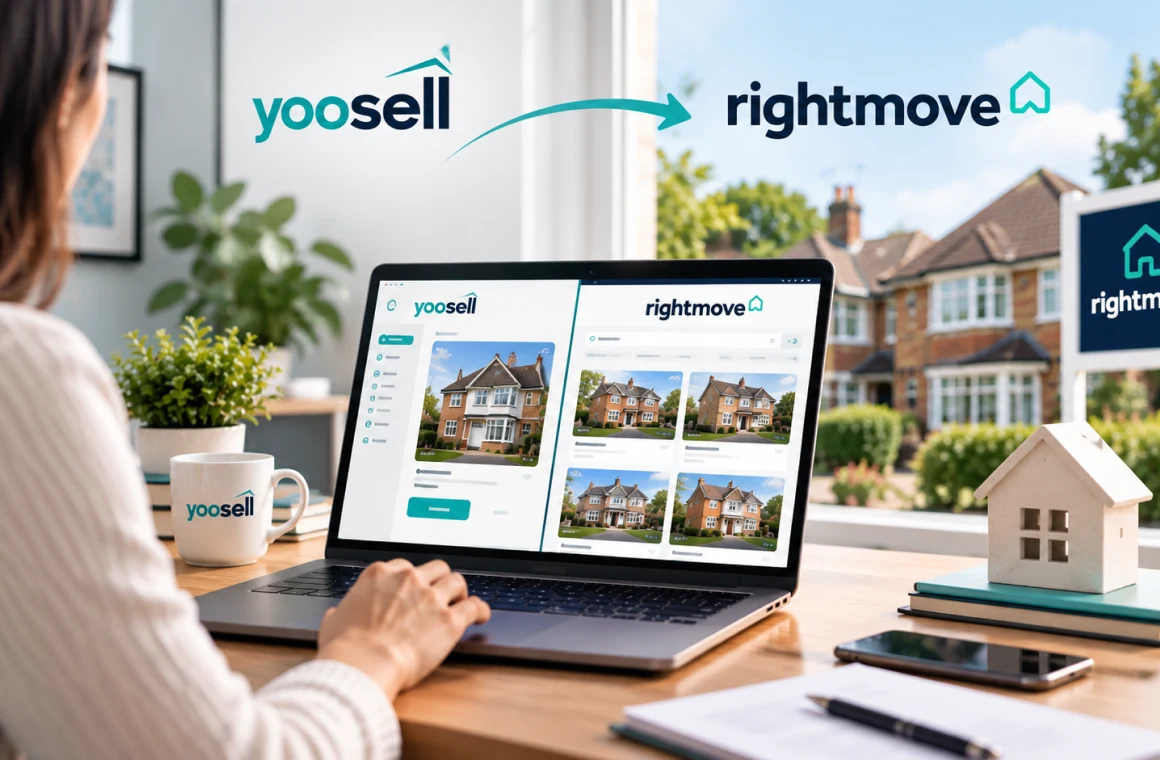
You can list your property on Rightmove without an estate agent by using a Rightmove-registered listing platform such as YooSell. Private individuals cannot list directly on Rightmove, but portal-approved services can. YooSell includes Rightmove listing on all three plans from £29 per month, with the first month free, zero commission at completion, and ID-verified buyers as standard. Rightmove receives approximately 52.9 million monthly visits and accounts for around 70% of all time UK buyers spend on property portals, making it the most important portal for any UK seller in 2026.
Start Selling Your Home Today!
Take control of your sale with YooSell. Get started today and explore how we can help you sell smarter, faster, and with less hassle.