Scotland
Thinking of buying or selling property in Scotland in 2026? This original national guide covers Edinburgh, Glasgow, the Lothians, the Highlands and Islands, with verified Registers of Scotland and ONS data, LBTT explained, and how to sell your Scottish home commission-free on Rightmove with YooSell.

Sarah M.
Sarah focuses on pricing strategy, presentation, and getting listings ready for market. She helps sellers present homes clearly without overcomplicating the process.
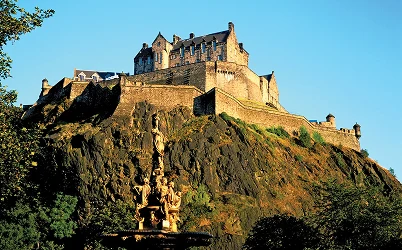
Scotland is a country of extraordinary contrast and remarkable variety. Its dramatic Highlands and Islands, its two great cities of Edinburgh and Glasgow, its fertile lowland farmlands, its world-famous whisky distilleries and golf courses, and its distinct legal and property system make it one of the most distinctive property markets in the UK. With an average house price of £196,000 in July 2026, Scotland offers the most accessible major property market of the three mainland UK nations while delivering consistent annual growth above the England average. Whether you are relocating from south of the border for space and value, buying your first home in one of Scotland's cities or towns, or a homeowner considering selling your Scottish property without paying estate agent commission, this guide gives you an accurate and original picture of Scotland's property market and quality of life in 2026.
Browse verified property listings across Scotland on the YooSell Find a Home platform, with no agent fees and direct access to verified seller listings.
About Scotland?
Scotland is a country and constituent nation of the United Kingdom, occupying the northern third of the island of Great Britain, with a population of approximately 5.45 million at the 2021 census. It is bordered by England to the south, with the North Sea to the east, the North Atlantic Ocean to the west, and the North Sea to the north. Scotland also includes approximately 790 offshore islands, principally in the Hebrides and the Northern Isles of Orkney and Shetland.
Scotland has a devolved parliament, the Scottish Parliament, which was established by the Scotland Act 1998 and first convened in May 1999. The Parliament, based at Holyrood in Edinburgh, has legislative powers over a wide range of devolved matters including health, education, justice, housing, and local government. The Scottish National Party governed Scotland as a minority and majority government from 2007, with the political landscape shifting through a period of independence referendums and constitutional debate. Scotland voted to remain part of the UK in the independence referendum of September 2014 by 55.3% to 44.7%. In the 2024 UK general election, Labour, the SNP, and the Scottish Conservative Party each won seats across Scotland's 57 Westminster constituencies.
Scotland's largest cities are Glasgow, the most populous city with approximately 600,000 residents in the city proper, and Edinburgh, the capital city with approximately 550,000 residents. Other significant cities include Aberdeen, Dundee, and Inverness. The country is divided into 32 council areas for local government, each with its own elected council.
Scotland has its own distinct legal system, which differs significantly from English law and has important implications for property transactions. The Scots law concept of missives, the formal exchange of letters between solicitors that constitutes a binding property contract in Scotland, differs from the English contract exchange process. In Scotland, a binding contract is typically formed earlier in the transaction, reducing the risk of late fall-throughs. Conveyancing in Scotland is handled exclusively by solicitors, not by separate licensed conveyancers as in England. Scotland also uses Land and Buildings Transaction Tax rather than Stamp Duty Land Tax for property purchases. These differences make understanding the Scottish property process essential for buyers relocating from England.
Scotland Property Market 2026
Scotland's property market in 2026 presents a picture of consistent growth across most areas, with the official data from Registers of Scotland and the ONS UK House Price Index providing the most authoritative picture of the national market.
National Property Market Overview
According to Registers of Scotland, the most authoritative source of Scottish property data, the median price of a residential property in Scotland reached £198,000 in the 2025 to 2026 financial year, an increase of 4% compared to £190,000 the previous year. The total market value of residential sales in Scotland reached £24.3 billion in 2025 to 2026, a 7% increase over the previous year and a 45% increase over ten years. There were 8,469 residential sales in Scotland in May 2026 alone, according to Registers of Scotland data.
The UK House Price Index, which uses a different methodology to Registers of Scotland, shows the average price of a property in Scotland was £196,000 in July 2026, an increase of 2.3% compared to July 2025. At the Scotland average price of £186,582, a standard buyer pays £832 in Land and Buildings Transaction Tax.
According to the Scottish Government's Housing Market Review for Q2 2026, based on UK HPI data, the average house price in Scotland in 2025 to 2026 was £190,000, an increase of 3.3% relative to 2024 to 2025. Registers of Scotland data shows the average arithmetic mean house price in Scotland was £227,000 in Q1 2026, up 1.5% annually.
Property Prices by Type
Registers of Scotland data for 2025 to 2026 shows detached homes recording the highest median sale price in Scotland at £324,995, while flats had a median price of £138,017. Semi-detached properties and terraced houses sit between these two extremes. Accessible rural areas had the highest median price of all area types in 2025 to 2026 at £280,500, reflecting the premium commanded by quality rural property across Scotland's countryside.
Property Prices by Local Authority
The most expensive local authority in Scotland for property is the City of Edinburgh, with an average price of £289,857 as of March 2026, up 15.4% over five years. East Renfrewshire, a suburban council area to the south of Glasgow with exceptionally strong schools, averages £288,945, up 19.8% over five years. East Lothian, the coastal commuter district to the east of Edinburgh, averages £277,238, up 22.5% over five years.
The average house price in Edinburgh was £304,000 in July 2026 according to ONS data, up 4.0% from July 2025. Edinburgh is the second most expensive local authority in Scotland by average price.
At the more accessible end of the market, West Dunbartonshire had an average price of £125,718 in Q1 2026, up 6.0% year-on-year. The Western Isles, North Ayrshire, and Inverclyde offer the most affordable property in mainland Scotland, while Orkney and Shetland have their own distinct market conditions.
Land and Buildings Transaction Tax
Scotland replaced Stamp Duty Land Tax with Land and Buildings Transaction Tax from 1 April 2015. For residential purchases in Scotland, the LBTT nil-rate threshold applies to the portion of purchase price up to £145,000, with a 2% rate on the portion between £145,001 and £250,000, 5% on the portion from £250,001 to £325,000, 10% on the portion from £325,001 to £750,000, and 12% on the portion above £750,000. First-time buyers benefit from a relief that increases the nil-rate threshold to £175,000. The Additional Dwelling Supplement of 8% applies to purchases of additional residential properties above a threshold price.
Use the YooSell Stamp Duty Calculator as a reference guide and consult a Scottish solicitor for your specific LBTT liability.
How Much Could You Save Selling Without an Agent?
Traditional estate agents typically charge between 1% and 2% commission on the final sale price for Scottish properties. With YooSell, you pay a fixed monthly fee from just £49.50 and keep 100% of your agreed sale price. You can list your property on Rightmove through YooSell directly, giving your Scottish home full visibility on the UK's biggest property portal without paying estate agent commission. Use the YooSell Cost Saving Calculator to understand your saving.
Best Places to Live in Scotland
Scotland's variety of living environments is extraordinary, from cosmopolitan city living in Edinburgh and Glasgow to dramatic coastal villages on the west coast and whisky heartlands of Speyside. The following covers the principal areas that attract property buyers from across the UK and internationally.
Edinburgh
Edinburgh, Scotland's capital city, is consistently named one of the best cities to live in the UK and regularly appears in global rankings of the most liveable cities in the world. The Old Town, with its medieval closes, the Royal Mile, and the dramatic volcanic crag of Arthur's Seat, and the Georgian New Town, a UNESCO World Heritage Site, give Edinburgh an architectural quality unmatched in Scotland and rare anywhere in the UK. The city has a population of approximately 550,000 and a highly educated, professional workforce driven by its universities, financial services sector, and government employment. Property in Edinburgh is the most expensive in Scotland, averaging £304,000 in July 2026. Browse properties in Edinburgh on the YooSell Find a Home platform.
Glasgow
Glasgow is Scotland's largest and most commercially vibrant city, with a population of approximately 600,000 in the city proper and approximately 1.8 million in the wider metropolitan area. The city has undergone one of the most dramatic urban transformations of any UK city since the 1980s, moving from a post-industrial decline to a thriving economy anchored in higher education, financial services, digital technology, and the creative industries. Glasgow's West End is one of the most desirable urban residential areas in Scotland, and the East End has been comprehensively regenerated. The surrounding suburbs of East Renfrewshire have the highest average property prices in the Glasgow area.
The Lothians
East Lothian, West Lothian, and Midlothian surround Edinburgh to east, west, and south and provide the capital's suburban and commuter hinterland. East Lothian, with its dramatic coastline, golf links, market towns of Haddington, North Berwick, and Dunbar, and fast rail connections to Edinburgh, is consistently cited as one of the most desirable places to live in Scotland. Average prices in East Lothian are £277,238, up 22.5% over five years.
St Andrews and Fife
St Andrews in Fife is one of Scotland's most distinctive towns, home to the world's oldest golf course, the University of St Andrews where the Duke and Duchess of Edinburgh met as students, and a beautifully preserved medieval town centre. Property in St Andrews commands a significant premium. The wider Kingdom of Fife, connected to Edinburgh by the Forth Rail Bridge, offers accessible commuter property at prices well below the capital.
Perthshire and the Trossachs
Perthshire, centred on the historic city of Perth, provides the gateway to the Highlands for buyers seeking genuinely dramatic landscapes. The Trossachs National Park, known as the Highlands in miniature, is accessible from Stirling and Callander. Stirling itself, with its extraordinary castle and position between the Highlands and the Central Belt, is one of Scotland's most practical residential choices.
The Highlands and Islands
The Scottish Highlands cover approximately one third of Scotland's land area and have a population of approximately 260,000 people. Inverness, the Highland capital, is the fastest-growing city in Scotland and has excellent transport connections via the A9, the Inverness to Edinburgh rail line, and Inverness Airport. Fort William at the foot of Ben Nevis, Aviemore in the Cairngorms National Park, and the Skye communities of Portree and Broadford draw buyers seeking an outdoor lifestyle of unparalleled quality. Property in the Highlands and Islands is generally more accessible than in the Central Belt, though the island regions have a median price of £185,000 compared to £198,000 for mainland Scotland.
Aberdeen
Aberdeen, the Granite City, is Scotland's third city and the hub of the North Sea oil and gas industry. The city has a strong economy anchored in energy, university research, and food and drink manufacturing. Property in Aberdeen and Aberdeenshire has been on a recovery trajectory after the oil price collapse of 2014 to 2016 suppressed values, and the long-term energy transition is bringing new investment in renewable energy infrastructure. Average prices in Aberdeen city are below the Scottish average, making it one of the more accessible city markets in the country.
Argyll, the Borders, and Dumfries and Galloway
For buyers seeking the most rural and peaceful settings in Scotland, the Scottish Borders, Dumfries and Galloway, and Argyll and Bute all offer outstanding countryside living at highly accessible prices. The Borders, a region of rolling farmland and market towns including Jedburgh, Peebles, and Melrose, has seen increased interest from Edinburgh commuters since improvements to the Borders Railway restored direct rail connections between Galashiels, Tweedbank, and Edinburgh.
Education in Scotland
Scotland operates an entirely separate education system from England, with its own curriculum, qualifications, and structure. Scottish schooling follows a different qualifications framework, with pupils studying towards National 5 examinations at age 15 to 16, Highers at age 16 to 17, and Advanced Highers at age 17 to 18. Scottish Highers are the primary qualification for university entrance in Scotland, and most Scottish university degrees are four years rather than the three years typical in England.
Ofsted does not operate in Scotland. Scottish schools are inspected by Education Scotland and Her Majesty's Inspectorate of Education, with inspection reports published on the Education Scotland website. Scotland's school performance across key subject areas is broadly competitive with English standards. St Andrews, Edinburgh, and Glasgow universities consistently rank among the world's top 100 universities in global league tables.
Families researching schools in Scotland should use the Education Scotland inspection reports and the Scottish Government's school performance statistics for the most accurate current picture.
Transport in Scotland
Rail Connections
ScotRail operates the majority of Scottish domestic rail services, connecting Edinburgh and Glasgow with Dundee, Aberdeen, Inverness, and the Borders. Cross-border services between Scotland and England are operated by LNER on the East Coast Main Line, with Edinburgh Waverley to London King's Cross in approximately 4 hours 20 minutes on faster services. Avanti West Coast operates the West Coast Main Line from Glasgow Central to London Euston in approximately 4 hours 30 minutes.
The Edinburgh to Glasgow Central route is one of the busiest in Scotland, with frequent services taking approximately 50 minutes. The Ayrshire and Inverclyde commuter lines serve the Glasgow suburban area. The Borders Railway, which reopened in 2015 after 46 years of closure, connects Edinburgh to Galashiels and Tweedbank in approximately 55 minutes.
Roads
The A9, running from Perth northward to Inverness and beyond, is Scotland's most important Highland road corridor and is currently the subject of a major dualling programme. The M8, M80, and M9 motorways connect the Central Belt cities of Glasgow, Edinburgh, Stirling, and Falkirk.
Heritage and Culture
Scotland's cultural and heritage offer is extraordinary. The Edinburgh Festival, held each August, is the world's largest arts festival, drawing approximately 4 million visits to Edinburgh during the Festival month. The Fringe, the International Festival, the Book Festival, the Film Festival, and the Art Festival run concurrently across the city's venues. The Scottish Highlands are home to Balmoral Castle, Glencoe, the Glenfinnan Viaduct, and Loch Ness. Glasgow's Kelvingrove Art Gallery and Museum is Scotland's most visited museum outside Edinburgh. The Cairngorms National Park is the UK's largest national park by area.
Scotland's whisky industry, producing Scotch whisky in five recognised regions, Speyside, Highlands, Lowlands, Islay, and Campbeltown, is one of Scotland's most significant cultural and economic exports, generating several billion pounds annually and supporting tens of thousands of jobs across the country.
Selling Your Home in Scotland with YooSell
If you are considering selling your Scottish property, YooSell offers a genuinely better alternative to the traditional estate agency model. YooSell is a self-service home-selling platform giving you complete control of your sale at a fraction of the cost of a conventional agent.
Why Scottish Homeowners Choose YooSell
With YooSell, you pay no commission at any stage of the sale process. You pay a simple fixed monthly fee from £49.50 and keep 100% of your agreed sale price. You can list your property on Rightmove through YooSell directly, giving your Scottish home maximum visibility on the UK's biggest property portal without paying estate agent commission. Learn more about how YooSell works or view the full pricing plans.
Free Tools for Scottish Buyers and Sellers
Valuation Calculator to estimate your Scottish property's current market value
Cost Saving Calculator to see exactly how much you save versus a traditional agent
Mortgage Calculator to plan your purchase costs and monthly repayments
YooSell Pricing Plans to choose the listing tier that fits your sale
YooSell Rightmove Listing to learn how to list on Rightmove through YooSell
Frequently Asked Questions
Find Homes Available In Scotland
Browse verified homes listed directly by sellers in Scotland. Compare listings, arrange viewings and make offers in one place.
Find Homes Available In ScotlandStart Selling Your Home Today!
Take control of your sale with YooSell. Get started today and explore how we can help you sell smarter, faster, and with less hassle.