Derby
Thinking of moving to Derby in 2026? This original city area guide covers the best neighbourhoods from Darley Abbey to Mickleover, verified property market data, Rolls-Royce and Great British Railways, the Museum of Making, schools, transport connections, and how to sell your East Midlands home on Rightmove commission-free with YooSell.

Oliver H.
Oliver covers Midlands property trends and practical selling tips for homeowners. He focuses on clear, jargon-free advice that helps private sellers stay in control.
Derby is one of England's most historically significant cities and one of the East Midlands' most dynamic property markets. Birthplace of the Industrial Revolution, home to Rolls-Royce's global civil aerospace and defence campuses, site of the world's first factory on the River Derwent, and chosen headquarters for Great British Railways, Derby combines a remarkable industrial heritage with a modern city centre undergoing its most ambitious regeneration programme in a generation. With a population of 266,500 across 30 square miles and an average weekly pay for full-time employees of £769.30, above both the East Midlands average of £664.90 and the national average of £729.60, Derby offers exceptional value for buyers relocating from more expensive cities. Whether you are searching for your first home, looking for a family house in one of Derby's most desirable suburbs, or considering selling your property without paying estate agent commission, this guide gives you an accurate and original picture of the city in 2026.
Start your property search by browsing verified listings across Derby and the wider East Midlands on the YooSell Find a Home platform, with no agent fees standing between buyer and seller.
About Derby?
Derby is a city and unitary authority area in Derbyshire, England, situated on the River Derwent in the East Midlands. The city covers approximately 30 square miles and had an estimated population of 266,500 at the time of Derby City Council's 2025 to 2028 plan, with 63% of residents of working age, 20% aged 15 or under, and 17% aged 65 or over. The city has 114,090 homes, with 51% in Council Tax Band A, reflecting the significant proportion of affordable housing stock across the city's residential areas.
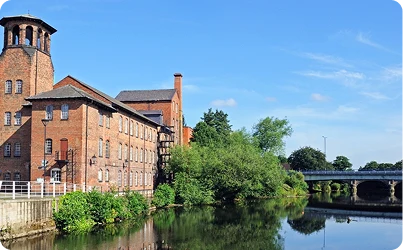
Derby was granted city status in 1977. Its name derives from the Old Norse Djúrabýr, meaning village where deer are kept, and the town's origins as a Viking settlement are reflected in the characteristic "-by" ending. However, Derby's place in history is secured not by its Viking beginnings but by what happened here at the dawn of industrialisation. In 1721, the Lombe brothers opened the first large-scale water-powered silk throwing mill at the Silk Mill on the River Derwent, creating what is widely regarded as the world's first factory. This single event, which gave Derby a defining claim in the history of manufacturing and human productivity, is commemorated today at the Museum of Making, which opened on the same Silk Mill site in 2021 and is part of the Derwent Valley Mills UNESCO World Heritage Site.
Derby has been a centre for innovation for over 300 years. In 1840, Derby became the headquarters for Midland Railway and remained a major hub for rail manufacturing. Today, Rolls-Royce's global civil aerospace and defence campuses are based in Derby, while Alstom and Bombardier, now Alstom Transport UK, are part of Derby's rail manufacturing cluster, described as Europe's largest. Toyota manufactures cars at its Burnaston plant, approximately five miles from the city centre. In 2023, Derby was named as the chosen headquarters for Great British Railways, the new organisation bringing together the work of 17 different rail organisations, with a shortlist of two Derby city centre sites, Becketwell and Midland House, under active consideration as of April 2026. Derby is the UK Capital for Innovation, a title that reflects both its historical legacy and its continued strength in advanced manufacturing and engineering.
Derby Property Market 2026
Derby's property market offers genuine value relative to comparable English cities. The city's strong employment base in advanced manufacturing and engineering, two universities, a growing city centre, and excellent transport links support consistent residential demand across a wide range of price points.
Property Market Overview
According to ONS UK House Price Index data, the average house price in Derby was £205,000 in April 2026, up 1.7% from April 2025. This growth was below the East Midlands regional rise of 5.5% over the same period, indicating that Derby city itself has seen more modest growth than some surrounding areas, though it remains significantly below both the East Midlands average of £284,000 and the Great Britain average of £332,000.
Looking across multiple data sources provides a fuller picture. Rightmove analysis of HM Land Registry data shows the average property price in Derby at £245,933 over the last year. Property Solvers analysis of HM Land Registry data places the average at £229,830, with prices up 12.37% over the last five years and 2.25% over the last 12 months. OnTheMarket data shows the average sold price in Derby at £239,000 as of June 2026. A broader analysis across the Derby postcode area shows an average property price of £260,000 between May 2025 and April 2026 across approximately 9,800 transactions, with older homes averaging £258,000 and new-build properties averaging £318,000.
The most affordable postcode sector in Derby is DE23 8, with an average price of approximately £142,000, while the most expensive is DE22 5, which averages approximately £895,000, the latter reflecting the premium properties in Darley Abbey and the broader Allestree area. This very wide spread illustrates how significantly the character of Derby's different neighbourhoods can affect prices.
Properties in Derby are currently taking an average of 83 days to sell from listing to completion, excluding fall-throughs. The average difference between asking and sold prices is minus £8,622, or minus 3%, indicating that accurate pricing at the point of listing is important to achieving a timely sale.
Property Types and Price Bands
The majority of house sales in Derby over the last year were in the £182,000 to £234,000 range with 600 transactions, followed closely by the £130,000 to £182,000 range with 559 transactions. Detached homes in Derby command approximately £320,000, while flat properties are the most accessible at approximately £115,000, illustrating a spread of £205,000 between the most and least expensive property types. In the year to April 2026, semi-detached property prices in Derby rose by 2.5%, while flat prices decreased by 2.4%.
The average price paid by first-time buyers was £183,000 in April 2026, broadly in line with the previous year. Home movers in Derby paid an average of £239,000 in April 2026, slightly above the £235,000 average a year earlier. Derby recorded 37 new-build transactions in the past 12 months, representing 1.4% of total sales, with new builds commanding an average premium of approximately £60,000 over existing stock.
Use the free YooSell Valuation Calculator to get an informed estimate of your Derby property's current market value before listing.
The Rental Market in Derby
Private rents in Derby averaged £852 per month in May 2026, an increase of 1.9% from £836 in May 2025, according to ONS Price Index of Private Rents data. This rise was lower than the East Midlands regional rise of 3.7% over the same period. At £852 per month, Derby's average rent sits below the East Midlands average of £914, making the city one of the more affordable rental markets in the region. Rental costs in Derby vary considerably by area, with the city centre and student areas typically commanding higher monthly rents than established family suburbs such as Mickleover and Littleover.
How Much Could You Save Selling Without an Agent?
Traditional estate agents typically charge between 1% and 3% commission on the final sale price. On a Derby property sold at the local average of £239,000, that commission can represent between £2,390 and £7,170 deducted directly from your sale proceeds at completion. With YooSell, you pay a fixed monthly fee from just £49.50 and keep 100% of your agreed sale price. You can list your property on Rightmove through YooSell directly, giving your home full exposure to buyers on the UK's biggest property portal without paying estate agent commission. Use the free YooSell Cost Saving Calculator to calculate your exact potential saving.
Best Areas and Neighbourhoods in Derby
Derby is a city of genuinely distinct neighbourhoods, each with its own character, price point, and appeal. Understanding the differences between them is essential for making a confident property decision.
Darley Abbey
Darley Abbey, on the northern fringe of Derby along the banks of the River Derwent, is widely regarded as one of the most distinctive and desirable villages within the city boundary. It is part of the Derwent Valley Mills UNESCO World Heritage Site, and its rows of 18th-century workers' cottages, built by the Evans cotton mill family to house their workforce, give it an architectural character unlike anywhere else in Derby. Darley Park, adjacent to the village, spans 80 acres and contains the largest collection of hydrangeas in Britain and the third largest in the world. The village is just two miles from the city centre, offering a combination of extraordinary character and practical proximity that makes it one of the most sought-after addresses in the city.
Buyers looking at Darley Abbey can explore available properties on the YooSell Find a Home platform alongside listings from across the city.
Mickleover
Mickleover, to the west of the city centre, is consistently rated as one of the most covetable neighbourhoods in Derby, offering an eclectic mix of housing from traditional period homes to modern developments. The area is popular with families, professionals, and retirees seeking a residential setting with good schools, active community life, and easy access to the A38 and A50 road network. Mickleover's village centre retains a genuine independent retail and café offer, giving the area a town-within-a-city character that many buyers find immediately appealing.
Littleover
Littleover, to the south-east of the city centre, is one of Derby's most consistently popular residential areas and is home to Littleover Community School, one of the highest-performing state secondary schools in the city. The area offers a diverse range of housing options, from period homes and bungalows to modern estates and new developments. Its strong schools, good transport links via the A38 and A514, and inclusive community character make it a particularly popular choice for families relocating from other cities and seeking a well-connected, family-friendly setting.
Sellers in Littleover can use the YooSell Cost Saving Calculator to see exactly how much they could save on commission versus a traditional agent.
Allestree
Allestree, in the north-west of Derby, is one of the city's most attractive residential areas, offering access to Allestree Park with its woodland trails, lake, and golf course. It has a strong community feel and excellent primary school provision. The area is accessible from the A6 heading north towards the Peak District and benefits from relatively peaceful residential streets despite its proximity to the city centre, approximately three miles to the south.
Chellaston
Chellaston, to the south of Derby close to the border with South Derbyshire, is a popular family suburb that has expanded considerably over the past two decades. It benefits from direct road access to the A50 and the Toyota manufacturing plant at Burnaston, as well as proximity to East Midlands Airport. Chellaston is home to Chellaston Academy, a well-regarded secondary school. The area offers a good mix of modern semi-detached and detached family homes.
Oakwood
Oakwood, to the north-east of the city centre, is described as a sought-after area that offers a wide range of amenities including diverse restaurants, shopping, and excellent schools. It appeals to families and young professionals who want a vibrant community feel with strong transport connections to the city centre and to Nottingham.
City Centre and Cathedral Quarter
The city centre and the Cathedral Quarter around Derby Cathedral and the Derbion shopping centre attract young professionals, students, and those who want city-centre living at the heart of Derby's regenerating cultural life. The Cathedral Quarter is the historic heart of the city, characterised by independent shops, galleries, cafes, and restaurants, with Derby Cathedral and the Silk Mill Museum of Making as its defining landmarks.
Spondon, Alvaston, and the Eastern Suburbs
Spondon, Alvaston, and the wider eastern suburban corridor offer some of the most affordable property in Derby while remaining well connected to the city centre and to Nottingham via the A52. These areas are popular with first-time buyers and young families seeking accessible entry to the market. The YooSell Mortgage Calculator can help first-time buyers in these areas plan their monthly repayments before committing to a purchase.
Schools in Derby
Derby has 28 secondary schools serving 21,591 students and a significant number of primary schools across the city's diverse residential areas. School performance in Derby is broadly in line with the national average at GCSE level, with 30.44% of pupils achieving grade 5 or above in English and maths GCSEs, close to the England average of 30.84%.
Primary Schools in Derby
Griffe Field Primary School
Griffe Field Primary School on Grosvenor Drive, Littleover, Derby DE23 3UQ is rated Outstanding by Ofsted in all categories, including quality of education, behaviour and attitudes, personal development, leadership and management, and early years provision. The school was inspected on 10 October 2023 and received Outstanding across every single judgement area. It has 454 pupils, above its stated capacity of 420, and is part of Derby Diocesan Academy Trust. It is one of the highest-rated state primary schools in the Derby city area and a key reason why Littleover is so popular with families.
Walter Evans Church of England Aided Primary School
Walter Evans Church of England Aided Primary School is located on Darley Abbey Drive, Darley Abbey, Derby DE22 1EF, within the UNESCO World Heritage Site. The school serves the unique historic village of Darley Abbey and provides primary education in one of the most distinctive and beautiful settings of any school in Derbyshire.
Other Primary Provision Across Derby
Derby has a wide range of primary schools distributed across its residential areas. Families researching primary schools are advised to check current Ofsted reports and catchment boundaries directly with Derby City Council's school admissions team before making a residential decision based on a specific school catchment. The new Ofsted report card framework, introduced from September 2024, no longer issues a single overall effectiveness judgement for most newly inspected schools, and parents should review the full report card for any school inspected under the new system.
Secondary Schools in Derby
Littleover Community School
Littleover Community School on Pastures Hill, Littleover, Derby DE23 4BZ is rated Good by Ofsted, inspected on 19 October 2022, with Good ratings across quality of education, behaviour and attitudes, personal development, and leadership and management. Uniquely, the school's sixth form provision was rated Outstanding by Ofsted in 2023, making Littleover Community School one of the only comprehensive schools in the East Midlands where the sixth form holds a higher Ofsted rating than the main school. The school has 1,822 pupils aged 11 to 18 and is oversubscribed, with 1.3 times as many applications as places in the most recent admissions cycle. In 2025, 58.40% of pupils achieved grade 5 or above in English and maths GCSEs, significantly above the national average of approximately 30%, and the school achieved an Attainment 8 score of 52.7, ranking second in Derby and 644th nationally out of 3,216 secondary schools. The school offers 26 A-level subjects in its sixth form, with 66.3% of A-level entries graded A to B.
Chellaston Academy
Chellaston Academy is ranked fifth in Derby by School Guide's independent ranking system and serves families in the Chellaston and Sinfin areas. It is a popular secondary school for the southern suburbs of Derby.
Landau Forte College
Landau Forte College, ranked third in Derby by School Guide, is a city centre secondary and sixth form academy providing education for students in the urban core of Derby. It has a strong performance record and is part of the Landau Forte Charitable Trust.
Derby Cathedral School
Derby Cathedral School is a Church of England secondary school providing education for students aged 11 to 19 with a student to teacher ratio of 19 to 1, offering a faith-based secondary option within the city centre.
Da Vinci Academy
Da Vinci Academy in Breadsall serves pupils aged 11 to 16 with a student to teacher ratio of 16 to 1, providing a supportive and safe environment in the north-east of Derby.
Families considering a purchase in Derby based on school catchment should always verify current catchment boundaries and admission criteria with Derby City Council's admissions team, as these can and do change between academic years.
Special Educational Needs Provision
Derby City Council provides SEND home-to-school transport for eligible children with Education, Health and Care Plans. Families with children who have additional needs should contact Derby City Council's SEND team directly to discuss eligibility and available specialist provision across the city.
Universities in Derby
University of Derby
The University of Derby is a significant employer and community institution in the city. The university is currently developing a new £150 million city centre campus, which includes a £70 million new business school, bringing a major part of its academic provision into the heart of Derby's regenerating city centre. The university has strong partnerships with Derby's advanced manufacturing sector and offers programmes in engineering, business, health sciences, art, design, and education.
Other Higher Education Access
Loughborough University, ranked among the UK's top institutions for sport science and engineering, is approximately 20 miles from Derby. Nottingham Trent University and the University of Nottingham are both accessible within approximately 30 to 40 minutes by car or direct train, giving Derby residents access to three further leading institutions within a practical commuting distance.
Transport and Commuting from Derby
Derby's transport connectivity is one of its most important practical strengths, with frequent direct rail services in multiple directions, good motorway access, and an improving active travel network across the city.
Rail Connections
Derby railway station is a major interchange on the UK's national rail network, served by East Midlands Railway, CrossCountry, and Avanti West Coast services. Direct trains operate to a remarkable range of destinations, giving Derby residents genuine flexibility for both daily commuting and longer-distance travel.
Nottingham is reachable by direct train in approximately 20 to 28 minutes, with East Midlands Railway and CrossCountry services running frequently throughout the day, approximately every 20 minutes at peak times. Birmingham New Street is approximately 35 minutes away by direct CrossCountry service. London St Pancras is reachable in approximately 1 hour 30 minutes by direct East Midlands Railway service. Sheffield is approximately 40 minutes away, Leicester approximately 35 minutes, and Leeds approximately 1 hour 15 minutes. The combination of fast direct services to London and to Birmingham gives Derby's commuter population genuinely good options for working in either of England's two largest cities.
Derby also has two smaller stations at Peartree, serving the Peartree, Normanton, and Osmaston areas, and at Derby Midland which serves as the main city station. East Midlands Railway operates services through Peartree to Crewe, Nottingham, and Newark Castle.
Road and Motorway Access
The A38 and A50 are the two primary arterial routes connecting Derby to the wider Midlands road and motorway network. The A38 connects south to the M42 and north to Matlock and the Peak District. The A50 runs east-west, providing access to the M1 at Junction 24 in Nottingham to the east and to Stoke-on-Trent to the west, with the M6 accessible via the A500. The M1 is approximately 15 to 20 minutes from the city centre via the A52. Toyota's manufacturing plant at Burnaston, approximately five miles south-west of Derby, is accessible directly from the A38 and A50 interchange.
Bus Services
Derby's bus network is operated primarily by Arriva Midlands and Trent Barton, providing connections between the city centre and residential suburbs. The Skylink service, operated by Trent Barton, runs every 20 minutes during the daytime between Derby city centre, East Midlands Airport, and Leicester, with a 24-hour frequency maintained throughout the night. This service is particularly useful for residents in the south of the city and for those who travel frequently for work or leisure via East Midlands Airport. The East Midlands Combined County Authority is now the official regional transport authority for the Derbyshire, Derby, Nottinghamshire, and Nottingham area, with ongoing work to improve bus service levels and integration across the region.
Cycling and Active Travel
Derby City Council's Transforming Cities programme has delivered new and renewed cycle pathways, traffic signal improvements, and carriageway upgrades across the city. Six city parks hold Green Flag status in 2025, reflecting the quality of Derby's parks and green infrastructure. The Derwent Valley Heritage Way, running along the River Derwent from Derby city centre northward through Darley Abbey, Duffield, and towards the Peak District, provides an outstanding off-road cycling and walking route for residents in the northern parts of the city.
Living in Derby: Heritage, Culture and Community
Derby's Industrial and Manufacturing Heritage
Derby is justifiably proud of its status as the birthplace of the Industrial Revolution. The Derwent Valley Mills, including the Silk Mill on the River Derwent, were inscribed as a UNESCO World Heritage Site in 2001, recognising their global significance as the site where the modern factory system originated. The Museum of Making, which opened on the Silk Mill site on 21 May 2021, tells Derby's 300-year history of manufacturing and innovation through interactive exhibits, workshops, and a stunning civic hall containing a seven-tonne Rolls-Royce Trent 1000 engine suspended above visitors' heads. The museum also houses the much-loved Midland Model Railway in the Railway Gallery and provides publicly accessible workshops equipped with CNC machines, laser cutters, and textile facilities. Entry is free.
Rolls-Royce remains Derby's most famous employer, with its global civil aerospace and defence campuses based in the city. The company's presence touches every aspect of Derby's economy and identity, from the engineers and graduates it employs to the global supply chain it sustains across the wider Derbyshire economy.
Becketwell, Derby Market Hall, and City Centre Regeneration
Derby's city centre has undergone the most significant transformation in a generation during 2024 and 2025. Two major projects have completed or are in the final stages of opening.
The Derby Market Hall, a Grade II listed Victorian building completed in 1866 by engineer Rowland Mason Ordish, has been transformed through a £35 million refurbishment, partly funded with £9.43 million from the Government's Future High Streets Fund. The building reopened in 2025 as a new hub for independent food, drink, makers, and traders, bringing together the best of the region's independent offer under a beautifully restored Victorian roof.
Becketwell Live, the new £45.8 million, 3,500-capacity performance and conference venue at Becketwell in the city centre, was funded by Derby City Council and is operated by ASM Global. It is expected to host over 200 cultural and commercial events each year and attract an additional 250,000 visitors to Derby. The venue received the Special Recognition Award at the 2025 East Midlands Property Dinner. Together, these two venues represent a fundamental shift in Derby's offer as an evening and leisure destination.
The Becketwell regeneration scheme as a whole is a £200 million mixed-use city centre development, also including residential apartments through the Condor development. One of Derby city centre's key routes has completed a major overhaul connecting Becketwell Live, the Condor apartments, and the Derby Market Hall, creating a new pedestrian and cycling spine through the regenerating city centre.
Great British Railways Headquarters
In March 2023, Derby was named as the chosen headquarters for Great British Railways, the new organisation that will bring together the work of 17 different rail industry organisations. This is a major long-term economic prize for the city, bringing hundreds of high-quality jobs to Derby and reinforcing the city's claim as the UK's leading rail city. A GBR Transition Team office has been operating in Derby from John Ellis House since 2024. The shortlist of two locations, Becketwell and Midland House, was confirmed in April 2026, with a final decision expected in due course.
Derby Cathedral and the Cathedral Quarter
Derby Cathedral is the seat of the Bishop of Derby and one of the city's most significant historic buildings. The Cathedral Quarter, the area surrounding the cathedral and the Silk Mill, forms the historic heart of the city, characterised by independent shops, galleries, cafes, restaurants, and the Museum of Making. This area has seen significant investment and improvement in recent years and is increasingly cited as one of the most characterful areas of Derby's city centre for daily life and weekend leisure.
The Derwent Valley and Darley Park
The River Derwent and its associated parks provide Derby with outstanding green infrastructure through the heart of the city. Darley Park, adjacent to the village of Darley Abbey, spans 80 acres and is home to the largest collection of hydrangeas in Britain and the third largest in the world, a genuinely extraordinary natural resource within the city boundary. The park holds Green Flag status and is one of six Derby parks maintaining this standard.
Derby's Major Employers and Economy
Beyond Rolls-Royce and the rail manufacturing cluster including Alstom, Derby's economy includes Toyota at Burnaston, SmartParc, a world-leading sustainable food manufacturing hub development on the city's fringes, and Vaillant, which has invested in Derby as part of the Becketwell regeneration. The city's average gross weekly pay for full-time employees of £769.30 significantly outperforms both the East Midlands average of £664.90 and the national average of £729.60, reflecting the concentration of high-skilled manufacturing and engineering employment. The employment rate in Derby stood at 73.9% with 7,550 registered businesses in the city.
Derby's Arts, Sport, and Community Life
Derby has two professional football clubs with historic rivalry. Derby County plays at Pride Park Stadium, a modern stadium to the east of the city centre. Derbyshire County Cricket Club plays at the County Ground on Nottingham Road, one of the oldest cricket grounds in the county. Derby Arena, an indoor velodrome and events venue at Pride Park, hosts national and international cycling events and community events throughout the year.
Derby's arts offer includes Derby Theatre on Theatre Walk in the city centre, the Derby Museum and Art Gallery on the Strand, and the Museum of Making. The Festive Derby 2025 programme included live music, a spectacular parade, ice-skating, and the Sadler Gate Night Market, reflecting a year-round programme of civic events.
Safety in Derby
Derby is the 67th most deprived local authority in England out of 317, with 16% of neighbourhoods in the 10% most deprived nationally. Deprivation is concentrated in specific inner-city wards, while many of the suburban areas, including Mickleover, Littleover, Allestree, Chellaston, and Darley Abbey, have significantly lower crime rates than the city average. Buyers and renters are advised to review Derbyshire Police crime statistics by specific postcode before making a residential decision, as conditions vary significantly between different parts of the city.
Healthcare in Derby
University Hospitals of Derby and Burton NHS Foundation Trust (UHDB) operates the Royal Derby Hospital on Uttoxeter Road, the main acute hospital for the city. The Royal Derby Hospital provides a full range of emergency, surgical, maternity, and specialist services and is one of the largest NHS trusts in the East Midlands. Multiple GP surgeries and health centres operate across Derby's residential areas, providing primary care for residents throughout the city. For first-time homeowners in Derby, the YooSell Stamp Duty Calculator can help you plan your full upfront costs before completing a purchase.
Selling Your Home in Derby with YooSell
If you are considering selling your Derby property, YooSell offers a genuinely better alternative to the traditional estate agency model. YooSell is a self-service home-selling platform built for homeowners across the East Midlands and the wider Midlands, giving you complete control of your sale at a fraction of the cost of a conventional agent.
Why Derby Homeowners Choose YooSell
With YooSell, you pay no commission at any stage of the sale process. You pay a simple fixed monthly fee from £49.50 and keep 100% of your agreed sale price. There is no percentage cut at completion, no hidden extras, and no agent taking a share of the equity you have built in your home.
You can list your property on Rightmove through YooSell directly, putting your Derby home in front of millions of active buyers on the UK's biggest property portal without instructing a traditional estate agent. You set your own asking price, manage your own viewings on your own schedule, and respond to offers entirely on your own terms. Every buyer on the platform is ID-verified and financially qualified before making an offer, so you only deal with serious, genuine purchasers. When you accept an offer, access trusted conveyancers and legal partners directly through your YooSell dashboard, keeping the process streamlined from acceptance through to completion.
Free Tools for Derby Buyers and Sellers
YooSell provides a suite of free online tools to help you plan your move with confidence. Before listing or making an offer in Derby, make use of these resources:
Valuation Calculator to estimate your Derby property's current market value
Cost Saving Calculator to see exactly how much you save versus a traditional agent
Mortgage Calculator to plan your next purchase and understand your monthly repayments
Stamp Duty Calculator to calculate your full tax liability before you exchange
YooSell Pricing Plans to choose the listing tier that fits your sale
Frequently Asked Questions
Find Homes Available In Derby
Browse verified homes listed directly by sellers in Derby. Compare listings, arrange viewings and make offers in one place.
Find Homes Available In DerbyStart Selling Your Home Today!
Take control of your sale with YooSell. Get started today and explore how we can help you sell smarter, faster, and with less hassle.