|Reading time: 10 minutes
Where to Buy vs Rent in Leicestershire (Full Breakdown)

Sarah M.
Sarah focuses on pricing strategy, presentation, and getting listings ready for market. She helps sellers present homes clearly without overcomplicating the process.
Whether to buy or rent in Leicestershire in 2026 depends on your deposit, your income, your timeline, and which part of the county you are looking at. As a broad starting point: in most Leicestershire areas, a buyer with a 10% deposit on an average-priced property will pay monthly mortgage costs broadly comparable to local rents, but will build equity over time and benefit from any further price growth. For people without a deposit, or who need flexibility in the next two to three years, renting remains the more practical short-term option.
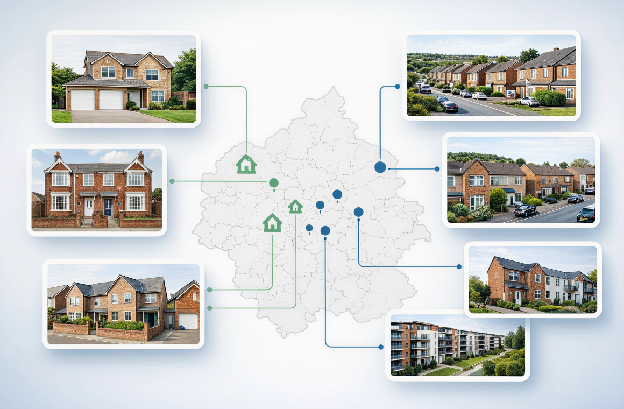
That summary covers the principle. The detail is where Leicestershire gets interesting, because this is not a uniform market. Average house prices vary from approximately £103,000 in some LE1 postcodes to over £700,000 in LE19. Monthly rents range from £718 for a one-bed flat to over £1,400 for a four-bedroom house in premium areas. The buy-versus-rent calculation produces genuinely different answers depending on whether you're looking at Leicester city, Loughborough, Market Harborough, or Coalville. This guide breaks it all down with the latest 2026 data from the ONS, Land Registry, and local market analysis so you can make the comparison that actually applies to you.
Leicestershire Property Market Overview 2026
Leicestershire is one of the more resilient property markets in England in 2026. The East Midlands region recorded annual house price growth of approximately 5.5% in the year to April 2026, according to the ONS UK House Price Index, outperforming the national average and placing Leicestershire among the stronger-performing regions for both buyers and sellers.
The average house price across the Leicestershire county area was approximately £297,000 for the 12 months to May 2026, based on Land Registry price data compiled by Plumplot. Within the city of Leicester itself, the average house price was £235,000 in April 2026 (provisional ONS data), up 2.9% year-on-year, with the average first-time buyer price at £218,000.
For context on affordability, the median property price to median earnings ratio across Leicestershire ranges from 6.8 in North West Leicestershire to 8.5 in Melton. That means a resident on a median income in the most affordable area still needs almost seven years of gross salary to buy a median-priced property. In the least affordable district, it is closer to nine years. Ownership is achievable but requires deliberate financial planning.
Average House Prices Across Leicestershire by Area in 2026
Leicestershire is not a single market. Prices differ substantially by district and postcode. Here is the current picture:
AreaAverage House Price 2026Annual ChangeMarket CharacterLeicester City (overall)£235,000+2.9%First-time buyers, investors, studentsLoughborough£233,000+6.5%University, commuters, FTBsMarket Harborough£337,000+5.5%Premium, families, ruralCoalville£160,000 to £200,000Modest positiveEntry-level, BTL investorsHinckley£220,000 to £260,000PositiveFamilies, first-time buyersMelton Mowbray£260,000 to £300,000PositiveRural, older buyersOadby and Wigston£280,000 to £320,000PositiveFamilies, school catchmentsNorth West Leicestershire£220,000 to £250,000PositiveCommuters, logistics workers
Sources: ONS UK House Price Index (April 2026), Plumplot Leicestershire data (June 2026), YooSell Leicestershire Property Market Guide 2026.
Loughborough's 6.5% annual growth rate makes it one of the fastest-appreciating areas in the county, driven by Leicester University's structural rental demand, direct rail access to both Leicester and Nottingham, and value-seeking buyers priced out of Nottingham city. Market Harborough at approximately £337,000 remains the premium end of the county, with strong demand from families, professionals, and buyers relocating from the south.
Average Rents Across Leicestershire in 2026
On the rental side, Leicester city recorded an average monthly private rent of £1,024 in May 2026, up 3.1% from £993 in May 2025, according to the ONS Price Index of Private Rents. The East Midlands overall averaged £914 per month in May 2026, compared to a UK average of £1,383.
Breaking down Leicester rents by property type (Hutch rental data, 2026):
Property TypeAverage Monthly Rent (Leicester)One-bed flat£718Two-bed flat£896Two-bed house£962Three-bed house£1,206Four-bed house£1,683Five-bed house£1,944
The most expensive area for house rentals is LE15 (Rutland borders) at an average of £1,459 per month. LE8 (Oadby, Wigston, rural south Leicestershire) averages £1,399. The most affordable rental areas for flats are in LE17, LE14, and LE13, with average flat rents in the £683 to £735 range.
For buy-to-let investors, gross rental yields across Leicester postcodes range from 3.3% in LE1 to 7.3% in LE8, according to Property Investments UK data updated in February 2026. Monthly rents range from £784 in LE1 to £1,178 in LE8 across these postcodes.
Buy vs Rent: The Monthly Cost Comparison for Leicestershire
The buy-versus-rent decision comes down to monthly costs, long-term wealth, and flexibility. Let us run the actual numbers for a representative Leicestershire purchase in 2026.
Scenario: First-time buyer purchasing an average Leicester city property at £235,000 with a 10% deposit.
Deposit: £23,500
Mortgage amount: £211,500
Assumed mortgage rate (two-year fix, average Q2 2026): approximately 5.60%
Monthly mortgage payment (25-year repayment): approximately £1,320
Monthly rent for equivalent three-bedroom house in same area: approximately £1,206 (Hutch, 2026)
In this scenario, buying costs roughly £114 more per month than renting, before accounting for maintenance, insurance, and other ownership costs. However, every mortgage payment builds equity. After five years on this scenario, assuming modest 2% annual growth, the buyer has accumulated substantial equity and a property asset appreciating in value.
Scenario: Loughborough, average property at £233,000 with 10% deposit.
Given Loughborough's 6.5% annual price growth in 2026 and strong structural rental demand from the university, buying here in 2026 positions a buyer to benefit from continued appreciation while paying mortgage costs broadly comparable to local rents. The equity build over three to five years is significant at this growth rate.
Scenario: Coalville entry-level buyer at £175,000 with 10% deposit.
Deposit: £17,500
Mortgage amount: £157,500
Monthly mortgage payment (5.60% two-year fix, 25 years): approximately £985
Monthly rent for equivalent two-bed house in Coalville area: approximately £850 to £950
In Coalville, renting and buying monthly costs are very closely matched, with buying marginally more expensive on a monthly basis but providing equity accumulation and ownership security. For buyers with a deposit saved, Coalville offers the most accessible entry point in the county.
Use YooSell's Mortgage Calculator to model your own monthly cost based on your deposit, property price, and current rates.
Where Is It Better to Buy in Leicestershire?
For buyers with a deposit who plan to stay in an area for at least three to five years, buying in Leicestershire makes strong financial sense across most of the county in 2026. Here is the area-by-area assessment:
Best Areas to Buy in Leicestershire for First-Time Buyers
Coalville and North West Leicestershire offer the most accessible entry points in the county. Average prices of £160,000 to £220,000 mean deposits are achievable at lower income levels. Monthly mortgage costs are broadly comparable to local rents. Price growth is steady rather than spectacular, making it suitable for long-term owner-occupiers rather than short-term investors.
Loughborough is one of the most compelling buy locations in the county in 2026 for first-time buyers and investors alike. At £233,000 average, it remains significantly more affordable than Market Harborough while offering 6.5% annual price growth, strong rental demand, and excellent transport links.
Leicester LE3, LE4, and LE5 postcodes offer good value for first-time buyers. Average prices in these postcodes sit at the accessible end of the Leicester city range, with strong buyer demand from young professionals and families.
Best Areas to Buy for Long-Term Value
Market Harborough at £337,000 is the premium Leicestershire market with the characteristics of a sustained long-term value hold: good schools, a vibrant town centre, excellent road and rail links, and consistent demand from affluent buyers. Price growth of approximately 5.5% in 2026 reflects that underlying quality.
Oadby and Wigston benefit from proximity to Leicester, strong school catchments, and established family demand. Prices in the £280,000 to £320,000 range are well-supported by fundamentals.
Where Is It Better to Rent in Leicestershire?
Renting makes more sense than buying in Leicestershire when you don't have a deposit, when your stay is likely to be less than two to three years, or when you are in a period of financial transition.
It also makes specific sense in a few areas and circumstances:
Leicester LE1 city centre has the widest gap between rental yield and ownership cost. Average prices of around £103,000 in some LE1 postcodes suggest buying is possible, but these are often leasehold flats with short leases, high service charges, and complex conveyancing. Renting a one-bed flat in LE1 at approximately £784 per month provides city-centre living with full flexibility and no leasehold risk.
For those considering a move within one to two years, renting avoids the stamp duty, legal, and selling costs that make short-tenure ownership financially inefficient. On a £235,000 purchase, buying and selling within 18 months typically costs more in transaction fees than any price appreciation would offset.
For buyers waiting to save a larger deposit, renting in lower-cost Leicestershire areas like Coalville while saving can result in a significantly better mortgage rate and lower monthly costs when the time to buy arrives.
The Long-Term Wealth Argument for Buying in Leicestershire
Property ownership builds wealth in two ways: through equity accumulation from mortgage repayments, and through house price appreciation. In Leicestershire, both are working in buyers' favour in 2026.
RSM UK's property forecast projects house price growth of 22% across the UK over the five years to 2030. For a buyer purchasing an average Leicestershire property at £235,000 today, a 22% increase over five years would put that property at approximately £287,000 by 2030, an increase of £52,000. Over the same period, the same buyer's mortgage repayments on a 25-year term would have reduced the outstanding balance by approximately £28,000 in equity, producing a total wealth improvement of approximately £80,000 compared to a renter in the same period.
Against that, a renter saving the £23,500 deposit and investing it in a diversified fund at 7% annual return would have approximately £32,900 after five years. The ownership wealth advantage in this scenario is approximately £47,000 over five years, before maintenance and ownership costs are deducted.
This is the core argument for buying in Leicestershire: it is not just about monthly costs. It is about where your money goes over time.
Practical Steps: Whether You Are Buying or Selling in Leicestershire
For buyers in Leicestershire:
Check your mortgage affordability using YooSell's Mortgage Calculator before viewing properties.
Use YooSell's Stamp Duty Calculator to factor the full purchase cost into your budget.
Browse properties currently listed on YooSell for a live view of what is available across Leicestershire right now.
Read YooSell's Area Guides for neighbourhood-level insight on schools, transport, and community character across the East Midlands.
For sellers in Leicestershire:
Use YooSell's free Valuation Calculator to understand what your property is worth in the current market.
Run your numbers through the Cost Saving Calculator to see how much you'd save by avoiding estate agent commission.
Register on YooSell to list at a fixed monthly fee from £49.50, with Rightmove access and zero commission at completion.
Conclusion
The buy-versus-rent question in Leicestershire in 2026 does not have a single answer. It has a right answer for your specific situation, your finances, and your chosen area within the county.
The overall picture is clear: Leicestershire is a strong buy market in 2026 for anyone with a deposit and a three-to-five-year horizon. The East Midlands is one of the fastest-growing regions in the country, with 5.5% annual price growth and affordability ratios that compare favourably to London and the South East. Monthly mortgage costs are broadly comparable to local rents at current rates, and every repayment builds equity rather than paying a landlord's mortgage.
The most compelling areas for buyers are Loughborough (strong growth, university demand, accessible prices), Market Harborough (premium long-term hold), and Coalville (most accessible entry point in the county). For renters, Leicester city centre and those with sub-two-year timelines have valid reasons to wait.
Whatever you decide, know your numbers before you act. Use the tools available to model your actual costs, compare them to rental costs in your target area, and make a decision based on evidence rather than assumption.
Start Selling Your Home Today!
Take control of your sale with YooSell. Get started today and explore how we can help you sell smarter, faster, and with less hassle.