|Reading time: 14 minutes
Selling Your House Privately in the UK: The Complete Step-by-Step Guide (2026)

Arthur B.
Arthur writes about conveyancing, paperwork, and the steps that keep a sale moving. His guides help buyers and sellers avoid common delays.
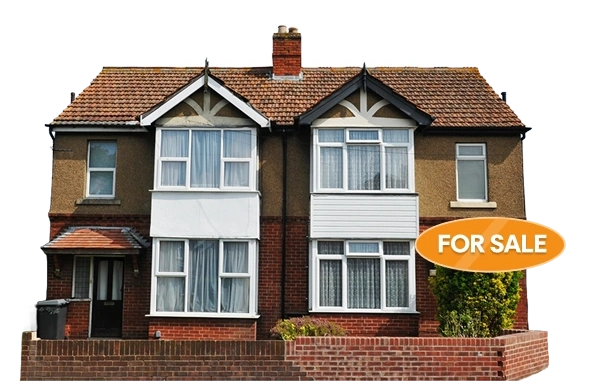
Yes. You can sell your house without an estate agent in the UK, and it is completely legal. There is no law requiring you to use an estate agent when selling residential property in England and Wales. The only professional you legally need is a solicitor or licensed conveyancer for the legal transfer of ownership. Everything else, pricing, photography, marketing, viewings, and negotiation, you handle yourself. In 2026, with Rightmove access available through self-service platforms, AI listing tools, and verified buyer systems, selling a house privately has never been more practical or more financially rewarding.
On a £350,000 property, the average estate agent fee at 1.42% including VAT is approximately £4,970 collected at completion. On a £500,000 home, that figure is over £7,100. Selling your house yourself through a fixed monthly platform eliminates that cost entirely. The solicitor is still required, the EPC is still required, and the legal process is identical to any other sale. What changes is who is in your pocket at the end.
This guide walks through every step of how to sell your house without an estate agent in the UK: what the process involves, what the savings look like, what paperwork you need, and what to watch out for so the whole thing goes smoothly from listing to completion.
Can You Sell a House Without an Estate Agent in the UK?
Yes. Selling a house without an estate agent in the UK is entirely legal under the Estate Agents Act 1979. That legislation governs how agents must behave if hired, but it places no obligation on homeowners to hire one. There is no regulatory body, no government requirement, and no legal barrier preventing you from selling your property privately.
What selling without an estate agent does require is that you take on the tasks an agent would normally manage: valuing the property, creating a listing, marketing it to buyers, managing enquiries, conducting viewings, negotiating offers, and chasing the conveyancing process through to exchange and completion.
Three legal requirements apply regardless of how you sell:
A valid Energy Performance Certificate (EPC). You cannot legally market your property without one. EPCs cost £60 to £120 from an accredited assessor and are valid for ten years. Under GOV.UK guidance, failure to have a valid EPC when marketing a property can result in a fine of up to £200.
A solicitor or licensed conveyancer. The legal transfer of ownership requires a qualified professional. This is non-negotiable and applies to every UK property sale regardless of how you market it.
Anti-money laundering checks. Both you and your buyer will need to pass AML identity verification. Your conveyancer handles this on your side. Platforms like YooSell carry out biometric ID and proof-of-funds verification on buyers before they can make contact with any listing.
Everything else is within your control.
How Much Do You Save by Selling Your House Privately?
Selling your house privately removes the estate agent commission, which is the single largest controllable cost in any UK property sale. According to the HomeOwners Alliance's 2026 data, the average high street estate agent fee is 1.42% of the final sale price including VAT. Fees range from 0.9% to 3.6% depending on agent type, location, and contract terms.
Here is what that means in real money across different property values:
These savings leave your account at completion. On a £500,000 property, keeping over £6,800 that would otherwise be deducted by your solicitor on behalf of the agent is a material difference to your net proceeds. On a £750,000 home, the saving exceeds £10,000.
A 2024 Statista survey found that 31% of UK homeowners cited agent fees as their single biggest frustration when selling a home. That figure reflects a growing understanding that the cost is significant and not inevitable.
Use YooSell's Cost Saving Calculator to see the exact saving on your specific property value.
What Paperwork Do You Need to Sell Your House Privately?
Selling a house privately requires the same documentation as any property sale. The difference is that you organise and present it yourself rather than relying on an agent to prompt you.
Being prepared with paperwork before you go to market speeds up your sale significantly. According to conveyancing firm Muve, incomplete documentation is one of the top three reasons property transactions fall through after offer acceptance.
Before marketing your property:
Valid Energy Performance Certificate (EPC)
Proof of identity (passport or driving licence) for AML checks
Proof of ownership (Land Registry title deeds or an official copy)
Mortgage redemption statement if you have an outstanding mortgage
Property information form TA6 (completed with your conveyancer)
Fittings and contents form TA10
During conveyancing:
Completed title deeds and Land Registry documentation
Planning permission certificates for any extensions or conversions
Building regulation completion certificates
FENSA or CERTASS certificates for replacement windows
Gas safety certificates and electrical installation condition report
Any building work guarantees or warranties
Lease documents if leasehold, including service charge history and management pack
For a complete checklist of every document required at each stage, read YooSell's property guide on seller paperwork.
How to Sell Your House Without an Estate Agent: Step by Step
Selling property by yourself follows the same broad process as any property sale. These are the steps in the order you will encounter them.
Step 1: Get Your Valuation Right
Your asking price is the most powerful variable in your entire sale. Overpricing at launch is the most expensive mistake a private seller can make. Property expert Kate Faulkner, founder of Propertychecklists.co.uk, has noted that "the first two weeks on the market generate the most buyer interest." Wasting that window with an inflated price costs you time, offers, and ultimately a lower final price.
Base your valuation on actual sold prices for comparable properties within the past three to six months, not asking prices on current listings. Use HM Land Registry's free sold price search at gov.uk/search-house-prices. Rightmove's sold prices section is equally reliable and adds original listing photos to help compare condition.
YooSell's free Valuation Calculator combines sold price data with local market signals to give you a data-grounded starting estimate. Use it alongside the Land Registry comparables to establish your range before deciding on an opening price.
Step 2: Prepare Your Property
Over 90% of buyers begin their property search on a portal before arranging a viewing, according to Rightmove's annual housing survey. Your listing photos are the single most important factor in generating viewing requests, and poor photos are the fastest way to lose a buyer you'll never meet.
Before photography, declutter every room, deep clean kitchens and bathrooms, repair obvious defects (cracked tiles, dripping taps, scuffed paint), improve kerb appeal by mowing, pressure washing, and painting the front door if needed, and stage rooms with good lighting and neutral decor where possible.
A well-prepared property photographs dramatically better. YooSell's listing tools include an AI photo enhancer that improves clarity and colour balance without hiring a separate photographer, and professional photography guidance for sellers who want the best possible images from their phone or camera.
Step 3: Create a Strong Listing
Your listing description should lead with the most desirable features, be factually accurate, and read naturally. Avoid estate agent hyperbole ("stunning," "must-see," "gorgeous"). Buyers are sceptical of it, and it makes your listing look like every other one.
A strong listing covers: property type and tenure (freehold or leasehold), bedroom and bathroom count, parking and garden details, EPC rating, accurate room dimensions, and nearby schools, transport links, and local amenities. Specific and honest beats vague and enthusiastic every time.
YooSell's AI listing tools generate a professional property description based on inputs you provide, which you can then edit to match your voice. This produces copy that reads well on both the YooSell platform and syndicated portals, and saves significant time at a stage where most sellers stall.
Step 4: Get Your Property in Front of Buyers
The most common question from sellers considering the private route is whether they can list on Rightmove without an estate agent. Rightmove does not accept listings directly from private sellers, but you can access Rightmove through a platform like YooSell. YooSell's Enhanced and Premium plans include a full Rightmove listing, giving your property identical portal exposure to any agent-listed property.
Beyond Rightmove, additional marketing channels worth using:
Facebook Marketplace and local Facebook property groups (growing significantly as a UK property search channel)
Neighbourhood forums and local community apps
A "For Sale" board outside your property (still generates enquiries, particularly from local buyers)
Personal and professional networks, particularly if you are in an area with high word-of-mouth buyer activity
The combination of Rightmove exposure and social reach covers the vast majority of active buyers in any market.
Step 5: Manage Enquiries and Viewings
Once your listing is live, respond to enquiries quickly. Research by property technology company Spectre found that response time in the first 24 hours is directly correlated with viewing conversion rates. Slow responses lose buyers who move on to the next listing.
Before confirming viewings, qualify buyers:
Are they in a position to proceed (no unconfirmed chain above them)?
Do they have a mortgage agreement in principle or cash funds confirmed?
What is their intended timeline and level of flexibility?
Conducting viewings yourself is one of the strongest advantages of selling privately. You know your home better than any agent. You can speak confidently about the neighbourhood, the practical benefits of the layout, the schools, the parking, and the quirks. Buyers trust sellers who are transparent and present. That trust influences offers.
On YooSell, all buyers are biometrically ID-verified and proof-of-funds confirmed before they can make contact with any listing. When you receive an enquiry through YooSell, you are dealing with a genuine, financially prepared buyer from the first message. That removes the wasted viewings that cost private sellers the most time.
Step 6: Evaluate Offers and Negotiate
When an offer arrives, take your time before responding. An offer is not legally binding until exchange of contracts in England and Wales, so there is no urgency to accept or reject instantly.
Assess each offer on: the price relative to your asking price and comparable sold data; the buyer's financial position (confirmed mortgage offer vs. agreement in principle vs. cash); chain complexity (chain-free buyers are significantly faster and lower risk); and proposed timeline.
When negotiating, reference comparable sold prices rather than personal attachment to your asking figure. Keep the conversation evidence-based. A counter-offer with a supporting data point ("comparable properties on this street have sold for £X in the past three months") is more persuasive and less confrontational than an emotional response to a low bid.
You are legally allowed to continue marketing your property and consider further offers until exchange of contracts. Many sellers accept an offer and take the property off the market as a goodwill gesture, but you are not obliged to do so.
Step 7: Instruct Your Solicitor
The moment you accept an offer, instruct your conveyancer. Do not wait. Every day of delay at this stage increases the risk to your transaction.
Your solicitor or licensed conveyancer handles: preparing and issuing the draft contract pack; completing property information forms with you; conducting local authority, water, and environmental searches; responding to the buyer's solicitor's enquiries; arranging exchange of contracts; and managing the completion date and transfer of funds.
Conveyancing in England typically takes 8 to 12 weeks from offer to completion, according to the Solicitors Regulation Authority. Complex chains or leasehold properties can extend this considerably. Sellers who instruct before listing and complete their TA6 and TA10 forms upfront consistently achieve faster completions.
YooSell's integrated services dashboard provides access to trusted conveyancing partners directly from your account, so you can instruct without searching separately.
Step 8: Exchange and Complete
Exchange of contracts is the point at which your sale becomes legally binding. Both parties sign identical contracts, and the buyer pays their deposit (typically 5% to 10%). After exchange, neither party can withdraw without significant financial consequences.
Completion is usually one to four weeks after exchange, on a date agreed at exchange. On completion day, your conveyancer receives the full purchase price from the buyer's solicitor, redeems your outstanding mortgage balance, deducts their own fees and disbursements, and transfers the net proceeds to you. Your sale is done.
Selling Without an Estate Agent: The Real Risks and How to Manage Them
Selling your house privately is achievable for most standard residential properties. Being clear-eyed about the genuine risks, not the exaggerated ones agents use to scare sellers back to the high street, is part of good preparation.
Overpricing. The most common mistake private sellers make. Emotional attachment to a home consistently pushes sellers toward aspirational prices rather than realistic ones. The fix is disciplined use of sold price data rather than asking prices or agent flattery. YooSell's Valuation Calculator anchors you in real comparables before you list.
Poor photography. Your listing photos are your first and most critical marketing asset. Poorly lit, cluttered, or low-resolution images kill buyer interest before a viewing is ever requested. Take time to prepare the property and use every tool available to improve image quality.
Accepting unqualified buyers. Falling through due to a buyer who turned out to have no confirmed finance is one of the most avoidable outcomes in a private sale. Always confirm mortgage readiness and chain status before accepting any offer. YooSell's ID-verified buyer system addresses this at the platform level.
Delaying conveyancer instruction. Every week of delay after accepting an offer adds risk to the transaction. Instruct your solicitor the same day you accept and stay actively involved throughout the process.
Emotional negotiation. Your home carries significant personal meaning. The price negotiation should not. Keep the two completely separate and rely on comparable sold prices when responding to any offer or counter-offer.
Is Selling Without an Estate Agent Right for You?
Selling your house yourself suits most homeowners selling a standard residential property in a functioning market. You're a strong candidate if you can respond to enquiries promptly during the day and at weekends, are comfortable showing people around your home, can handle direct negotiation conversations with buyers, and are organised enough to manage paperwork and stay engaged with the conveyancing process.
You might benefit from additional professional support if your property has significant structural complications, is part of a complex probate or divorce settlement, or if your work or travel schedule makes buyer communication genuinely difficult during marketing hours.
For most sellers in Leicestershire, the Midlands, and across mainstream residential markets, the private route is entirely manageable with the right platform supporting the process. Read YooSell's guide on what makes a house sell faster for further preparation guidance.
Why YooSell Makes Selling Privately Straightforward
YooSell is a self-service selling platform built specifically for UK homeowners who want to sell their house without an estate agent and without the commission cost that comes with one. It is not just a listing directory. It is the complete infrastructure for managing a professional property sale from your own account.
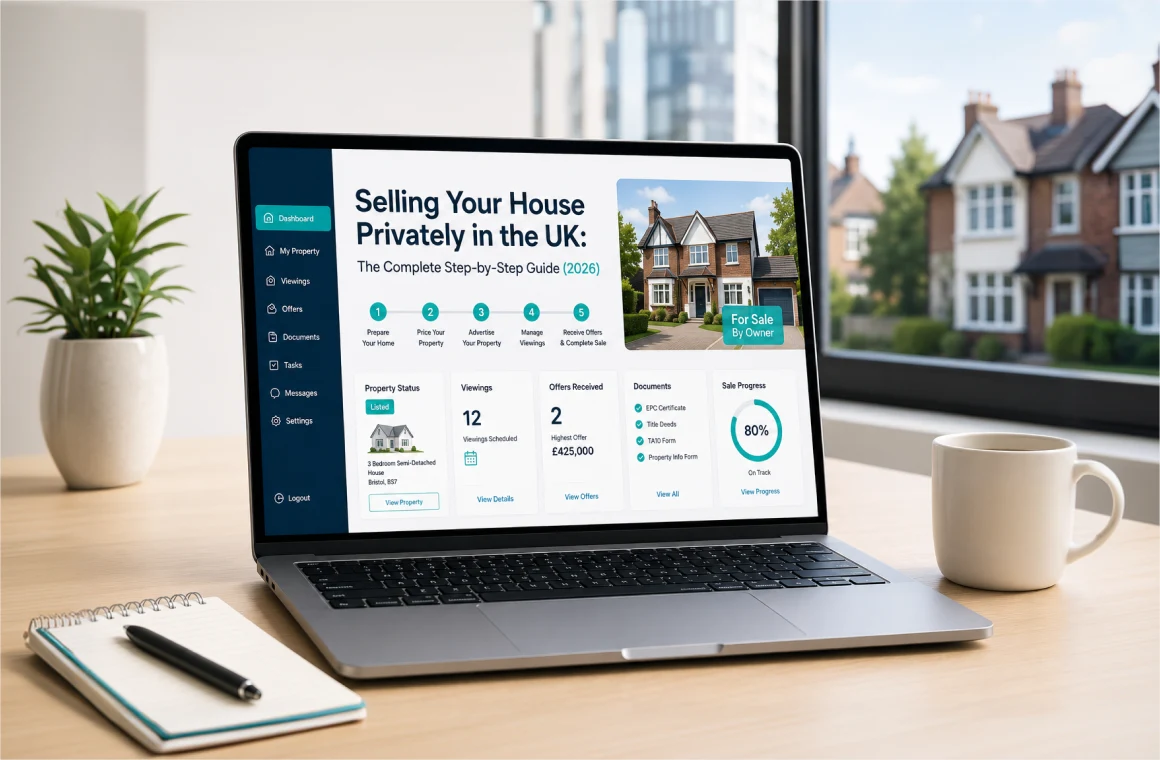
From your dashboard, you get AI-powered listing tools, an optional Rightmove listing through Enhanced and Premium plans, a direct buyer messaging system, a viewings booking calendar, offer management tools, and access to trusted conveyancing partners. Buyers are biometrically ID-verified and proof-of-funds confirmed before making contact with any listing, meaning every enquiry you receive comes from a genuine, financially prepared buyer.
Pricing starts from £49.50 per month with zero commission at completion. No tie-in contract. No withdrawal fees. No percentage of your sale price collected by someone else on the day it matters most.
See how YooSell works, read YooSell's Area Guides for local market context across Leicestershire and the Midlands, and register your listing today when you're ready to start.
Conclusion
The key takeaway from this guide is straightforward: selling your house without an estate agent in the UK is legal, achievable for most homeowners, and financially significant. You do not need an estate agent to sell your home in 2026. You need an accurate price, a strong listing on the right portals, qualified buyers, and a competent conveyancer. Everything else is within your control.
The savings speak directly to the decision. On a £280,000 property, selling without a 1.5% commission agent puts approximately £5,000 back in your pocket at completion. On a £500,000 home, the saving exceeds £6,800. On a £750,000 property, it approaches £11,000. These are not marginal differences. They are meaningful sums that represent months of mortgage payments, a significant deposit contribution, or a renovation budget on the next property.
What holds most sellers back from selling privately is not capability. It is confidence built on unfamiliarity with the process. From working with homeowners across Leicestershire and the Midlands, the most consistent feedback from sellers who go through the private route is that it was more straightforward than they expected. The process is logical. The support is available when needed. And the sense of control over one of the biggest financial transactions of your life has real value beyond the fee saving alone.
Your clear next steps are these. Start with YooSell's free Valuation Calculator to establish what your property is worth in the current market. Then run your figures through the Cost Saving Calculator to see exactly what you would save versus a traditional agent commission. When you're ready to list, register on YooSell and start your private sale from £49.50 per month, with zero commission due at completion.
Your home is your asset. The proceeds of selling it should be yours too.
Frequently Asked Questions
Start Selling Your Home Today!
Take control of your sale with YooSell. Get started today and explore how we can help you sell smarter, faster, and with less hassle.