|Reading time: 8 minutes
Can You Put Up a For Sale Sign When Selling Your House Privately?

Sarah M.
Sarah focuses on pricing strategy, presentation, and getting listings ready for market. She helps sellers present homes clearly without overcomplicating the process.

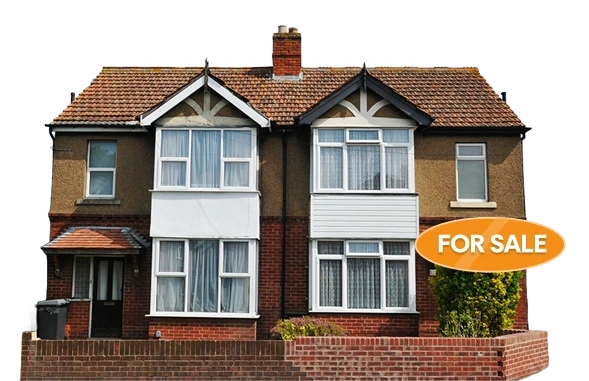
Yes. You can absolutely put up a For Sale sign when selling your house privately in the UK and you do not need to use an estate agent to do it. Under the Town and Country Planning (Control of Advertisements) (England) Regulations 2007 for sale signs on residential properties benefit from what is called deemed consent which means no formal planning application is required as long as the sign stays within specific size and placement rules. If you are selling through YooSell all plans include a downloadable For Sale sign template so you can get one up the same day you list your property on Rightmove.
That said there are real rules to follow and a few situations where things get more complicated. This guide covers everything you need to know before you put that board up.
What Does Deemed Consent Actually Mean for Private Sellers?
Deemed consent is an automatic permission that applies to certain types of signs without you needing to apply to your local council. For Sale and To Let boards fall into this category under Class 3A of the Town and Country Planning (Control of Advertisements) Regulations.
According to the official guidance from the London Borough of Hammersmith and Fulham citing the regulations directly the rules for a residential For Sale sign under deemed consent are:
Only one sign per property is allowed including one per individual flat in a block
The sign must only say for sale or to let. You cannot use it to advertise other services or businesses
The sign must be removed within 14 days of the sale completing
Maximum size for a residential sign is 0.5 square metres. For a conjoined double-sided board that rises to 0.6 square metres
The sign must not project more than 1 metre from the building
The maximum height of the sign symbol must not exceed 0.75 metres
The sign must not be positioned higher than 4.6 metres above ground level
No illumination is permitted
To put those dimensions in practical terms 0.5 square metres is roughly 70cm wide by 70cm tall. That is smaller than the boards you typically see estate agents using which often push to the limit of the regulations or slightly beyond. For a private seller a standard garden board stake sign in that size range is perfectly legal without any council involvement.
Do You Need Permission From Anyone Else?
Planning rules and property rules are separate things and you need to be aware of both.
If you own the property freehold you own the land the sign stands on so you can put up a sign subject to the planning rules above without asking anyone else.
If your property is leasehold things are different. Most leasehold agreements include clauses about what you can and cannot do to the exterior of the property. Some leases specifically prohibit For Sale boards or require the freeholder or management company's written permission before anything is attached to or placed in front of the building. Check your lease before you put anything up. Breaking a lease clause can cause problems with your sale even if the planning rules themselves allow the sign.
If you live on a private estate or in a development with a residents management company there may be estate rules or deed restrictions that control signage. As Carrick Signs confirmed in their guide to estate agent boards the council does not enforce private estate rules. But that does not mean you can ignore them. Your solicitor will pick up any restrictions when they check the title and a buyer's solicitor will notice them too.
Are There Special Rules for Conservation Areas and Listed Buildings?
Yes. If your property sits within a conservation area or is a listed building the standard deemed consent rules may not apply and you may need to apply for advertisement consent from your local planning authority before putting up any sign at all.
Conservation areas are designated by local councils to protect the character and appearance of places that have special architectural or historic interest. Within these areas councils have additional powers to control signage because boards can affect the visual character of the area. Some conservation areas have had article 4 directions applied which remove deemed consent for certain types of signs entirely.
For listed buildings English Heritage guidance recommends checking with your local planning authority before attaching anything to the exterior even temporarily. The building's listed status protects not just the structure but its appearance and the requirement for advertisement consent can apply even for a simple for sale board.
The safest approach if you are in a conservation area or have a listed building is to call your local planning authority's duty officer for a quick informal opinion before the sign goes up. It is a five minute conversation that can prevent a compliance notice later.
Does Putting Up a For Sale Sign Actually Help You Sell?
This is worth asking honestly. For Sale boards have been used for decades and they do serve a purpose but their role has shifted significantly.
According to the HomeOwners Alliance's guidance on selling your home over 90% of UK property buyers now start their search on Rightmove or Zoopla rather than walking a neighbourhood looking for signs. The primary marketing tool for any property in 2026 is a compelling Rightmove listing with professional quality photographs not a board on the front lawn.
That said For Sale signs still do a few things that portal listings cannot. They tell neighbours the property is on the market and neighbours frequently know someone who wants to move to their street. They create a sense of local visibility that reinforces your Rightmove listing. And for any passing buyer who has already been searching online they confirm the property is genuinely available rather than a saved search result they forgot about.
The practical conclusion is that a For Sale sign is a low-cost addition that is worth putting up alongside your Rightmove listing rather than instead of it. On YooSell's downloadable template it costs you nothing extra.
See how YooSell works to understand how a Rightmove listing combined with AI-assisted descriptions and ID-verified buyers gives you a significantly stronger marketing presence than a board on its own.
What Should a Private For Sale Sign Include?
You do not need to include anything beyond the basic for sale message but a few additions make it more useful for buyers who see it in person.
A QR code linking directly to your Rightmove or YooSell listing is the most practical addition. A buyer who walks past and scans it can see all the photos the floor plan and the asking price instantly from their phone. This bridges the gap between someone noticing your board and actually engaging with your listing.
Your contact number is useful too. Some buyers who spot a sign prefer to call directly rather than go through a portal and as a private seller that direct contact is one of the practical advantages of selling without an agent.
Do not include anything beyond the property itself on the sign. Under the deemed consent rules the sign must relate only to the sale of that specific property. Adding other business advertising or services would take it outside deemed consent.
What Happens If You Display a Sign That Breaks the Rules?
If a sign does not comply with the deemed consent conditions it becomes an unauthorised advertisement. The local planning authority has the power to issue a notice requiring you to remove it. Continued non-compliance can result in a fixed penalty notice or prosecution under Section 224 of the Town and Country Planning Act 1990.
In practice councils tend to pursue non-compliant signs when they receive complaints from neighbours or when a sign causes a safety concern near a road junction rather than proactively policing residential For Sale boards. But the risk is real and the remedy is straightforward. Keep the sign within the size limits do not illuminate it do not display more than one per property and remove it within 14 days of completing the sale.
Tips for Getting Your For Sale Sign Right
Keep these in mind before you put yours up.
Check your lease if the property is leasehold before attaching or placing any sign
Confirm whether your property is in a conservation area or listed using the GOV.UK Planning Portal
Keep the sign within 0.5 square metres for a residential property
One sign per property only. One per flat in a block
Remove it within 14 days of completing your sale
Add a QR code linking to your Rightmove listing to make it work harder
Do not illuminate the sign
Keep it below 4.6 metres from the ground
Conclusion
Putting up a For Sale sign when selling your house privately is entirely legal in England as long as your sign stays within the deemed consent rules set out in the Town and Country Planning (Control of Advertisements) Regulations. No planning application is needed for a standard residential sign up to 0.5 square metres that is not illuminated and only advertises the sale of that specific property.
Where sellers sometimes run into difficulty is with leasehold restrictions private estate rules and properties in conservation areas or listed buildings. In those cases it is worth checking before the sign goes up rather than having to remove it under pressure later.
The sign itself is a useful but secondary marketing tool. Your Rightmove listing is what drives 90% of buyer enquiries in 2026. The two work best together. YooSell includes a downloadable For Sale sign template on all plans alongside a full Rightmove listing AI-assisted property description and ID-verified buyers from £29 per month with the first month free.
Use YooSell's free Valuation Calculator to find out what your property is worth. Then register and list your property on YooSell from £29 per month with the first month free and zero commission at completion.
Read YooSell's full property guides for practical advice on every stage of selling your home in 2026.
Frequently Asked Questions
Start Selling Your Home Today!
Take control of your sale with YooSell. Get started today and explore how we can help you sell smarter, faster, and with less hassle.